The recent departure of Sherritt International from Cuba has dramatically altered the risk perception for foreign companies still operating on the Island.
For over 30 years, the Canadian mining company was seen as a steadfast international ally of the Cuban regime. However, citing the latest wave of sanctions driven by President Donald Trump, Sherritt suspended its direct involvement with Cuban joint ventures this week.
This decision delivers a significant blow to Havana and sends a clear warning to Spanish hotel chains still investing in Cuban tourism: Washington appears ready to increase the financial burden of doing business with regime-controlled entities.
The core of this new approach is Executive Order 14404, signed on May 1, 2026.
This order allows for sanctions against entities connected to strategic sectors of the Cuban state apparatus and particularly introduces secondary sanctions against foreign financial institutions that facilitate significant transactions with the blocked entities.
The pivotal moment came on May 7, when the United States officially designated GAESA under this executive order, giving foreign companies and financial institutions until June 5, 2026, to cease all operations with the Cuban military conglomerate, under threat of secondary sanctions.
Targeting the Cuban military conglomerate has made it the main economic focus of the Trump administration, directly impacting tourism.
GAESA oversees a significant portion of Cuba's hotel infrastructure through Gaviota S.A. and its influence over other state chains. As a result, a large share of international tourism revenue ends up benefiting a military-run economic structure.
Spanish hotel chains like Meliá, Iberostar, and Barceló have managed to operate in Cuba despite the U.S. embargo, Helms-Burton Act lawsuits, and the island's deteriorating economy. Nevertheless, Sherritt's situation indicates that the landscape might be shifting.
For decades, Sherritt endured sanctions, non-payments, and operational challenges, collaborating with the Cuban state on the Moa nickel and cobalt mine and participating in Energas S.A., linked to about 10% of national electricity generation capacity.
However, the introduction of new U.S. measures has completely reshaped its risk assessment.
The company concluded that continuing operations in Cuba could jeopardize its access to the international financial system. Secondary sanctions against foreign banks and entities maintaining ties with blocked companies placed Sherritt in an unsustainable position for a corporation reliant on global financing, insurance, and banking operations.
This precedent should particularly concern Spanish hotel chains.
Unlike the mining sector, tourism relies heavily on international payments, digital reservations, travel platforms, bank correspondences, insurance, and international tour operators.
Any perception of risk by banks or financial partners can directly impact the operational viability of these chains.
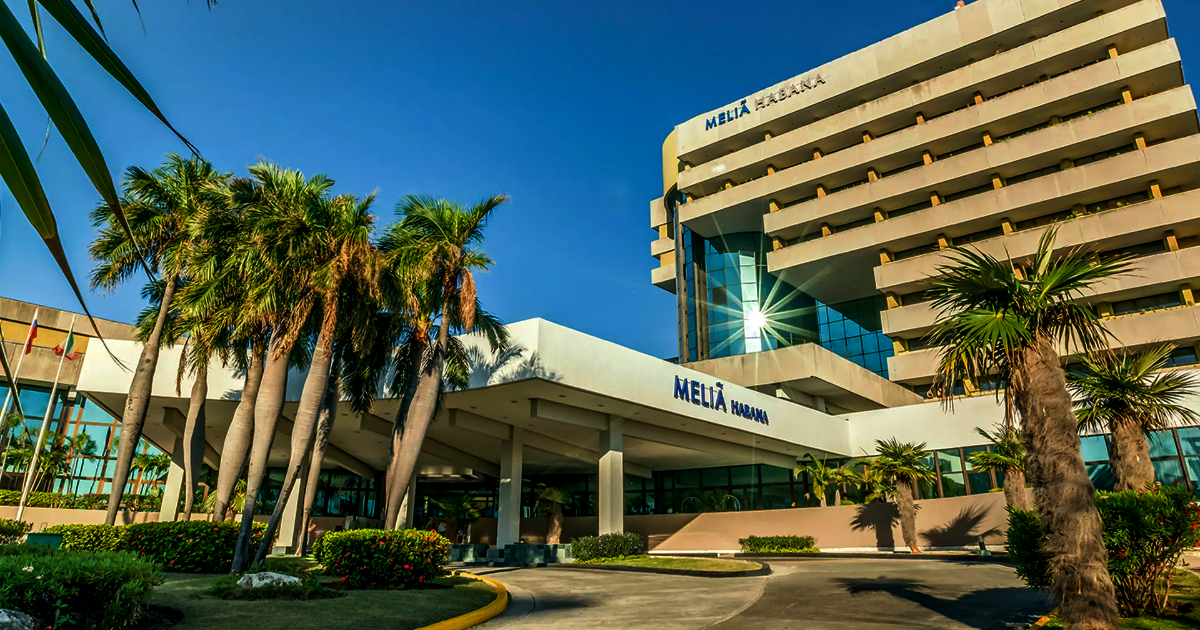
Meliá, for instance, operates around thirty hotels on the Island and has maintained a strategic commitment to the Cuban market for decades.
Iberostar also holds a significant presence in key tourist destinations. However, both Spanish chains face this new phase of pressure with weakened businesses.
The energy crisis, blackouts, fuel shortages, deteriorating services, and the sustained decline in tourism had already drastically reduced the sector's profitability. Several hotel chains closed facilities or consolidated operations over the past year due to low occupancy levels.
Simultaneously, there is growing reputational pressure on foreign companies operating in Cuba. Human rights organizations and activists have long criticized the regime's labor model, which forces chains to hire workers through state agencies that retain a large portion of salaries paid in foreign currencies.
The designation of GAESA now amplifies this debate.
Spanish hotel chains face an increasingly narrow scenario. Remaining in Cuba means coexisting with an environment of growing sanction, financial, and reputational risks. Exiting, on the other hand, would entail assuming losses, breaking contracts, and abandoning investments built over decades.
One potential option could be a hypothetical collaboration between Spanish hotel chains and the Trump administration to clarify the extent of their agreements with the regime and to make transparent activities that Cuban authorities have kept under wraps and beyond even official audits' reach.
So far, no major European chain has announced a withdrawal similar to Sherritt's. But the message from the Canadian mining company is clear: even companies accustomed to operating under pressure for years find that the new U.S. context may make it too costly to continue betting on Cuba.
The big question is whether Sherritt will be an isolated case or the first sign of a gradual withdrawal of foreign investment from the Island.
For the Cuban regime, the threat is serious. Tourism represents one of the country's primary sources of foreign currency, and GAESA is at the heart of that structure.
If the sanctions succeed in increasing the financial isolation of foreign companies associated with the military conglomerate, the economic blow to Havana could be much more profound than that caused by the traditional embargo restrictions.
Understanding the Impact of Sanctions on Cuba's Economy
What led Sherritt International to leave Cuba?
Sherritt International decided to exit Cuba due to new U.S. sanctions under Executive Order 14404, which increase financial risks for companies doing business with Cuban state-controlled entities.
How do U.S. sanctions impact Spanish hotel chains in Cuba?
U.S. sanctions raise the financial and reputational risks for Spanish hotel chains operating in Cuba, potentially affecting their access to international financial systems and partnerships.
What is the significance of GAESA in Cuba's economy?
GAESA is a military conglomerate that controls much of Cuba's hotel infrastructure and plays a central role in the country's tourism industry, making it a focal point for U.S. sanctions.
Could Sherritt's exit be a sign of broader foreign withdrawal from Cuba?
Sherritt's departure may be indicative of a larger trend, as increased U.S. sanctions could drive other foreign investors to reassess their involvement in Cuba.