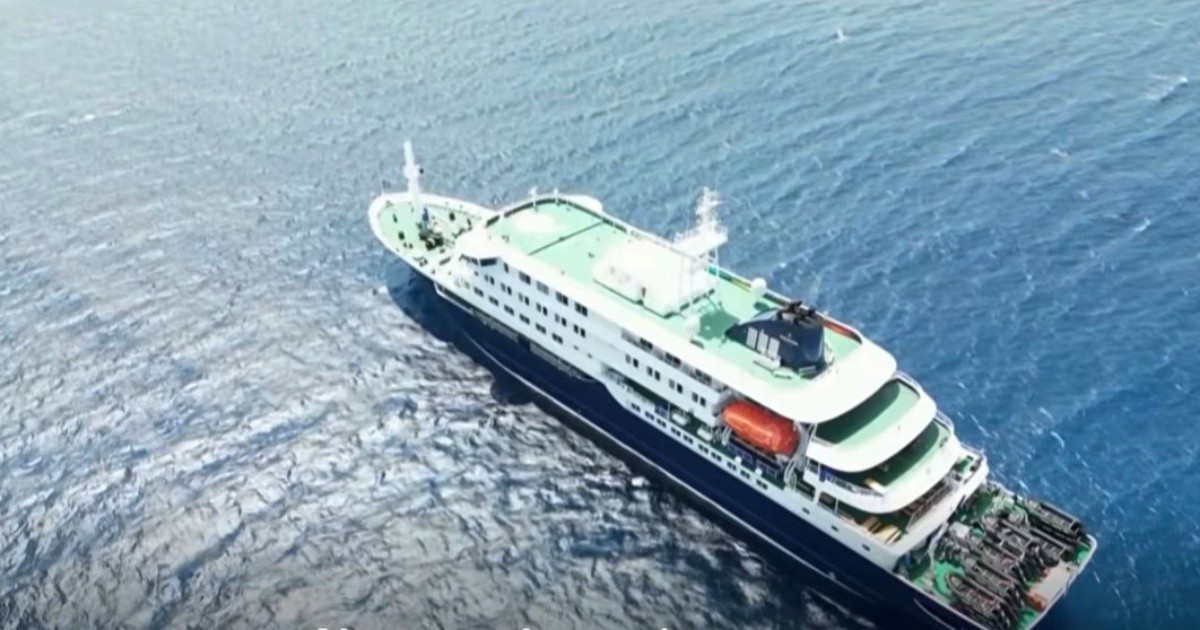
The World Health Organization (WHO) released an official update on Tuesday regarding the hantavirus outbreak linked to the Dutch-flagged luxury cruise ship, MV Hondius. The update raises the number of affected individuals to seven, confirms the deaths of three people, and warns of the potential for virus transmission among those in very close contact on board.
The organization's statement was published on its disease outbreak alerts portal, detailing that since the ship set sail from Ushuaia, Argentina, on April 1, seven out of the 147 people on board have fallen ill. Among them, three have died, one is critically ill, and three are experiencing mild symptoms.
Potential Human-to-Human Transmission Raises Concerns
While the WHO assessed the global risk of the outbreak as low based on current hantavirus transmission knowledge, the possibility of person-to-person spread is the most troubling aspect of the announcement. Dr. Maria Van Kerkhove, WHO's head of Epidemic and Pandemic Preparedness and Prevention, elaborated on the organization's working hypothesis: "We suspect there may be some level of person-to-person transmission among very close contacts. Some individuals on the ship were couples sharing cabins, which implies quite intimate contact."
The organization emphasized that "human-to-human transmission cannot be ruled out" and that, "as a precautionary measure, this is the assumption we are working with." Van Kerkhove also highlighted that the threat is not comparable to other respiratory viruses: "The risk to the general population is low. This virus does not spread like the flu or COVID; it's significantly different."
Profiles of the Affected: International Cases
The first known case was a 70-year-old Dutch man who fell ill with fever, headache, and diarrhea on April 6 and died on board on April 11 without microbiological testing. His 69-year-old wife disembarked in Saint Helena with gastrointestinal symptoms, worsened during a flight to Johannesburg, and died upon arriving at the emergency room on April 26; her diagnosis was confirmed by PCR on May 4. The family stated, "The beautiful journey they shared was abruptly and tragically cut short. We are yet to come to terms with our loss."
A British citizen, evacuated from Ascension Island to South Africa on April 27, remains hospitalized in an intensive care unit in Johannesburg, showing gradual improvement; he is the second confirmed case by PCR. A German woman died on board on May 2 with pneumonia symptoms, and her case is treated as suspicious.
Current Status and Future Plans for MV Hondius
The MV Hondius, operated by Oceanwide Expeditions, is anchored off Praia, the capital of Cape Verde, after being denied docking permission by the nation. According to Maria da Luz Lima, president of Cape Verde's National Institute of Public Health, the refusal was based on health concerns.
On board are 88 passengers and 59 crew members from 23 countries, including 17 Americans. This lethal outbreak marks the first hantavirus occurrence on such a vessel, confirmed by Van Kerkhove.
The WHO is coordinating medical evacuation for two symptomatic crew members with specialized aircraft organized by the Dutch government. Van Kerkhove stated, "The plan is to medically evacuate these two individuals. That is underway. The goal is for the ship to proceed to the Canary Islands. We are in discussions with the Spanish authorities."
On Tuesday, Spain's Ministry of Health dispatched a team of epidemiologists to the ship to assess those on board and prepare disinfection protocols. Strict isolation and hygiene measures are enforced on board; passengers can receive meals in their cabins and access outdoor decks but are prohibited from gathering indoors.
Understanding Hantavirus and the Andes Virus Threat
Hantavirus is primarily transmitted through contact with the urine, feces, or saliva of infected rodents. Experts suspect the strain involved is the Andes virus (Orthohantavirus andesense), the only one among over 20 known strains with documented human-to-human transmission, endemic to the southern cone of America, and prevalent in Argentine Patagonia, the region where the cruise originated.
The hantavirus fatality rate can reach up to 50% in the Americas, with no approved specific antiviral treatment or vaccine available. The WHO advised passengers and crew to actively monitor symptoms for 45 days after the voyage and discouraged any travel or trade restrictions based on current information.
Key Questions About the Hantavirus Outbreak on MV Hondius
What is the current status of the MV Hondius?
The MV Hondius is currently anchored off Praia, Cape Verde, as it was denied docking permission due to health concerns. Plans are underway for medical evacuation of symptomatic crew members, with the ship expected to continue to the Canary Islands.
What measures are being taken on board to contain the hantavirus outbreak?
Strict isolation and hygiene protocols are enforced, with passengers receiving meals in their cabins and permitted access to outdoor decks while being prohibited from gathering indoors.
How does hantavirus transmission occur?
Hantavirus is primarily spread through contact with the urine, feces, or saliva of infected rodents. The Andes virus strain involved in this outbreak is unique in its documented human-to-human transmission capability.