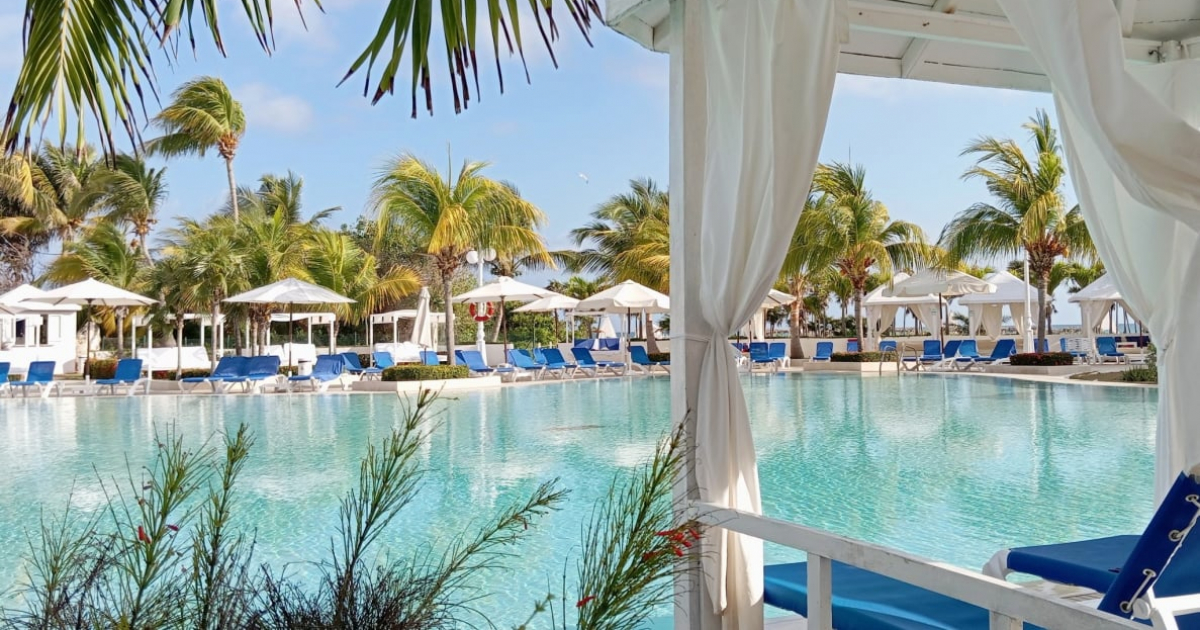
The renowned hotel chain Meliá Hotels International and Spanish financial institutions might soon find themselves targeted by a recent executive order signed by Donald Trump, as outlined in an analysis from the U.S.-Cuba Trade and Economic Council.
Issued on May 1, 2026, the order strengthens sanctions against the Cuban regime under the International Emergency Economic Powers Act. It blocks all assets linked to the regime within the United States, including those belonging to current and former officials, their associates, and adult family members.
Described as a "political storm cloud" by the analysis, this measure is said to cast a wide shadow over the Cuban archipelago, with smaller storms potentially impacting other nations, especially those allied with the Cuban government.
Spain in the Crosshairs
The report suggests that Spain is particularly vulnerable: "Prime Minister Pedro Sánchez is directly in Trump’s political sights." If the Treasury and State Departments choose to enforce the order's provisions, Meliá Hotels International SA, headquartered in Palma de Mallorca, along with Spanish financial entities, are considered likely targets, the report warns.
The document clarifies that these entities are not necessarily violating the order. Instead, the pressure would come from Trump's desire to challenge Prime Minister Sánchez politically.
Political Tensions and International Context
This political motivation is intensified by the upcoming June 2026 G7 summit in France, where Spain participates by tradition despite not being a member. The analysis notes Trump's anticipation for a confrontation with Prime Minister Sánchez at this event.
The ongoing pressure on Spanish hotel chains in Cuba is not unprecedented. Since Trump activated Title III of the Helms-Burton Act on May 2, 2019, both Meliá and Iberostar have faced lawsuits in U.S. federal courts for operating on properties seized after the Cuban Revolution, with approximately 6,000 claims valued at nearly 8 billion euros.
Historical Challenges and Recent Developments
In July 2025, Trump had already imposed direct sanctions on Cuba’s tourism industry, including the Iberostar Selection La Habana in the State Department’s restricted list. On January 20, 2025, the administration updated Cuba’s restricted entities list, impacting the Meliá Marina Varadero and the Iberostar Grand Packard.
Cuban activists, including Sakharov Prize winner Guillermo Fariñas, have protested outside Meliá hotels in the U.S., accusing these chains of complicity with the regime. In April 2026, a Spanish lawyer described hotel investments in Cuba as "fraud exploiting Cuban workers."
European Response and Economic Decline
The analysis also highlights the European Union’s historical weakness in responding to such measures. In 2019, Brussels promised to hire legal representation in the U.S. to defend European companies under Title III, a threat that never materialized. "That never happened," the document recalls, concluding that Washington "has nothing to fear in terms of retaliation."
The business of Spanish hoteliers caught in Cuba’s collapse worsens alongside a severe energy crisis: the island endures power outages lasting up to 25 hours daily in over 55% of its territory, with an economic contraction projected at 7.2% in 2026, according to The Economist Intelligence Unit.
The new executive order adds to more than 240 sanctions imposed by the Trump administration against Cuba since January 2026, part of a maximum pressure strategy that has also intercepted at least seven oil tankers, reducing the regime’s oil imports by 80% to 90%.
Impact of U.S. Sanctions on Spanish Entities
What is the main focus of the new U.S. executive order?
The new executive order intensifies sanctions against the Cuban regime by blocking assets tied to the regime within the U.S., including those of officials and their associates.
Why are Meliá Hotels International and Spanish banks potential targets?
Meliá Hotels International and Spanish banks are seen as likely targets due to political motivations and their connections to Cuba, despite not necessarily violating the order's provisions.
How has Spain responded to previous U.S. sanctions?
The European Union, including Spain, has historically shown weak responses to U.S. sanctions, such as the unfulfilled promise to defend European companies against Title III claims in the U.S.