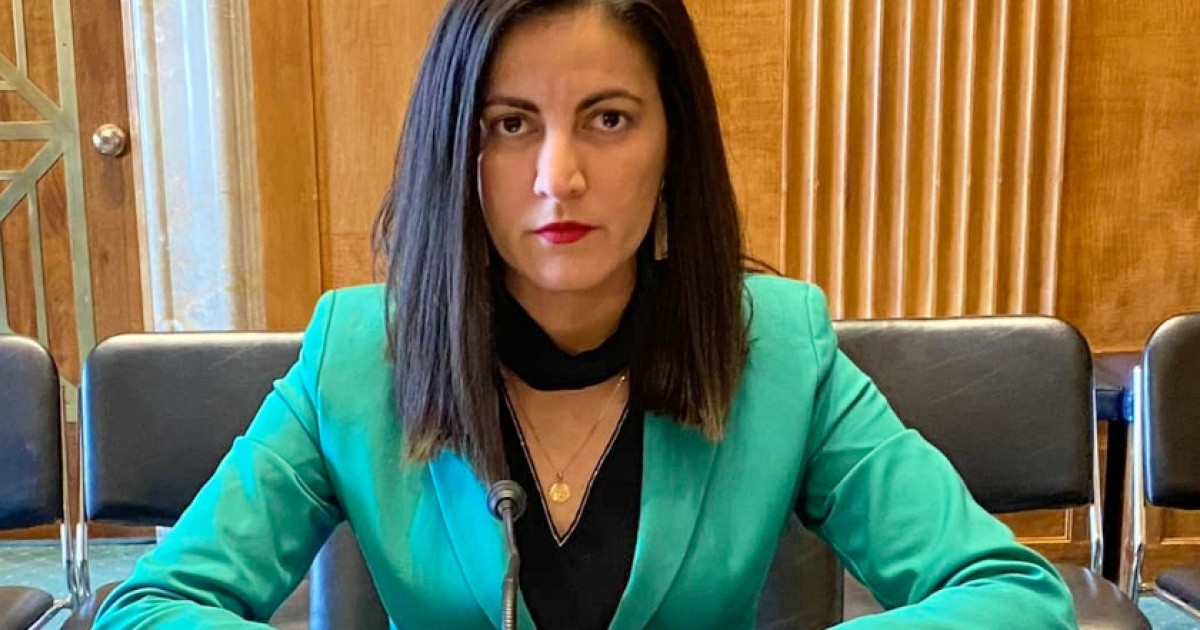
On Wednesday, Cuban activist Rosa María Payá hinted at the possibility of running for the presidency of Cuba if the nation transitions to democracy.
During an interview with Gloria Ordaz on Telemundo 51's Encuentro Virtual, Payá was asked directly about a potential candidacy. She responded thoughtfully yet decisively, stating, "If my name is to be on that list, it will be a decision made in due time."
She further expressed her commitment to the cause, adding, "What is certain is that I want to be part of this liberation process."
The Path to Cuban Liberation
Summarizing the urgency of the current situation, Payá stated, "Cubans have a plan and the responsibility to initiate the transition that Cuba desperately needs."
Payá, daughter of the late Oswaldo Payá, emphasized that a structure is already being developed to lead this transformation. "This interim team aimed at guiding Cuba towards free elections is growing, and the involvement of the exile community is crucial," she asserted.
Support from Florida
Her comments come in the wake of the Florida Senate's formal recognition of the Liberation Agreement, through a proclamation by Senator Alexis Calatayud of Miami-Dade's District 38. This document describes the agreement as "the path to freedom and democracy in Cuba" and marks the first formal state legislative support for the initiative.
Payá expressed gratitude for this endorsement, highlighting it as "a pivotal step in acknowledging that a free Cuba is of immense interest to Florida, the U.S., and the world."
Blueprint for Change
Signed on March 2 in Miami by the Cuban Resistance Assembly and Pasos de Cambio, along with over 30 exile organizations, the Liberation Agreement outlines three phases: liberation—which involves ending the regime and releasing more than 1,000 political prisoners—stabilization with a plural provisional government, and democratization with internationally supervised free elections.
The plan proposes a 51-member provisional council acting as a transitional parliament, alongside an executive branch with a president and two vice presidents.
Recognition and Solidarity
Days prior, Payá attended an exile rally at Bayfront Park under the banner "United for a Free Cuba," urging world governments to align with Washington under the leadership of Trump and Rubio.
Simultaneously, Freedom House announced that Payá will be honored with the Alfred Moses Freedom Award in 2026. The ceremony is scheduled for May 20, in recognition of her advocacy for Cuban political prisoners.
Payá, who in 2025 became the first Cuban dissident elected to the Inter-American Commission on Human Rights (CIDH), dedicated the award "to the brave Cuban people who continue to resist tyranny" and to every political prisoner.
Amidst this political fervor and Cuba's future plans, another activist has entered the conversation: Amelia Calzadilla recently declared from Madrid the establishment of the Cuban Orthodox Liberal Party, a center-right organization inspired by José Martí's ideals and free-market policies.
Key Aspects of Cuba's Potential Political Shift
What are the phases proposed in the Liberation Agreement?
The Liberation Agreement outlines three phases: liberation, which involves ending the current regime and releasing political prisoners; stabilization with a provisional government; and democratization through internationally supervised elections.
Who is supporting the Liberation Agreement in Florida?
The Florida Senate has formally recognized the Liberation Agreement, with Senator Alexis Calatayud of Miami-Dade's District 38 issuing a proclamation in support, marking it as the first state legislative endorsement.
What award is Rosa María Payá set to receive?
Rosa María Payá will receive the Alfred Moses Freedom Award in 2026 from Freedom House in recognition of her efforts advocating for Cuban political prisoners.