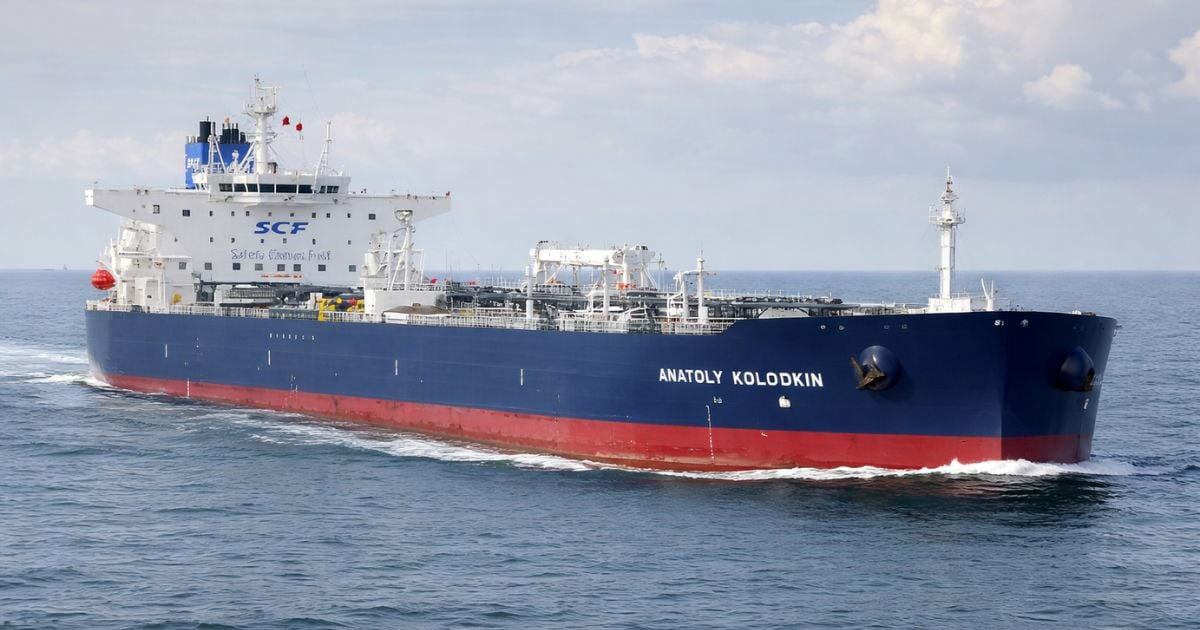
The Russian oil tanker, Anatoly Kolodkin, is currently making its way to the Caribbean, loaded with crude oil, intensifying the pressure on the United States' sanctions policy against Cuba.
Maritime tracking data reveals that the vessel could approach the island within the next few days, amidst the severe energy crisis plaguing the Cuban population.
According to reports from independent analyst Falcon on X, the tanker is navigating toward the Caribbean at a speed of approximately 11-12 knots. However, its course has slightly shifted, and it is not directly heading toward Cuba.
The latest tracking information places the ship about 487 miles from Turks and Caicos, with an estimated route of 941 miles. It is anticipated to arrive around March 30, as per AIS data.
Last week, the U.S. government banned the shipment of Russian oil to Cuba through a new license issued by the Office of Foreign Assets Control (OFAC), aimed at limiting transactions involving Russian-origin crude.
The Anatoly Kolodkin departed from Primorsk on March 8, carrying approximately 730,000 barrels of crude oil. Initially, it declared a generic destination, but tracking systems now place it en route to the Caribbean, with analysts suggesting a potential docking at Matanzas.
The technical specifications of the tanker highlight the scale of this operation. It is a 250-meter-long vessel with a draft of 13.3 meters, capable of transporting substantial volumes of oil.
Its last known position was in the Atlantic, northeast of the Caribbean, navigating on a course of 223°.
This shipment occurs during a critical period for Cuba, where the fuel shortage has led to persistent power outages and a noticeable decline in everyday life conditions.
The island has not received oil shipments since January, following the collapse of Venezuelan supplies and additional restrictions imposed by Washington.
Russia has defended the oil shipment to Cuba as "humanitarian aid," while the United States maintains sanctions that prohibit such transactions.
However, intercepting the tanker in international waters could pose legal risks and potentially escalate tensions with Moscow.
For the Trump administration, the situation presents a dilemma: allowing the supply could partially alleviate Cuba's energy crisis but would weaken pressures on the regime. Blocking it might open a new international tension front amid already existing global conflicts.
As the oil tanker moves toward the Caribbean, the scenario once again underscores the fragility of Cuba's energy system and its reliance on external allies, amidst an ongoing crisis that continues to directly impact its citizens.
Key Questions on Russian Oil Tanker and U.S.-Cuba Relations
Why is the Russian oil tanker Anatoly Kolodkin heading to Cuba?
The Anatoly Kolodkin is reportedly heading to Cuba with a shipment of crude oil amidst a severe energy crisis on the island, despite sanctions from the United States.
What are the implications of the U.S. banning Russian oil to Cuba?
The U.S. ban on Russian oil shipments to Cuba, enforced through OFAC, aims to limit Cuba's access to foreign oil, adding pressure on the regime while exacerbating the energy crisis for its citizens.
What challenges does the Trump administration face regarding the tanker?
The administration faces a complex decision: allowing the shipment could ease Cuba's energy crisis but reduce pressure on its government, while blocking it could lead to international tensions with Russia.