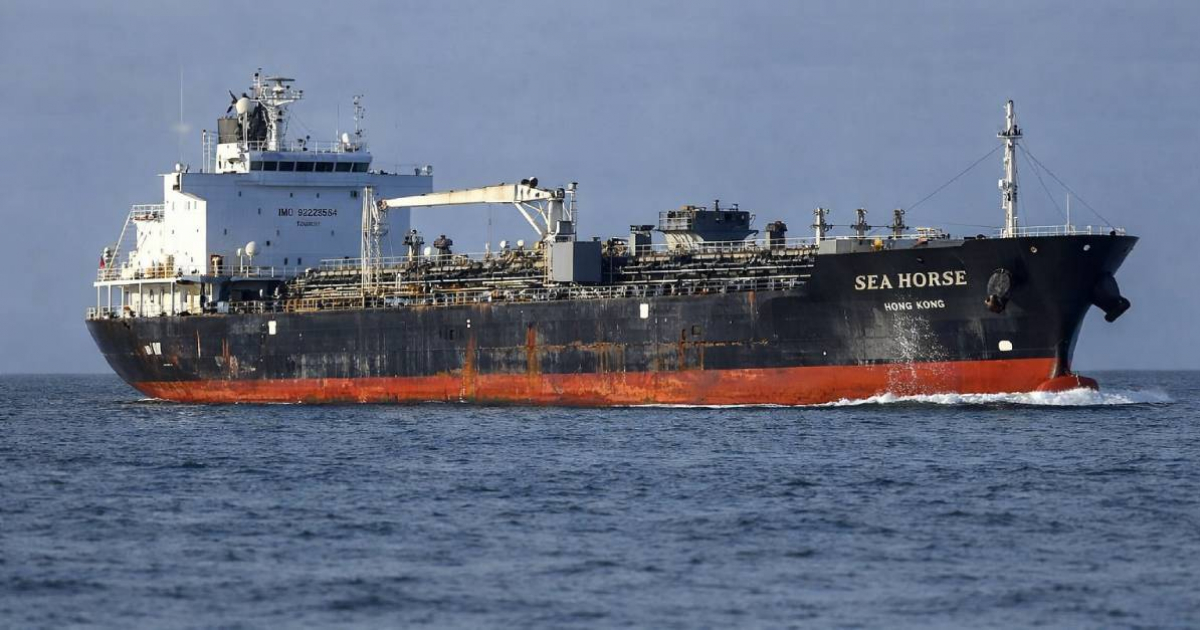
The tanker Sea Horse, associated with shipments of Russian diesel and under suspicion for evasive maneuvers, never reached Cuba and instead altered its course in the Caribbean towards Trinidad and Tobago. This development comes amidst increasing pressure from the United States and a severe energy crisis on the island.
According to data reported by Reuters from LSEG, the Sea Horse is now heading south and is expected to arrive in Trinidad and Tobago by Monday.
Identified with IMO number 9262584 and sailing under the Hong Kong flag, the vessel was recently tracked heading into the Caribbean, carrying an estimated 200,000 barrels of fuel.
From the outset, the Sea Horse raised alarms due to erratic course changes and potential tampering with tracking signals, behaviors linked to the so-called Russian “ghost fleet.”
Suspicious Navigation and Alternate Destinations
Initially, the Sea Horse declared far-flung destinations such as Gibraltar. Later maritime tracking data suggested a Caribbean route, fueling speculation that Cuba was its intended destination.
A user known as Falcon on X, citing sources, mentioned that alternative routes were part of the original plan. These reports indicated Venezuela as a secondary destination, with Cuba as a backup if other regional operations failed.
As it traversed the Atlantic, the tanker maintained a draft of 10.9 meters—nearly its maximum operational level—indicating it was fully loaded.
Impact of U.S. Sanctions and Route Change
However, the situation shifted recently. The Sea Horse updated its destination to Trinidad and Tobago, veering away from any potential paths toward Cuba.
This rerouting coincides with new restrictions imposed by the United States, explicitly banning the shipment of Russian oil to Cuba via a license from the Office of Foreign Assets Control (OFAC).
These measures are part of a strategy to cut energy supplies to the Cuban regime and increase internal pressure amid severe economic decline.
The Sea Horse's change of course represents a setback for Cuba, which has not received stable fuel supplies since January and is experiencing widespread power outages.
Another Russian vessel, the Anatoly Kolodkin, is en route to Matanzas with a larger cargo, but uncertainty over energy shipments remains high.
The case of the Sea Horse highlights the growing challenges of transporting Russian oil to Cuba and the effectiveness of control measures in the Caribbean. It also underscores the fragility of Cuba's energy system, increasingly reliant on complex, opaque operations subjected to geopolitical risks.
Frequently Asked Questions About Cuba's Energy Crisis
Why did the Sea Horse change its course to Trinidad and Tobago?
The Sea Horse redirected to Trinidad and Tobago likely due to increasing U.S. sanctions and logistical challenges in delivering Russian diesel to Cuba.
How does the change in the Sea Horse's route affect Cuba?
The rerouting of the Sea Horse deals a significant blow to Cuba, exacerbating its ongoing energy crisis and contributing to extended power outages.
What are the implications of new U.S. sanctions on Cuba's energy supply?
The new U.S. sanctions aim to cut off Russian oil supplies to Cuba, further straining the island's energy resources and increasing pressure on the Cuban government.