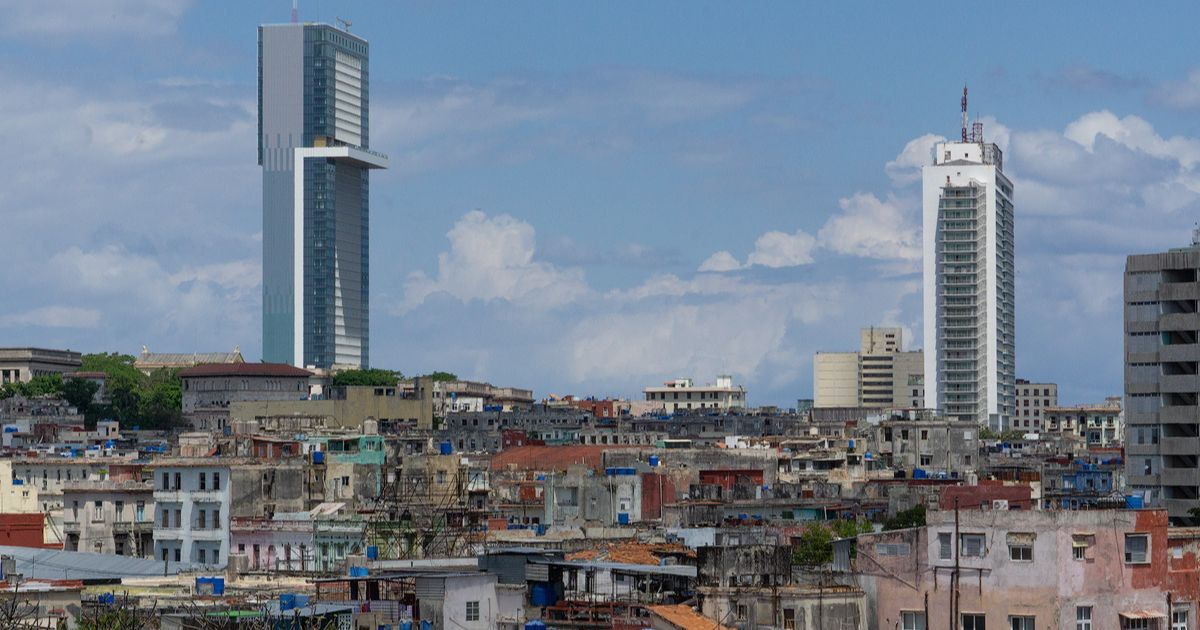
On February 10, 2026, Cuba woke up to a stark reality: all nine of its international airports were closed for refueling. A NOTAM alert (A0356/26) confirmed by the United States FAA verified what the Cuban regime had been reluctant to admit for weeks—there was not a drop of Jet A-1 fuel left on the island. This situation is expected to persist until at least March 11.
This stark image is the culmination of a crisis that has been brewing for years but has recently reached a critical point. The capture of Nicolás Maduro abruptly cut off Venezuelan oil supplies, compounded by heightened U.S. sanctions under the Trump administration and a chronic power grid collapse, leaving Cuba with no energy, no flights, no tourists, and seemingly no way out.
The Venezuelan Oil Crisis: A Lifeline Cut Off
To grasp the enormity of this disaster, one must consider Venezuela's historical role. For over two decades, Venezuelan oil was the lifeblood of Cuba's economy. During the height of Chavismo, Cuba received up to 90,000 subsidized barrels daily. In exchange, Havana sent doctors, educators, and intelligence agents to Venezuela.
Even before Maduro's capture, oil flows had diminished drastically. By 2024, Venezuela was supplying only about 35,000 barrels per day. Mexico had become the primary supplier, albeit with just 12,284 barrels. These dwindling supplies were crucial for keeping power plants, distributed generation engines, and airports operational.
When a U.S. military operation captured Maduro in early January 2026, it delivered a final blow. Additionally, U.S. actions against the Chavista "dark fleet" intercepted at least four tankers linked to Venezuela. Washington also imposed tariffs on any country selling or providing crude oil to Cuba, labeling it a "national security threat."
Trump and Rubio: The Maximum Pressure Strategy
From Air Force One, just hours after Maduro's capture, Donald Trump made the U.S. strategy clear: "Cuba is ready to fall. They no longer have revenue. They lived off Venezuelan oil, and that's over." Weeks later, he intensified the pressure, stating, "Cuba will fail very soon. They should reach an agreement before it's too late."
Secretary of State Marco Rubio added an ideological dimension to the debate, warning, “I would be worried if I were the Cuban regime.” In another statement, he was even more forceful: “The Cuban dictatorship must choose: have a real country with a real economy or continue with its failed dictatorship. The era of subsidies is over.”
Airlines Flee: An Island Without Flights
The most visible consequence of the oil collapse is the halt of air transportation. In a matter of days, Cuba lost most of the airlines connecting it to the world.
The Canadian market, accounting for 42.5% of all visitors, was the first to crumble. Air Canada suspended all flights until May 2026, stranding about 3,000 passengers to be repatriated on 16 weekly emergency flights. Air Transat ceased operations until April 30, affecting over 6,500 travelers. WestJet also halted services, leaving an estimated 10,000 Canadians stranded on the island.
In contrast, U.S. airlines began their retreat in 2025. United Airlines suspended its only regular route (Houston-Havana) in September 2025 due to a lack of demand. Southwest Airlines reduced frequencies from Tampa, and American Airlines requested to suspend the Miami-Santiago de Cuba route.
European carriers are improvising. Iberia and Air Europa maintain frequencies but since February 10, they make technical stops in Santo Domingo, Dominican Republic, for refueling before continuing to Havana. Aeroméxico is practically the only airline operating normally. Even Russian and Chinese airlines, traditional allies of the Cuban regime, have reduced operations.
The "Tourism Compact": Shutting Hotels to Survive
On February 7, the Cuban government initiated what it euphemistically calls a "tourism compact." In practice, it means closing hotels with low occupancy and relocating tourists to facilities that concentrate the few available resources.
A hotel worker in Varadero, speaking anonymously to EFE, confirmed, "Hotels are already closing in Varadero, but also in other provinces." The most affected areas are Varadero and the northern keys: Cayo Coco, Cayo Guillermo, and Cayo Cruz.
Without providing details on the number of hotels closed or the relocation process, information from hotel chains sketches the picture:
Meliá Hotels International, the largest foreign operator on the island with 33 hotels, closed three establishments. The chain described it as "an operational decision strictly based on occupancy levels" and assured it had "supplies on hand to support the operational continuity" of the remaining hotels. The Mallorca al Día newspaper was less diplomatic, headlining that Meliá and Iberostar "crowd tourists in Cuba amid total collapse."
Iberostar, with 20 hotels, closed at least two: the Iberostar Origin Daiquirí and the Iberostar Origin Playa Pilar, both in Cayo Guillermo. Tourists were relocated to the Iberostar Selection Esmeralda in Cayo Cruz.
Other affected chains include Blue Diamond (Canada, 8 hotels), Blau Hotels (3), Valentín Hotels (3), and Barceló (2).
Meliá and Iberostar: Stuck in a No-Win Situation
The financial figures for Meliá in Cuba are devastating. An analysis by the business newspaper Cinco Días labeled them as the "worst among all the geographies where it operates":
Hotel occupancy dropped to 39.4% in 2024—compared to a global average of 60%—and plummeted to 21.5% in the first half of 2025. Revenue per available room (RevPAR), the sector's most important indicator, stood at 31.7 euros, a third of the global average of 83.8 euros. In 2024, Cuba generated pre-tax losses of 4 million euros, while Spain, in the same company, contributed profits of 185.3 million.
In the first quarter of 2025, before the oil collapse worsened, Meliá already recorded a 20.8% drop in management fees attributable to Cuba, equivalent to about 5 million euros in losses.
On February 10, 2026, the day airport refueling closures became public, Meliá's shares plummeted by 8.5% in a single session on the Madrid stock exchange, wiping out approximately 130 million euros in market capitalization.
Iberostar, not being publicly traded, avoids stock market scrutiny but not risk. Its shift to a leasing model in Cuba—instead of the safer hotel management model—heightens its direct financial exposure.
Why don't they leave? Despite the disaster, both Gabriel Escarrer (Meliá) and Miguel Fluxá (Iberostar) "take any public appearance to emphasize their commitment to the Cuban government," betting that the embargo will eventually ease and Cuba will open up. The reasons are manifold:
Long-term contracts with the Cuban state—through Gaviota, the tourism arm of the military conglomerate GAESA—have terms of 25 to 30 years. Breaking them unilaterally would entail indemnities and the loss of assets. Meliá has been in Cuba for 35 years: it was the first Western chain to enter, and the island holds emotional significance for the Escarrer family.
The latent real estate value also explains the resilience. Meliá's market capitalization (about 1.7 billion euros) is far below the real value of its real estate assets (5.285 billion according to CBRE), incentivizing them to "wait" for a regime change that unlocks the potential of Cuban properties.
Additionally, there is an implicit domino effect: if one chain exits, others become more exposed, and the Cuban government could retaliate. The Mallorca Hotel Federation has opted for coordinated silence. "We have no direct information from the chains. All I can say is that the chains have not made any statements yet," said its president, Javier Vich, during the International Tourism Fair in Madrid in January.
The Legal Sword of Damocles: Helms-Burton Act
The legal risk is not hypothetical. Trump activated Title III of the Helms-Burton Act in 2019, allowing Cuban-American families to sue companies operating on confiscated properties. There are about 6,000 claims for expropriated assets valued at nearly 8 billion euros. Meliá already faced a lawsuit in federal courts in Florida filed by the Mata family. Spanish courts dismissed similar cases for lack of jurisdiction, but both chains have hotels in the United States—Meliá in New York, Miami, and Orlando; Iberostar in New York and Miami—that could be subject to seizure.
If the Trump administration decides to fully reactivate Title III—Biden had suspended it in his final days—Spanish hotel chains would face a wave of litigation in U.S. jurisdiction.
GAESA: The Military Company That Controls Tourism and Exploits Workers
To understand the moral dimension of the hotel business in Cuba, one must recognize its true owner. It is not the Ministry of Tourism. It is GAESA (Grupo de Administración Empresarial S.A.), the business conglomerate of the Revolutionary Armed Forces. Through its subsidiary Gaviota S.A., GAESA controls 121 hotels, 20 marinas, a transportation company, a travel agency, and a logistics firm.
An investigation by the Miami Herald, based on internal financial documents of the military group, revealed that between January and March 2024, Gaviota achieved a net profit margin of 42%—nearly four times the global average in the tourism sector—with earnings equivalent to $554 million on revenues of $1.3 billion. Gaviota's sales accounted for 72% of GAESA's total.
How are these margins achieved? With miserably low wages. An average hotel worker earns the equivalent of $11 per month. The model works like this: foreign chains pay the Cuban state—i.e., GAESA—the full salary in foreign currency. The state retains most of it and gives the worker a fraction in devalued Cuban pesos. The average salary in the Cuban tourism sector was 5,839 pesos per month in 2024, about $16 at the informal exchange rate.
The Cuban Observatory for Human Rights (OCDH), based in Madrid, has repeatedly warned Spanish hotel chains that this model violates International Labor Organization (ILO) conventions. "Do not participate in the feudal exploitation of Cuban workers," the OCDH directly urged Meliá, Iberostar, Barceló, and other chains. The observatory documented that 55% of Cubans report discrimination in the tourism sector and that 72% cite political ideas as the main cause.
Iberostar, which has a Code of Ethics rejecting "any form of harassment and abuse of authority," tolerated interrogations by State Security agents of its own workers within its hotel premises, as documented by Diario de Cuba. The dissonance between these companies' proclaimed ESG commitments in Europe and their practices in Cuba is increasingly apparent.
The labor exodus has emptied staff rosters. More than 2.7 million Cubans have left the island since 2020, and over 60% of tourism positions remain unfilled. In response, the government has proposed coercive measures: obligating tourism graduates to remain in the sector for a minimum of five years without the possibility of transferring or emigrating.
The "Lost Decade": A Tourism Industry Already Dead Before the Final Blow
The current crisis did not begin with Maduro's capture. José Luis Perelló, an economist at the University of Havana and one of the most respected voices in the study of Cuban tourism, has been saying for years: Cuba is in the midst of a "lost decade."
The numbers do not lie. Cuba nearly reached 4.7 million tourists in 2018, its historical record. In 2024, it welcomed just 2.2 million, the worst figure in 17 years. In 2025, the decline accelerated to 1.8 million. Data from the first half of 2025 showed dramatic drops in all source markets: Canada (-25.9%), Russia (-43.5%), Germany (-41.4%), Spain (-27.7%).
Perelló points out that even in the best possible scenario—with an annual growth rate of 10.65%, the highest ever recorded during the thaw with Obama—Cuba would not recover pre-pandemic levels until 2030. And this calculation was made before the loss of Venezuelan oil.
Meanwhile, the Cuban government continued building hotels. GAESA invested billions in new luxury facilities—like the 200 million euro Torre K—while the power grid, food production, public health, and basic infrastructure crumbled.
How Long Will Spanish Hotel Chains Endure?
The Mallorcan hotel chains—around 70 Balearic-capital installations operate in Cuba—are caught between growing losses, legal risks, and reputational pressure they can no longer ignore. The sustainability of their presence depends on three variables.
The first is the full reactivation of the Helms-Burton Act. If Trump re-enables lawsuits under Title III, Meliá and Iberostar would face litigation in federal courts that could lead to the seizure of their assets on U.S. soil. For companies with hotels in New York, Miami, and Orlando, that risk is existential.
The second variable is the duration of the energy crisis. With occupancy rates below 20%, closed airports, and a lost high season, each month without fuel generates operating losses that even the most aggressive "compaction" cannot offset. If the crisis extends beyond March, as all indications suggest, the 2026 season will be unrecoverable.
The third is shareholder patience. The 8.5% stock market crash on February 10 was an initial alarm. If Cuba transitions from being a financial burden to a systemic risk for Meliá's stock price, institutional investors could force the Escarrer family's hand. Iberostar, being a family business without public trading, has more leeway, but not indefinitely.
In the short term, the most likely scenario is not a formal withdrawal—the contracts, pride, and hope for regime change prevent it—but a slow death: gradually closing hotels, reducing staff, minimizing new investment, and maintaining a symbolic presence with a handful of establishments in Havana and Varadero. This is exactly what's already happening.
However, there is a factor that no financial statement captures and that may ultimately prove decisive: the moral contradiction. Companies that champion corporate social responsibility, diversity, and labor rights in Europe, in Cuba participate in a system where the military takes 80% of workers' salaries and where State Security agents interrogate employees inside hotels. Their continued presence in Cuba has already exacted a reputational cost, and all indications are that this erosion will only intensify in the coming months.
FAQs on the Cuban Economic Collapse and Its Impact
What led to the current fuel crisis in Cuba?
The fuel crisis in Cuba was precipitated by the capture of Nicolás Maduro, which cut off Venezuelan oil supplies. This was exacerbated by increased U.S. sanctions and a failing power grid, leaving Cuba without essential resources.
How have international airlines responded to Cuba's crisis?
In response to the crisis, many international airlines, including major Canadian and U.S. carriers, have suspended or reduced flights to Cuba. European airlines are making technical stops for refueling, while some continue limited operations.
Why do Spanish hotel chains continue to operate in Cuba despite the crisis?
Spanish hotel chains like Meliá and Iberostar remain in Cuba due to long-term contracts, potential real estate value, and emotional ties. They hope for eventual policy changes that would improve the business climate.