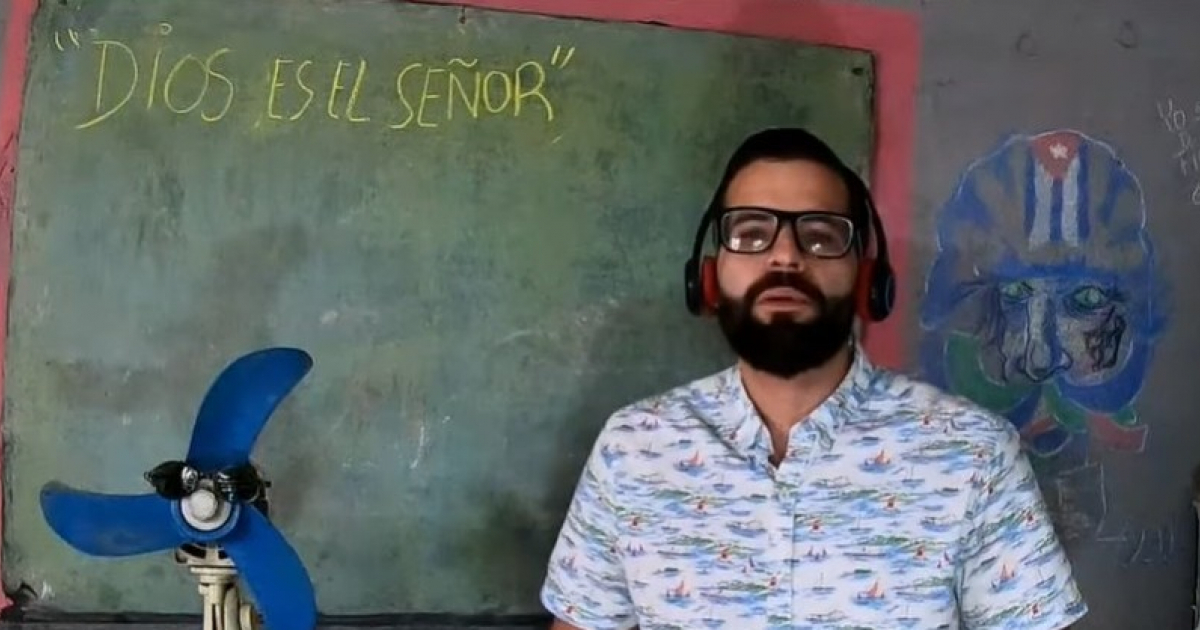
On February 9, the Provincial Popular Court of Holguín made an uncommon move by accepting a habeas corpus petition for Kamil Zayas Pérez and Ernesto Ricardo Medina, two youths associated with the independent project El4tico. This decision now compels the Prosecutor's Office to officially justify why they remain in custody, under which charges, and in what conditions.
The independent organization Citizenship and Freedom reported that the First Criminal Chamber proceeded with the petition, directing the Provincial Prosecutor's Office of Holguín to immediately address the legality of the detention, the charges filed, and the treatment received by the young men, who have been in custody since February 6.
According to the judicial order, signed by Judge Marcos Michel Betancourt Leyva, the court acknowledges that the request highlights a detention without charge notification, unspecified offenses, and a failure to adhere to legal formalities, potentially violating fundamental rights even recognized by the Cuban Constitution.
The judicial document indicates that Zayas Pérez and Medina were processed based on an unnumbered complaint, remain detained without known charges, and were arrested without meeting legal requirements. Consequently, the court is interested in their "immediate release."
An audience has been scheduled for February 12 at 9:00 a.m., during which the Prosecutor's Office must present the relevant files and reports, submitting to judicial review—a step that disrupts the opacity surrounding the detention to date.
The habeas corpus was filed by activist Yanet Rodríguez Sánchez, who previously approached the Provincial Court of Holguín on behalf of the youths, demanding official information on their whereabouts, formal accusations, and detention conditions.
Both were apprehended during a pre-dawn police raid and taken to the province's Criminal Investigation headquarters, known as "Everybody Sings," a center frequently denounced for violent interrogations and degrading treatment.
During the arrest, State Security agents seized computers, phones, cameras, and other equipment used by the youths to document their work, as reported by activists and civil society organizations.
The acceptance of the habeas corpus is a rare occurrence in Cuba's judicial system, placing the Prosecutor's Office under public and legal scrutiny amidst growing opposition both within and outside the island over the detention of the El4tico youths, who have become symbols of the risk faced by those who attempt to exercise their right to express and document the Cuban reality.
Key Questions About the Holguín Habeas Corpus Case
What is the significance of the habeas corpus acceptance in Cuba?
The acceptance of habeas corpus in Cuba is significant as it challenges the typical judicial opacity and compels the authorities to justify detentions, potentially highlighting violations of rights.
Who filed the habeas corpus for Kamil Zayas Pérez and Ernesto Ricardo Medina?
The habeas corpus was filed by activist Yanet Rodríguez Sánchez, who sought official information on the youths' detention and conditions.
What led to the detention of the El4tico youths?
Kamil Zayas Pérez and Ernesto Ricardo Medina were detained during a police operation without clear charges, as they were involved in documenting and expressing the Cuban situation through El4tico.