Violence isn't always about batons or shouting. In Cuba, it's also visible in empty shelves, trash-strewn streets, and the relentless darkness of endless blackouts.
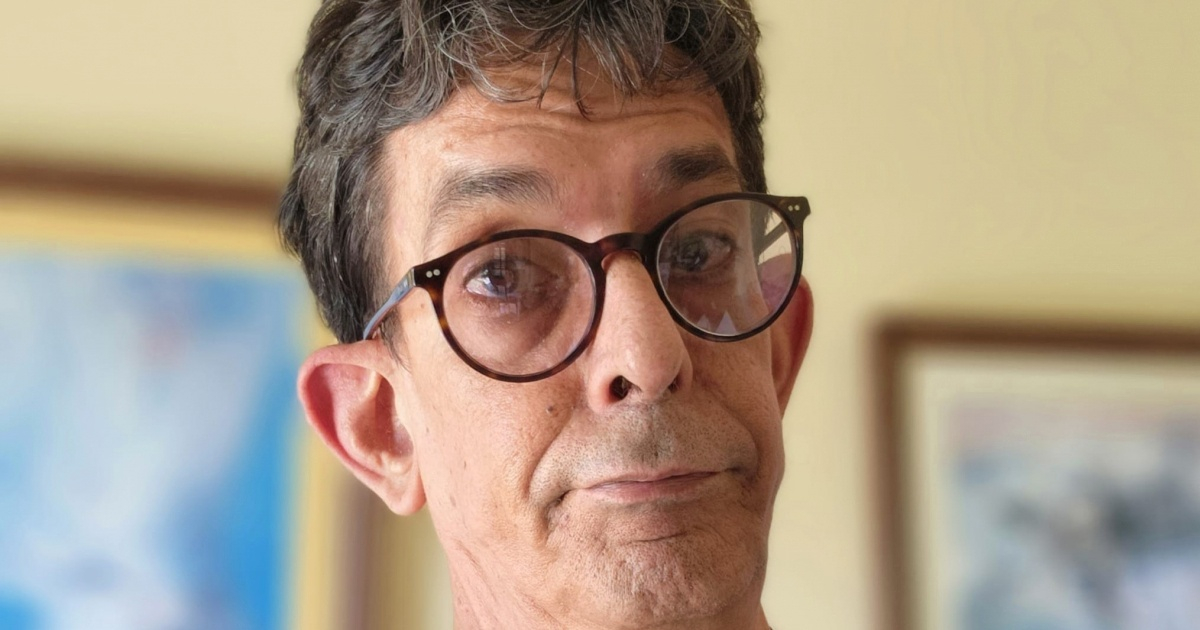
Ulises Toirac, a renowned comedian known for his sharp satire, highlighted this reality in a Facebook post this Thursday. His message underscores the structural violence of living without basic necessities like food, medicine, electricity, and a future.
The tone of his message isn't a loud outcry or political leaflet. It's a sober, yet unforgiving observation prompted by a 12-hour blackout in Havana. However, Toirac's diagnosis extends over six decades of economic mismanagement and social deterioration.
The Long-Standing Conflict and Its Consequences
Toirac acknowledges the impact of U.S.-Cuban tensions but dismisses simplistic or exonerating narratives.
"Yes, many U.S. measures have entrenched the crisis. Call it a blockade, embargo, or simply policies. It's a fact," he asserts.
He further explains that these measures stem from Cuba's defiant political stance towards U.S. demands, including supporting leftist movements, maintaining a single-party system, and providing asylum to fugitives.
He emphasizes that this is not a recent conflict, but a lengthy series of actions and reactions spanning nearly 67 years.
The Inevitable Economic Collapse
Yet, Toirac argues, the issue runs deeper. The Cuban economy didn't collapse; it simply never stood on its own.
"The situation, which was already declining, is now in a nosedive," he compares using aviation terminology.
"The ‘revolutionary’ economy never stood independently, and instead of taking corrective measures, deeper structural deformities were allowed to persist," he declares.
From his perspective, the current state isn't a crisis but confirmation of the system's failure.
"There’s no exit on this path. Instead, we’re headed for greater economic distortion, fewer recovery opportunities, and widespread poverty," he predicts.
Power Outages and Economic Stagnation
The cycle is straightforward: without energy, there’s no production; without production, there’s no income; without income, there's no way to import essential goods.
Each blackout halts more than just electricity; it extinguishes any hope for future development.
Toirac doesn't ignore internal social fractures. While some still support the system, he notes that reasons vary: necessity, hypocrisy, or belief in recovery potential.
He stresses that not the entire population shares this view. "We live in a society of inequalities, where wealth and poverty coexist. This isn’t what a just society looks like," he states.
The Violence of Hopelessness
Towards the end, Toirac delivers one of his most poignant statements, capturing the essence of his critique and the historical moment he’s describing:
"I oppose explicit violence just as much as the violence of poverty and hopelessness."
This poverty transcends material lack. It’s a constant aggression: the inability to envision a different life or escape daily struggles.
His closing question, stark and unembellished, leaves a lasting impact: "What's left? An apocalypse?"
Ulises Toirac’s post doesn’t offer solutions or easy answers. Nor does it intend to. It's a warning, an act of civic honesty, and an unfiltered depiction of a society in decline. Not just due to power outages, but from a lack of direction, justice, and truth.
When a figure like Toirac, who has used humor as a form of resistance, drops irony for seriousness, it's not surrender. It's an acknowledgment that laughter alone is no longer enough.
Understanding the Cuban Economic Crisis
What does Ulises Toirac identify as the primary cause of Cuba’s economic struggles?
Toirac points to the Cuban government's policies and structural economic failures as the main causes, rather than external factors like the U.S. embargo.
How does Ulises Toirac describe the current state of Cuba’s economy?
He describes it as a system that never functioned independently and has now reached a point of structural failure, beyond just a simple crisis.
What impact do blackouts have on the Cuban economy according to Toirac?
Blackouts disrupt more than just electricity; they stifle production, income, and the ability to import necessary goods, thereby halting economic progress.