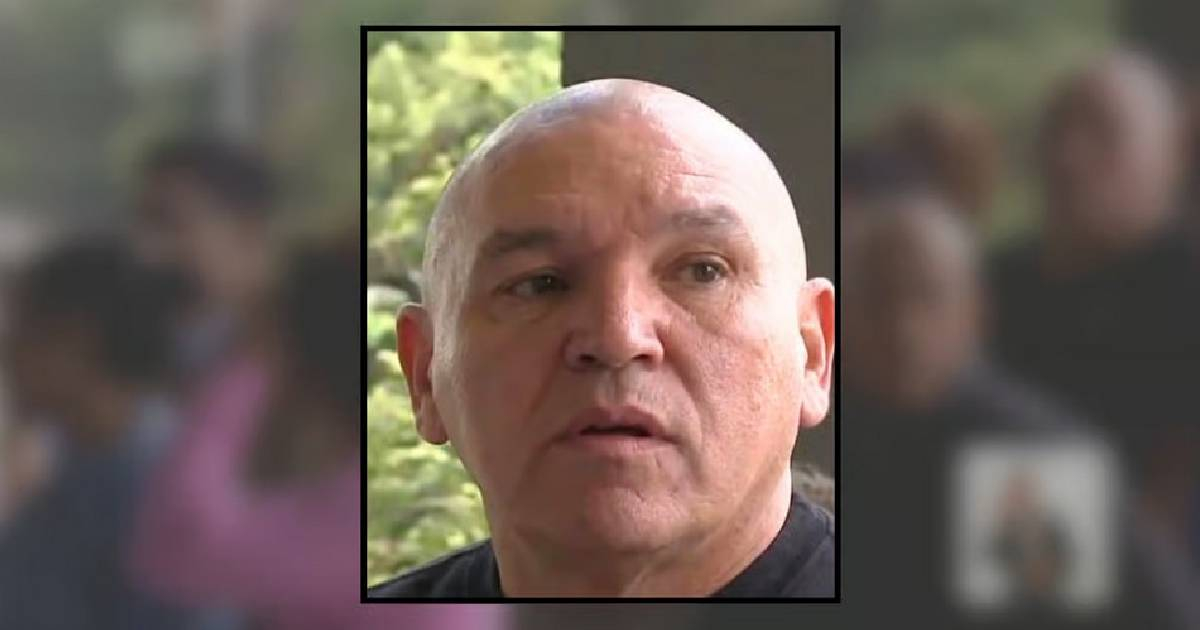
A recent journalistic investigation by the independent media outlet elTOQUE has uncovered the true identity of the Interior Ministry (Minint) officer known as "Juan Carlos," who has been involved in the repression of independent journalists and artists in Cuba. His real name is Rafael Pupo Carnet, residing in Playa municipality, Havana.
The identification came after Pupo Carnet appeared in televised images during a state tribute on January 15, 2026, honoring Cuban military personnel killed in Caracas. These individuals were shot by U.S. forces during the extraction of Venezuelan dictator Nicolás Maduro on January 3.
This event, held at the Ministry of the Revolutionary Armed Forces, inadvertently exposed several State Security agents. Among them was the officer known to victims as "Lieutenant Colonel Juan Carlos" or "Saucedo," who was seen conversing with other repressive figures while awaiting his turn to parade.
Based on these images, elTOQUE confirmed that his true identity is Rafael Pupo Carnet, born in 1967 and living in the Flores neighborhood, Playa municipality. The investigation was supported by two protected sources, leaked identity databases, and verification of familial connections.
The trail led to a family wedding video posted on social media in January 2024, where Pupo Carnet was clearly visible. Five of his victims independently confirmed he was the same agent who interrogated, threatened, or repressed them.
According to testimonies gathered by elTOQUE, Pupo Carnet used various aliases such as Juan Carlos, Darío, Adalberto, Augusto, Saucedo, or Roberto González, adopting different military ranks depending on the situation. Numerous victims describe him as short-tempered and prone to threats, with a documented history of repressive actions dating back to at least 2020.
This officer was particularly active in the 2022 harassment campaign against elTOQUE contributors and other critical journalists and artists. Public accusations against him have been made by figures like Hamlet Lavastida, Carolina Barrero, Yennys Hernández Molina, Rafael González Escalona, Mónica Baró Sánchez, Alejandro Ulloa, Laura Vargas, and Ariel Maceo Téllez, among others.
The state tribute images also helped identify other State Security agents, including one known as "Darío," linked to violent interrogations and death threats, and individuals denounced by activists for their roles in arbitrary detentions, forced disappearances, and intimidation acts against independent civil society.
Organizations like Reporters Without Borders continue to rank Cuba as the worst country in Latin America for press freedom, citing a sustained pattern of arbitrary arrests, surveillance, illegal searches, and harassment of journalists who do not toe the official line.
elTOQUE emphasizes that exposing these agents publicly is vital for victims' right to the truth and the need to document accountability in a context lacking effective justice mechanisms. The state's own cameras have partially dismantled the anonymity that protected these repressors for years, thereby challenging their impunity.
Understanding the Repression of Independent Journalists in Cuba
Who is Rafael Pupo Carnet?
Rafael Pupo Carnet is an officer in the Cuban Interior Ministry, identified as playing a significant role in the repression of independent journalists and artists. He has been operating under various aliases and ranks.
How was Pupo Carnet's identity revealed?
His identity was exposed through images broadcast on state television during a tribute event, which were analyzed by the independent media outlet elTOQUE using leaked databases and eyewitness confirmation.
What impact does this revelation have on press freedom in Cuba?
The exposure of repressive agents like Pupo Carnet highlights the ongoing challenges to press freedom in Cuba and underscores the importance of documenting abuses for accountability and justice, despite the lack of effective mechanisms in the country.