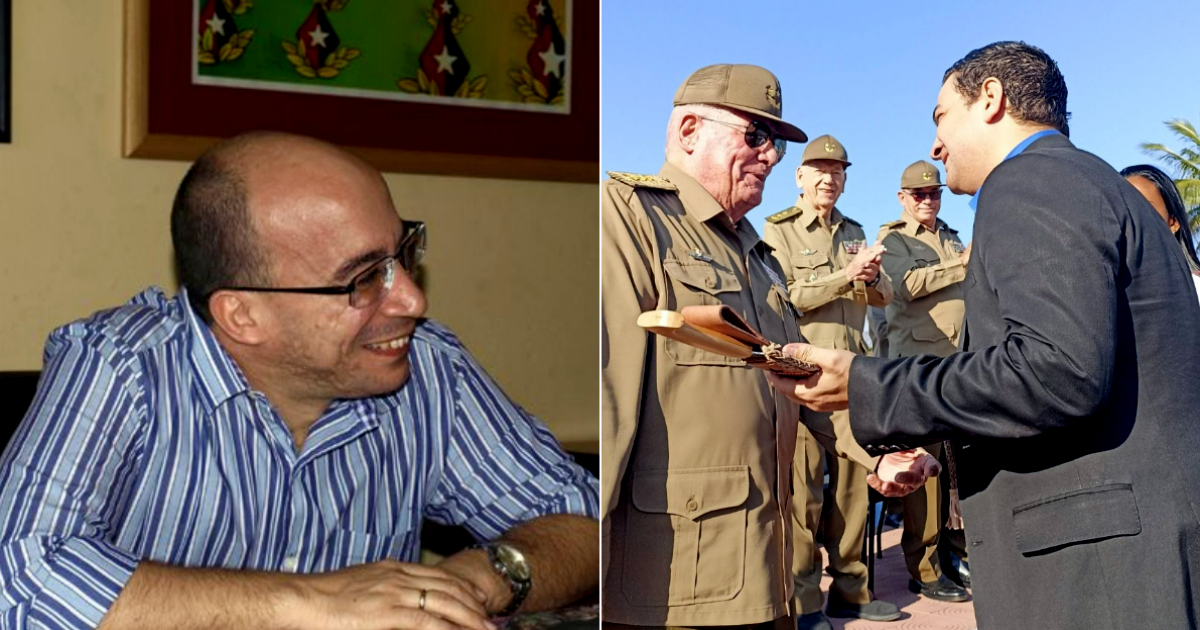
The Media Observatory of Cubadebate, a state-run initiative serving as a propaganda tool for the Cuban regime, recently published an article attempting to portray citizen criticism and digital activism as part of a supposed "violent escalation" orchestrated from abroad.
Masquerading as an academic analysis, the piece titled “From Insult to Violence Against Cubans on Social Platforms” echoed a familiar narrative from the Cuban government: it seeks to criminalize dissent, delegitimize independent public discourse, and confuse social outrage or denunciation with incitement to hate.
While placing blame on civil society for spreading toxic narratives, this state-aligned outlet conveniently ignored any mention of the structural violence perpetrated by the government itself against journalists, artists, activists, and ordinary citizens, both in the digital realm and in everyday life.
Selective Observations: A Convenient Viewpoint
The report, which cited political scientists Kathleen Klaus and Aditi Malik, claimed that social media violence becomes "thinkable, feasible, and unchecked." Yet, the Observatory purposefully overlooked the official hate speech promoted by Communist Party-controlled media outlets like Cubadebate, Granma, and the Cuban Television News System, where opponents and critics are insulted, stigmatized, and criminalized with impunity, sometimes even facing calls for violence.
Ironically, while the text condemned "dehumanization" on social networks, it failed to apply the same scrutiny to the language of the regime, which has long reduced dissidents to derogatory labels such as "worms," "mercenaries," or "digital terrorists."
The Reality of Political Violence: Arrests, Censorship, and Fear
While the Cubadebate Observatory pointed to digital activism from the exile community as a threat, it remained silent on the daily repression occurring within the island. This includes the use of Decree-Law 370 to punish critical posts, arbitrary arrests for expressing opinions, selective internet blackouts during protests, and smear campaigns against journalists and relatives of political prisoners. None of these practices were addressed by Klaus and Malik.
The report claimed to have analyzed 230 "radical" posts between 2021 and 2025, mostly from abroad, yet failed to disclose its methodology, sources, or selection criteria. Its objective was not to understand social dynamics but to reinforce the official narrative that frames freedom of expression as an act of aggression against the State.
From Legitimate Criticism to Criminalizing Dissent
Although the Observatory stated that “criticisms are not violence,” it drew such an ambiguous line that any uncomfortable message could be perceived as incitement to hate. This logic underpins the new Cuban Penal Code and Social Communication Law, tools designed to censor and punish independent opinions.
What the regime truly fears is not "digital violence" but rather citizen organization and the visibility of discontent. Social media has enabled Cubans to document abuses, blackouts, queues, corruption, and repression without relying on the state narrative. This informational autonomy poses a genuine threat to the regime's monopoly over discourse.
Character Assassination and Enforced Silence
State-run Cuban media have systematically discredited activists and journalists, such as Luis Manuel Otero Alcántara, Yunior García Aguilera, and the Ladies in White. Similarly, independent outlets like CiberCuba, El Toque, and 14ymedio have been frequent targets of defamatory campaigns. These actions, funded by public resources, constitute a form of political and psychological violence intended to isolate, humiliate, and neutralize critical voices.
Instead of examining these practices, the Observatory chose to focus on the exile community and social networks, where free criticism remains one of the few bastions of resistance against institutional censorship. Its analysis, once again, proved to be a propaganda maneuver masquerading as an academic study.
The True Escalation: Censorship as Violence
Violence in Cuba does not originate from social media but from state structures that punish free expression. Every time a young person is arrested for a tweet, a mother loses her job for speaking out, or an independent website is blocked by order of the Ministry of Communications, the regime demonstrates that the symbolic and material harm comes from its coercive power, not from citizen activism.
For over six decades, the Cuban government has confused "national security" with the preservation of power. In the name of this security, ideas have been imprisoned, media outlets have been shut down, talents have been exiled, and any form of free thought has been repressed.
The article from the Cubadebate Observatory was not an analysis of digital violence, but rather another attempt to justify censorship and control over public discourse. It portrayed victims of repression as instigators of hate while concealing the structural violence the State enacts against its own people.
In Cuba, the real threat is not angry tweets or memes, but a system that views critical thinking as a danger and freedom of expression as a crime.
Understanding the Cuban Censorship and Repression
What is the role of the Cubadebate Media Observatory?
The Cubadebate Media Observatory serves as a propaganda tool for the Cuban regime, aiming to criminalize dissent and reinforce state narratives by portraying criticism and digital activism as foreign-instigated violence.
How does the Cuban government respond to digital activism?
The Cuban government responds to digital activism with repression, including the use of laws to punish critical posts, arbitrary arrests, internet blackouts during protests, and smear campaigns against journalists and activists.
Why does the Cuban regime fear social media?
The Cuban regime fears social media because it allows citizens to document and share instances of abuse, corruption, and repression, challenging the state's control over information and weakening its monopoly on public discourse.