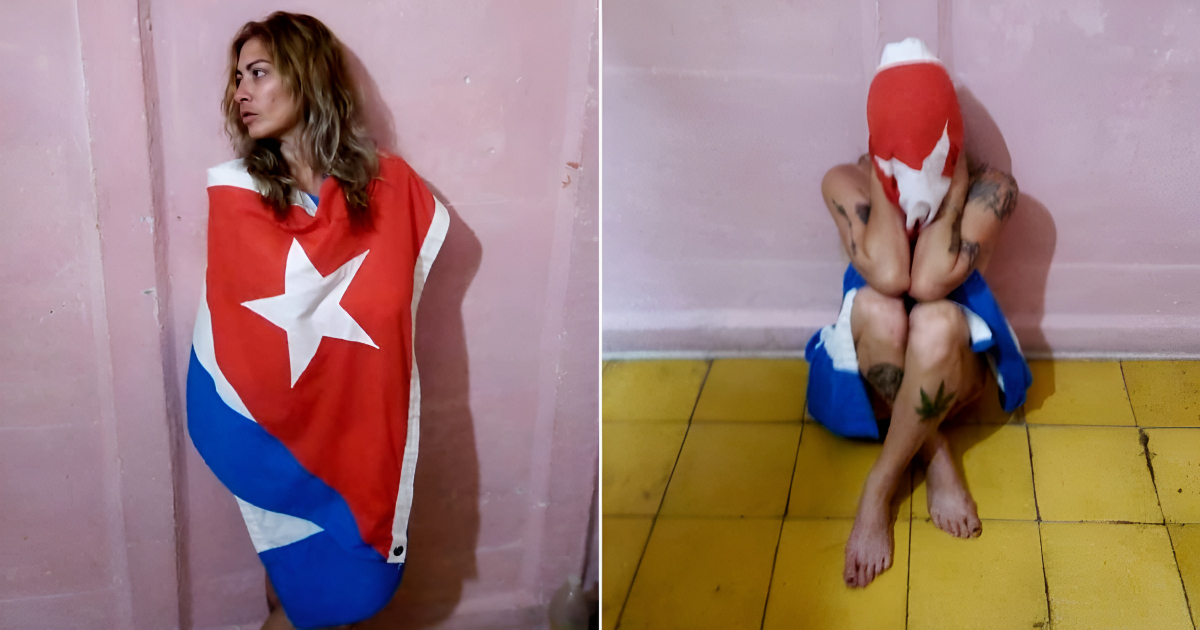
Aniette González García, a prominent Cuban activist and a symbol of the #LaBanderaEsDeTodos citizen initiative, regained her freedom this past Saturday following a three-year prison term for allegedly committing "offenses against national symbols."
The only "crime" attributed to Aniette was being photographed with the Cuban flag. While the regime perceived this act as offensive, many Cubans viewed it as a gesture of love and dignity toward their homeland.
González was detained on March 23, 2023, in Camagüey after sharing images on social media in which she was draped in the national flag. This peaceful act, part of a challenge initiated by the San Isidro Movement to reclaim the flag as a symbol for all Cubans, faced harsh institutional backlash.
Throughout her detention, her family repeatedly reported the arbitrary nature of her imprisonment and the harassment she endured at the Villa María Luisa prison, a hub for State Security operations in Camagüey.
A Symbol of Resistance
In February 2024, a local court sentenced her to three years in prison, a decision upheld despite an appeal in April of that same year. Her daughter, Aniette Ginestá, voiced the family's outrage on social media: "For thinking differently? For a photo? For a flag?" she questioned.
Upon completing her sentence, Aniette walks free again, though freedom in Cuba remains a fragile concept under a regime that punishes dissent. Her ordeal underscores how the communist regime's judicial system criminalizes patriotic expressions that deviate from its narrative.
Fighting for Freedom of Expression
During her incarceration, feminist groups, artists, and activists both inside and outside Cuba demanded her immediate release.
Alas Tensas magazine condemned her sentence as a political reprisal and an effort to stifle public support for artist Luis Manuel Otero Alcántara, who faced similar charges. Both share a common cause: advocating for the right to reinterpret national symbols without fear of retribution.
Meanwhile, the government allowed pro-regime artists like Haila María Mompié and international figures such as Laura Pausini to use the flag in public performances without repercussions. Activists at the time shouted, "They do not own our symbols," which became a rallying cry for resistance.
The Human Cost of Dissent
Aniette is more than an activist; she is a mother, daughter, and working woman. Her imprisonment was not only a violation of her human rights but also a deep emotional blow to her family.
Her daughter, a steadfast voice against the injustice, was forced to grow up in a nation where freedom of expression is punishable by imprisonment.
While Aniette's release does not erase the three years of confinement, humiliation, or fear, it renews hope for those who continue to strive for a Cuba where denouncing injustices with the flag is a source of pride, not punishment.
Reclaiming National Symbols
Aniette González's case highlights the painful reality of how the Cuban regime has hijacked national symbols to serve as tools of ideological control. The flag, anthem, and coat of arms have become weapons of exclusion for those who dissent from the official narrative.
Yet, the image of Aniette that authorities sought to suppress through a sentence has proliferated online as a symbol of resistance. Each repost, each hashtag with her name, serves as a reminder that the Cuban flag does not belong to the Communist Party or its leaders; it belongs to the people.
Today, as Aniette González steps out of prison, she embraces the flag once more. But this time, she does it not just for herself, but for all Cubans who dream of a country where thinking differently is not a crime, and justice is not clad in olive green.
Understanding the Impact of Activism in Cuba
What was Aniette González's alleged crime?
Aniette González's alleged crime was posing for a photograph with the Cuban flag, an act that the regime interpreted as an offense against national symbols.
How did the international community respond to her imprisonment?
Feminist organizations, artists, and activists both within and outside of Cuba called for her immediate release, viewing her imprisonment as a political reprisal.
What does the case of Aniette González signify for Cubans?
Her case symbolizes the struggle for freedom of expression in Cuba, highlighting how the regime uses national symbols as tools of ideological control against dissenters.