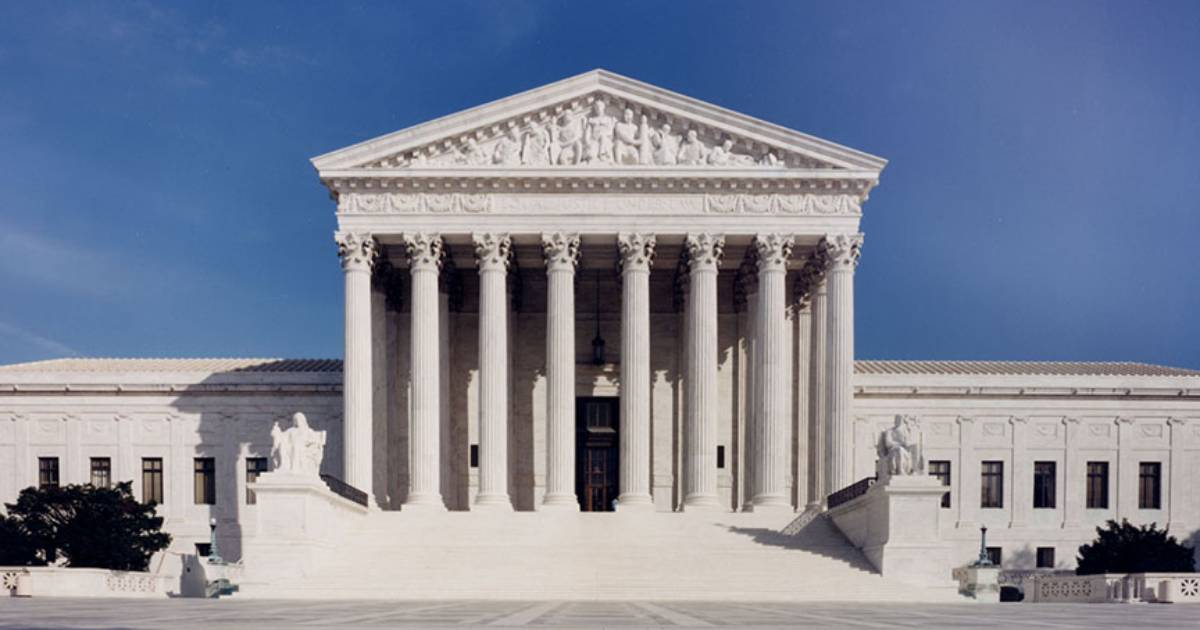
The United States Supreme Court is gearing up to examine the principle of birthright citizenship. This development follows an unprecedented legal challenge spearheaded by Donald Trump, who seeks to reinterpret the 14th Amendment to restrict the citizenship right, which since 1868, has guaranteed nationality to every child born on U.S. soil, regardless of their parents' immigration status.
The Supreme Court's decision to review the case on its merits has raised alarms among constitutional lawyers. Speaking to Telemundo Noticias, attorney Rafael Peñalver warned, "The mere fact that the Supreme Court has agreed to review this case suggests, in my opinion, the direction it is heading, and that direction is to limit birthright citizenship," he stated.
Trump's executive order demands that at least one parent must be a U.S. citizen or legal resident for a child to acquire American nationality. This reinterpretation starkly contrasts with the 14th Amendment, which has been upheld by U.S. jurisprudence for over 150 years. One landmark case, Wong Kim Ark (1898), saw the Supreme Court affirm that the immigration status of parents does not affect a child's right to citizenship when born in the country.
Trump's Campaign Against Birthright Citizenship
The Supreme Court's decision places the topic back into the national spotlight, at a time when Trump has consistently vowed to end birthright citizenship. Since 2024, Trump has derided birthright citizenship as a "ridiculous right" and accused immigrants of "taking advantage" of the U.S. He has repeatedly labeled so-called "anchor babies" as a national security issue, intending to abolish this right via executive order, although experts agree the Constitution cannot be rewritten from the White House.
In his second term as president, Trump signed an executive order prohibiting recognition of citizenship for children born to undocumented parents or those without permanent immigration status. Federal courts swiftly blocked its implementation, declaring it "blatantly unconstitutional." The government appealed, arguing judges lack authority to issue nationwide injunctions against the decree. Trump even urged the Supreme Court to permit enforcement in states that did not challenge his order.
The Human Impact: Fear and Uncertainty for Mixed-Status Families
For civil rights lawyers and advocates, the Supreme Court's review is not merely a legal debate, but an immediate threat to thousands of mixed-status families. In a Telemundo Noticias report, a concerned resident lamented, "They shouldn't take away birthright citizenship from anyone; it's like stripping them of a right they already have."
Trump's order would profoundly impact families where one or both parents lack legal status, even if U.S.-born children have grown up with rights and opportunities that are now at risk of vanishing. Without citizenship, these children would be unable to obtain passports, Social Security, or documents verifying their legal status, casting them into a limbo that could affect their health, education, and future employment.
Lawyers warn that such a change could lead to family deportations, denial of basic benefits, and extreme vulnerability for those who have always considered themselves Americans.
A Decision Expected by June
Although the Supreme Court has yet to schedule oral arguments, the timeline suggests a final ruling could emerge by June of next year. As usual, it will be during the final stretch of the judicial term when the nation will learn if the most powerful court in the U.S. will uphold the principle of ius soli or endorse the reinterpretation Trump has pursued for years.
Legal scholars urge scrutiny not only of the legal arguments but also the ideological composition of the court. Meanwhile, uncertainty continues to grow.
FAQs on Supreme Court Review of Birthright Citizenship
What is the 14th Amendment's stance on birthright citizenship?
The 14th Amendment guarantees citizenship to all persons born or naturalized in the United States, regardless of the parents' immigration status.
How did the landmark case Wong Kim Ark influence birthright citizenship?
In the 1898 Wong Kim Ark case, the Supreme Court ruled that a child born in the U.S. to foreign parents is a U.S. citizen, affirming the 14th Amendment's interpretation.
What could be the impact if the Supreme Court limits birthright citizenship?
Limiting birthright citizenship could result in family deportations, loss of basic benefits, and increased vulnerability for affected individuals who identify as Americans.