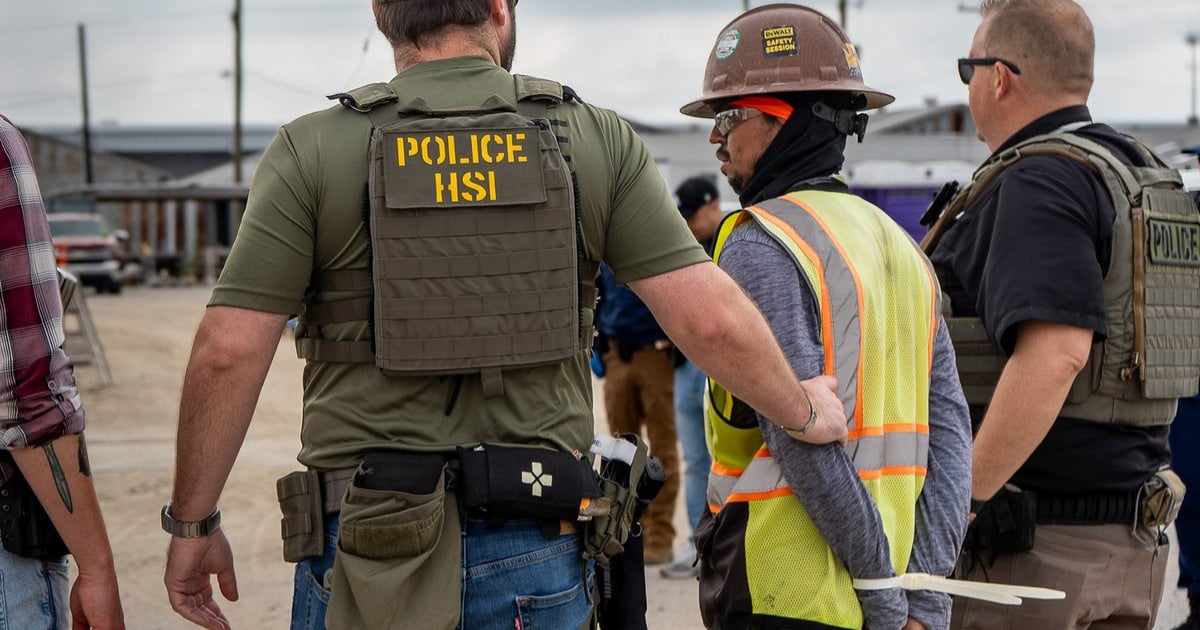
The aggressive immigration measures implemented by President Donald Trump are leading to widespread layoffs among foreign workers and increasing tensions within the U.S. labor market. Experts in economics caution that the mass deportations, termination of humanitarian programs, and new restrictions on work visas could hinder economic growth and exacerbate labor shortages in critical industries, according to the Associated Press.
One of those impacted is a 48-year-old Nicaraguan woman, who used to clean schools in Florida, earning $13 per hour. In August, she lost her job after the government dismantled the humanitarian parole program initiated by the Biden administration, which had provided temporary work permits to migrants from Cuba, Haiti, Venezuela, and Nicaragua. "I'm desperate. I don't have money even to buy food. I'm left with five dollars in my account and no job," she told the media, requesting anonymity due to fears of detention or deportation.
The Economic Impact of Immigration Crackdowns
The stricter immigration measures are being enforced at a time when hiring was already slowing down, partly due to uncertainties surrounding Trump’s trade policies. Economists highlight that the forced exit of thousands of foreign workers is adversely affecting sectors such as agriculture, construction, elderly care, and domestic services.
"Immigrants are beneficial for the economy," stated Lee Branstetter, an economist at Carnegie Mellon University. "The migration influx in recent years helped mitigate the severity of inflation." According to research by the Brookings Institution and the American Enterprise Institute, the loss of foreign labor could result in zero or even negative job growth in the U.S. in the coming years.
Effects on Employment and Economy
Job creation has plummeted from an average of 400,000 jobs per month during the post-pandemic boom (2021-2023) to just 29,000 between June and August 2025. The Congressional Budget Office has downgraded its annual growth forecast from 1.9% to 1.4%, citing the repercussions of the current immigration and trade policies.
In Virginia, the nonprofit Goodwin Living—which provides housing and healthcare services to seniors—was forced to lay off four Haitian employees when their permits were revoked. "It was a very difficult day. They were exemplary workers," lamented CEO Rob Liebreich. Of their 1,500 staff members, 60% are immigrants. "We're facing serious challenges in replacing them. We need these people, all those hands," Liebreich emphasized.
Legislation and Its Consequences
The new immigration legislation, termed the "One Big Beautiful Bill Act" by Republicans, allocates $150 billion to bolster deportations and border security. The law includes $46.5 billion for hiring 10,000 Immigration and Customs Enforcement (ICE) agents and $45 billion to expand detention centers. Since its passage on July 4, operations have intensified.
In September, immigration agents raided a Hyundai battery plant in Georgia, detaining 300 South Korean workers, some of whom were shackled. The incident angered the South Korean government and called into question Trump's strategy of attracting foreign investment. "These incidents send the wrong message to trade partners and deter investments," warned South Korean President Lee Jae Myung.
The agricultural sector, a cornerstone of Republican voter support, is also suffering. "ICE is targeting workers who are just here to earn a living," criticized John Boyd Jr., a Virginia farmer and president of the National Black Farmers Association. Boyd also questioned statements made by Agriculture Secretary Brooke Rollins, who suggested that Medicaid recipients work in agriculture. "No city person is going to bend over for 10 hours under the sun at 104 degrees. It's unrealistic," he stated.
The Department of Labor, in an October 2 statement, acknowledged that labor shortages resulting from immigration restrictions are causing "significant disruptions in production costs and threats to the nation's food stability."
Economist Jed Kolko from the Peterson Institute for International Economics warns that the effects will be long-lasting: "Immigrants have contributed innovation, productivity, and patents. Closing that door means the U.S. loses part of its competitive edge." With an aging workforce and more job vacancies than available workers, analysts fear the country could face another cycle of economic slowdown, inflation, and rising prices.
Key Questions About U.S. Immigration Policies
How do Trump's immigration policies affect the U.S. economy?
The policies may hinder economic growth and worsen labor shortages in key sectors, leading to potential negative job growth and increased production costs.
What sectors are most affected by the immigration crackdown?
Agriculture, construction, elder care, and domestic services are among the sectors most impacted by the loss of foreign labor.
What is the "One Big Beautiful Bill Act"?
It is a Republican-backed legislation that allocates $150 billion to strengthen deportation efforts and border security, including hiring new ICE agents and expanding detention centers.