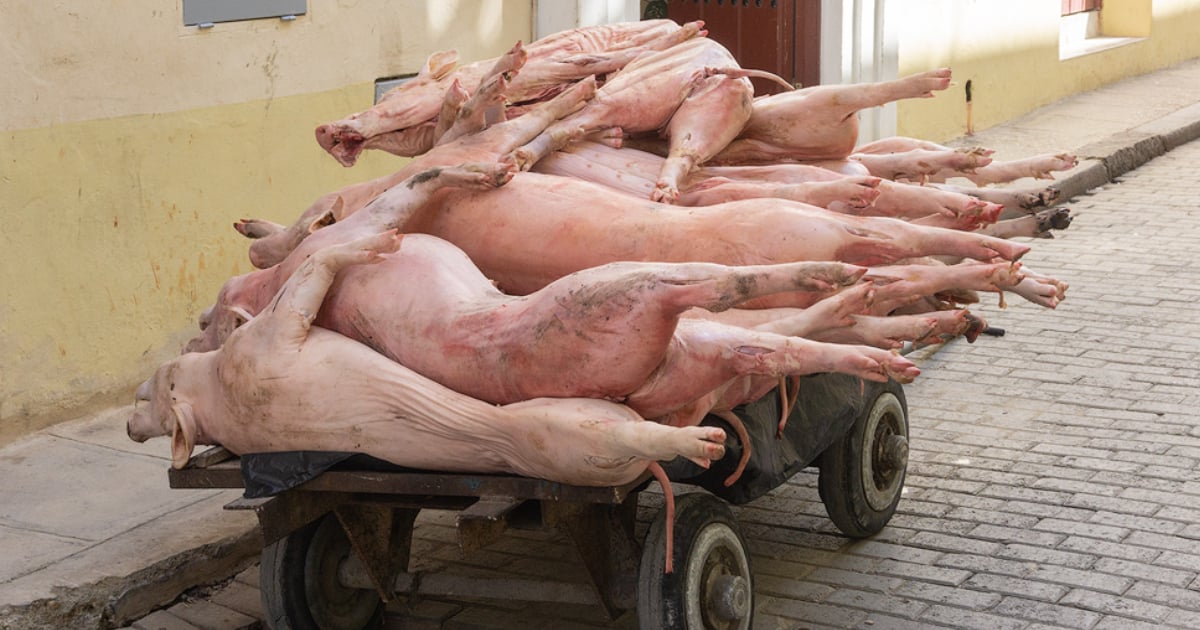
In the municipality of Jobabo, located in the province of Las Tunas, more than 440 pounds of meat products turned unusable at the Processing Center of the Commerce and Gastronomy Company. Reported by the local station Radio Cabaniguán, this incident combines technical failures, administrative oversight, and prolonged power outages lasting over 20 hours that plague the area.
The center's management explained that the spoilage began with a malfunction in one of the refrigeration units, worsened by the sporadic operation of the generator, which often lacked available fuel. Carlos Labrada Rodríguez, the unit director, acknowledged that beyond the electrical shortages, there was human negligence in monitoring: "We failed to notice that the fridge wasn't cooling from the middle to the back."
Spoiled Food Items
The discarded items included 94 pounds of croquette mix, nearly 159 pounds of ground meat, 46 pounds of boneless meat, 57 pounds of mortadella, along with over 29 pounds of cheese, 22 pounds of shrimp, and 34 pounds of beef. The beef was already compromised, having been part of a police seizure with preservation issues. Although some items from the front of the fridge were salvaged and used immediately or moved to other storage, those at the back were already decomposing when discovered.
Inspectors from Health and Hygiene certified these products as unfit for consumption, ordering their incineration.
Community Reaction and Criticism
Staff at the company admitted that similar incidents have happened before. Labrada Rodríguez recognized the underlying issue: the lack of regular checks to prevent such loss of basic foodstuffs, especially critical in a country where the population struggles to access protein. Residents of Jobabo, upon learning about the situation, remarked that these products, instead of being burned, could have been donated to vulnerable families or used for animal feed, thus avoiding such a painful waste in the current climate.
According to the director, some people, upon hearing of the spoilage, came to buy meat for their animals. However, hygiene inspectors noted that since the decomposition level wasn't too high, there was a risk that people might consume it. "And then they decided to take it over to the stream, where it was incinerated," he explained.
Impact on Workers and the Community
The repercussions are not just material. The financial loss impacts the company’s financial balance, with direct consequences for the employees' pay, who rely on the firm's performance. The harshest blow, however, strikes the public, witnessing essential foods vanish while market prices soar and shortages worsen.
A Structural Problem
Statements from those in charge make it clear that, although they now claim to have enough fuel to power the generator every two hours, this measure is too little, too late. The faulty fridge, intermittent diesel supply, and lack of oversight expose a chain of negligence that always ends at the same place: the empty tables of the people.
The unit director admitted, "It's painful that these products have been lost, especially given the current situation people are facing." Painful, but more importantly, unacceptable in a country where each pound of meat or sausage is a luxury beyond reach for most.
Understanding the Food Spoilage Crisis in Jobabo
What caused the spoilage of meat products in Jobabo?
The spoilage was caused by a combination of technical failures in the refrigeration system, administrative oversight, and prolonged power outages that affected the area's electricity supply.
How did the community react to the loss of food products?
The community expressed criticism, suggesting that the spoiled products could have been donated to families in need or used for animal feed, rather than being incinerated, to prevent unnecessary waste.
What are the broader implications of this incident for the local population?
The incident underscores a systemic issue, highlighting the vulnerability of the local food supply chain and the direct impact on the population, who face rising prices and worsening shortages of essential foods.