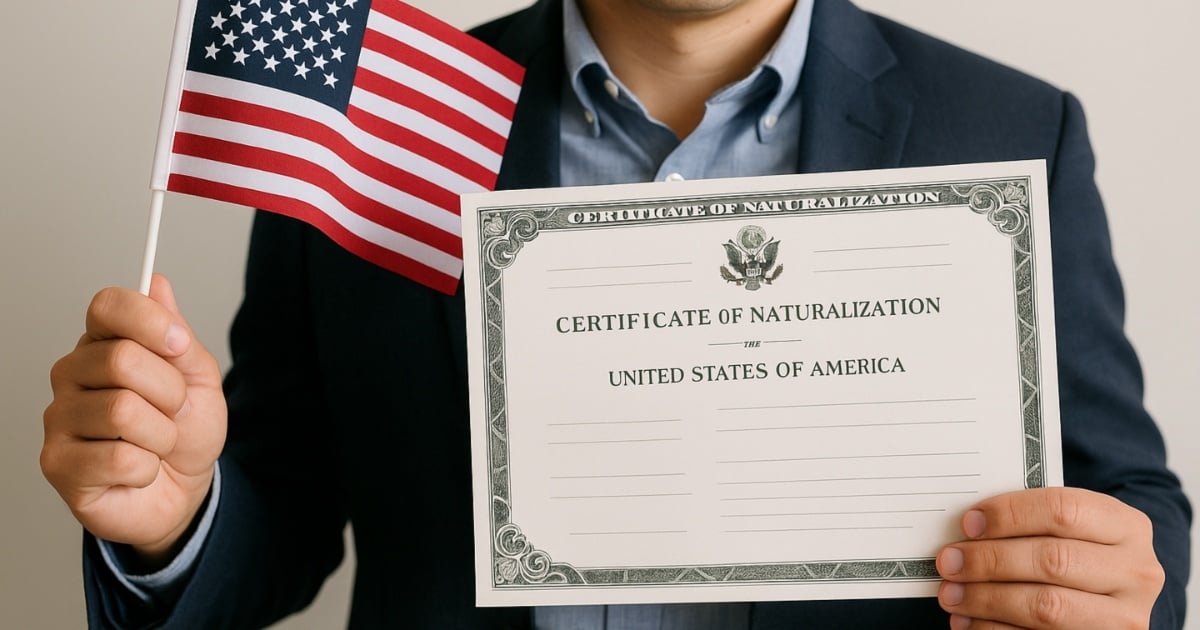
In 2025, the United States will implement a revised citizenship test, expanding the possible questions from 100 to 128, effectively reintroducing the format from 2020. This update aims to enhance the civic and historical knowledge required for naturalization applicants. According to a press release by the U.S. Citizenship and Immigration Services (USCIS), the revamped format seeks to more comprehensively assess an applicant's understanding of the nation's history, government, and core values.
Changes in the Citizenship Test Format
The test will remain an oral examination, consisting of 20 randomly selected questions, of which applicants must correctly answer at least 12. Previously, candidates had to answer 6 out of 10 questions correctly. The evaluation may conclude once an applicant answers 12 questions correctly or fails 9.
Expanding Knowledge: New Questions Introduced
What are the new questions included in the 2025 study guide? After reviewing the updated document against the 2008 version, 28 questions were identified that were not part of the previous exam.
Here are the 28 new questions for the 2025 citizenship test:
- What is the form of government of the United States?
- What founding document declared the American colonies free from Britain?
- Name two important ideas from the Declaration of Independence and the U.S. Constitution.
- The words “Life, Liberty, and the pursuit of Happiness” are in which founding document?
- Many documents influenced the U.S. Constitution. Name one.
- Why are there three branches of government?
- Why do U.S. Representatives serve shorter terms than Senators?
- Why does each state have two Senators?
- Who do members of the House of Representatives represent?
- Who elects the members of the House of Representatives?
- Which amendment states that the U.S. President can only serve two terms?
- Name one power of the President.
- How many Supreme Court justices are needed to decide a case?
- Why do Supreme Court justices serve for life?
- What is the 10th Amendment?
- Who can vote in federal elections, run for federal office, and serve on a jury in the United States?
- What are three rights of everyone living in the United States?
- What promises do new citizens make in the Oath of Allegiance?
- How can people become U.S. citizens?
- What is one way that Americans can serve their country?
- Why is it important to pay federal taxes?
- It is important for all men aged 18-25 to register with the Selective Service. Name one reason why.
- What war did the Americans fight to gain independence from Britain?
- Name one important event during the American Revolution.
- Why did the Americans declare their independence from Britain?
- Why did the United States enter World War I?
- Why did the United States enter World War II?
- Who was the main rival of the United States during the Cold War?
Reinforcing Civic Education
These new questions indicate an intention to strengthen civic education with a broader and more demanding approach, covering foundational origins, 20th-century international conflicts, legal aspects, and civic responsibilities. USCIS also announced, in an official statement published in the Federal Register, that implementing this test is part of an effort to restore the integrity of the naturalization process and meet Congressional intentions.
Eligibility and Integrity in Naturalization
The agency emphasized that naturalization is a privilege, accessible only to those who meet all eligibility requirements, including proficiency in English, knowledge of the governmental system, and an exemplary moral character. USCIS also reminded that illegal voting, registering as a voter without rights, or making false citizenship claims will automatically disqualify applicants.
Moreover, the moral character assessment will no longer be limited to the absence of criminal offenses but will include a more thorough review of the applicant's social behavior and community contributions. The agency plans to resume neighborhood field investigations to verify that applicants meet legal requirements and are worthy of citizenship. Additional measures to strengthen this process will be announced in the coming months.
Frequently Asked Questions About the 2025 Citizenship Test
What changes are being made to the U.S. citizenship test in 2025?
The test will see an increase in potential questions from 100 to 128, with a focus on a broader range of civic and historical topics. Applicants will answer 20 questions, needing 12 correct responses to pass.
Why are new questions being added to the citizenship test?
The addition of new questions aims to enhance civic education, ensuring applicants have a comprehensive understanding of U.S. history, government, and values.
How will moral character be evaluated in the new citizenship process?
Moral character evaluations will include a broader review of social behavior and community contributions, beyond just the absence of criminal activity.