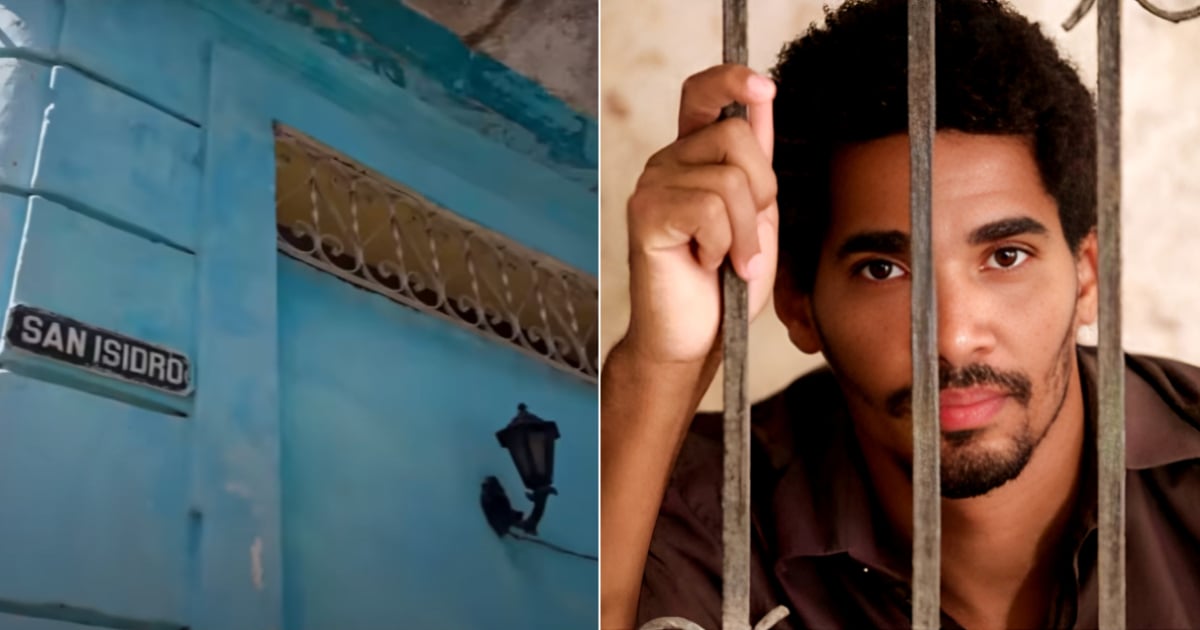
From the confines of a high-security prison in Guanajay, Artemisa, Cuban artist and activist Luis Manuel Otero Alcántara recently caught a glimpse of the music video "Ven, dame un abrazo" by Los Van Van on the television program Los Lucas. The video, which premiered on August 2, featured a surprising location familiar to Otero Alcántara: the San Isidro neighborhood, specifically his own street and the vicinity of the Movement San Isidro (MSI) headquarters. This collective, which he founded in 2018, has become a cultural and political symbol of resistance against Cuba's authoritarian regime.
During a phone call with activist Yanelys Núñez Leyva, Otero Alcántara shared that Alejandro Varela, the director of the clip, mentioned in an interview that filming in San Isidro was a challenging endeavor. Otero Alcántara was not surprised by this: "Everything that happens in San Isidro is under intense surveillance, as if they want to erase the history that was made there," he remarked.
In the video, he recognized several of his neighbors who have long stood by him through artistic and community initiatives, shielding him from arrests, providing meals, and participating in performances and activities against censorship. This strong connection between Otero Alcántara and his community was pivotal in establishing the MSI—a project that, through visual arts, music, and poetry, openly opposed Decree 349 and state repression. This defiance has been met with severe punishment, including prison sentences for both Otero Alcántara and rapper Maykel “Osorbo” Castillo, a two-time Latin Grammy winner for the song "Patria y Vida."
Impact and Repercussions of the San Isidro Movement
MSI's activities—ranging from hunger strikes to exhibitions, debates, and concerts—were met with police operations, internet blackouts, and arrests. The most notable incident occurred in November 2020 when the movement's headquarters was violently raided, sparking national protests and international condemnation.
From his prison cell, Otero Alcántara expressed gratitude to Varela for showcasing San Isidro and its people, and he sent a message to Los Van Van, whose video captured the essence of the neighborhood that has profoundly influenced his life and work. "San Isidro is not just a place; it's a living memory of resistance," declared the young artist, who has been imprisoned since the mass protests on July 11, 2021, known as 11J.
Prison Sentences and Conditions for MSI Leaders
On July 11, 2021, amid the anti-government protests that swept across Cuba, Otero Alcántara was detained in Havana as he attempted to join the demonstrations. Months earlier, in May, authorities had also arrested rapper and MSI member Maykel “Osorbo” Castillo during a crackdown on independent artists and activists.
In June 2022, Otero Alcántara was sentenced to five years in prison for "insult to patriotic symbols," "disrespect," and "public disorder." In the same trial, Osorbo received a nine-year sentence for "disrespect," "assault," and "public disorder."
Both have reported inhumane conditions: prolonged isolation, constant threats, untreated illnesses, beatings, physical abuse, and psychological torture. They have also resorted to multiple hunger strikes in protest, which has severely impacted their health. Organizations like Amnesty International and Human Rights Watch regard them as prisoners of conscience and call for their immediate release.
Frequently Asked Questions about San Isidro Movement and Imprisoned Activists
What is the significance of the San Isidro neighborhood in Cuba?
San Isidro is a neighborhood in Havana that has become a symbol of cultural and political resistance against the Cuban regime, largely due to the efforts of the Movement San Isidro (MSI) founded by Luis Manuel Otero Alcántara.
Why were Luis Manuel Otero Alcántara and Maykel “Osorbo” Castillo imprisoned?
They were imprisoned for charges including "insult to patriotic symbols," "disrespect," "assault," and "public disorder," stemming from their activism and opposition to state repression in Cuba.
What are the conditions reported by the imprisoned activists?
The activists have reported facing inhumane conditions, including prolonged isolation, threats, lack of medical care, physical violence, and psychological torture.