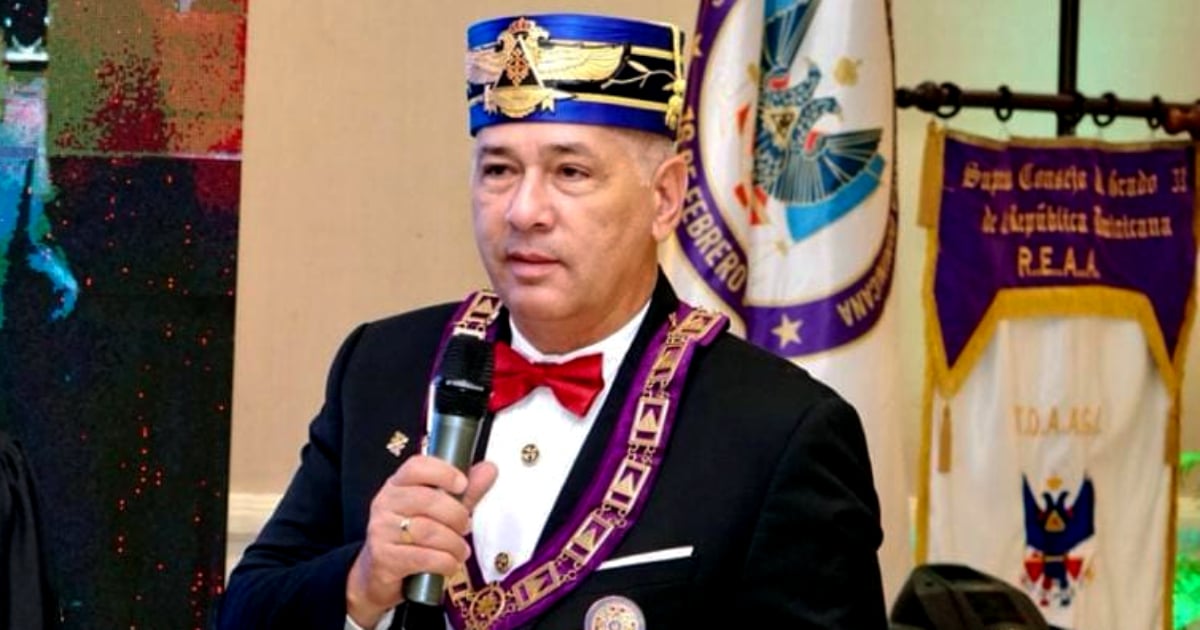
The Cuban State Security agency has launched an aggressive media and legal campaign against José Ramón Viñas Alonso, a prominent Masonic leader and a thorn in the side of the regime since his public denunciation of the July 11th protests in 2021. Recently, an unsigned and anonymous document has been circulating on social media and pro-government platforms like Razones de Cuba, branding Viñas as a "false leader" entangled in alleged Masonic corruption schemes.
The document accuses Viñas of embezzling funds intended for the National Masonic Asylum, associating with "irregular" foreign lodges, and politicizing the fraternity. To his supporters, these allegations are seen as a smear campaign orchestrated by the political police. As the Sovereign Grand Commander of the Supreme Council of the 33rd Degree, Viñas has openly opposed state interference in Freemasonry.
In 2021, he signed a letter on behalf of the brotherhood holding Miguel Díaz-Canel directly accountable for inciting violence against the people. Since then, Viñas has faced interrogations, surveillance, and irregular internal proceedings. His outspoken criticism extended beyond condemning the July 11th repression to denouncing Russia's invasion of Ukraine, which independent media sources suggest made him a prime target for State Security.
Judicial Proceedings and Repression
In May this year, the Ministry of Justice removed Viñas from his position, appointing Lázaro Cuesta Valdés, a veteran mason with close ties to the regime, as his replacement. This move was accompanied by threats to freeze the fraternity's funds if the decision was not accepted. Viñas was summoned and interrogated once again by State Security in early August, now facing charges of "currency trafficking."
The charges stem from two internal exchanges of $100 among masons to cover asylum expenses, conducted at a rate of 370 pesos instead of the official 120. His fellow masons view these charges as a pretext to oust him from leadership and criminalize his actions. "We call for international solidarity against the blatant assassination being committed against Masonry in Cuba," declared writer Ángel Santiesteban-Prats, also a mason and regime critic, who reported being surrounded by patrols to prevent him from supporting Viñas during one of his summonses.
The Struggle for Masonic Autonomy
Cuban Freemasonry is experiencing an unprecedented crisis characterized by dismissals, expulsions, and the imposition of government-aligned leaders. Despite threats, many members remain steadfast in defending the institution's autonomy, even meeting on the street in front of the Carlos Manuel de Céspedes statue under police watch. For them, the campaign against Viñas Alonso is not an isolated case but a clear warning: any independent organization challenging authority risks infiltration, division, and discredit.
"If the government wants to dominate us, we won't allow it," warned elected Grand Master Juan Alberto Kessell Linares. Amidst this struggle, Viñas has chosen public silence, adhering to the belief that fraternity matters should be resolved within the order. Yet, the offensive against him underscores that in Cuba, not even Freemasonry is safe from political control.
Understanding the Campaign Against Masonic Leadership in Cuba
Why is José Ramón Viñas Alonso being targeted by the Cuban government?
José Ramón Viñas Alonso has been vocal against state interference in Freemasonry and has criticized government actions, such as the repression of the July 11th protests and Russia's invasion of Ukraine. These positions have made him a target for the Cuban regime.
What are the accusations against Viñas Alonso?
Viñas Alonso is accused of misappropriating funds intended for the National Masonic Asylum, associating with irregular foreign lodges, and politicizing the fraternity. He also faces charges of currency trafficking related to internal financial transactions.
How has the Masonic community in Cuba responded to these events?
The Masonic community in Cuba has been resilient, defending the autonomy of their institution despite government threats. Many members continue to meet publicly and resist government attempts to impose aligned leaders.