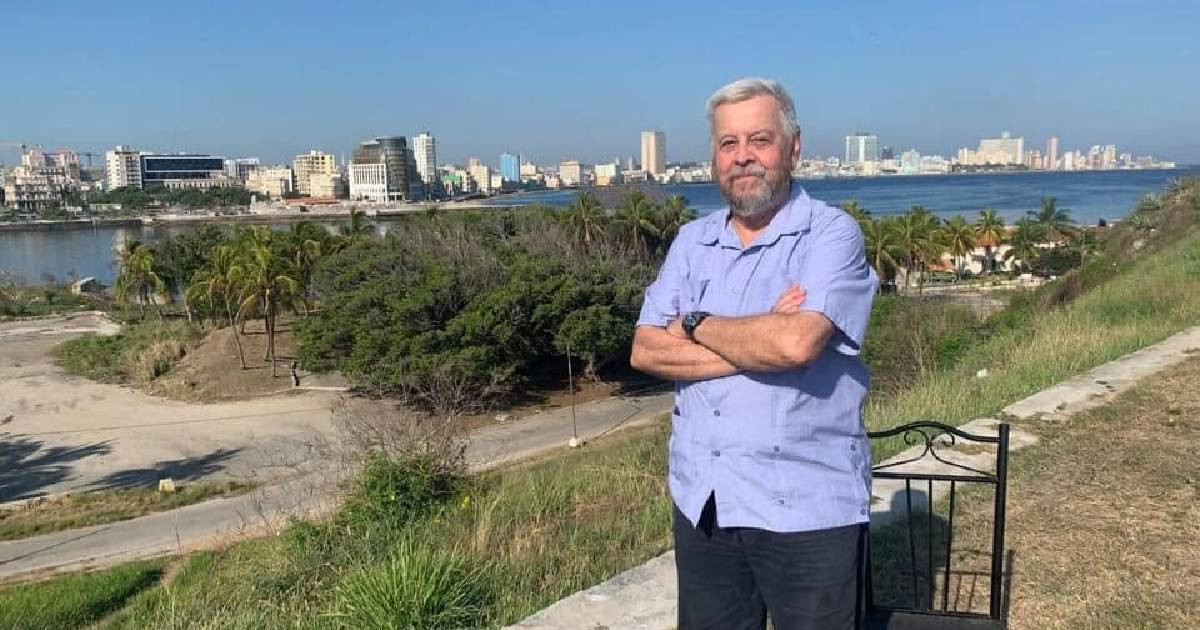
On Sunday, former Cuban ambassador Carlos Alzugaray took to Facebook to clarify his comments made to the Spanish newspaper El País, attributing what he considers missteps in his statements to fatigue, a cold, and being rushed during the contentious interview.
The interview, conducted in Mexico City and published on Friday, was headlined by the Spanish daily with Alzugaray's remark about the future of leader Miguel Díaz-Canel following Raúl Castro's death: "After Raúl dies, Díaz-Canel won't last long."
This statement was widely interpreted as a prediction of the Cuban leader's downfall. Alzugaray dismissed this interpretation, accusing El País's editor of taking his words out of context.
The former diplomat clarified that his comments were not about Díaz-Canel's tenure, but rather his ability to prevent potential political reform after Castro's passing.
To support his clarification, he provided a transcript of his exchange with journalist Juan Carlos Espinosa. When asked about the possibility of political reform in Cuba, Alzugaray responded that such change was unlikely while Castro lived and that Díaz-Canel would not be able to stop it after his death.
Nevertheless, Alzugaray admitted to making mistakes during the conversation. "In some instances, I said things I absolutely shouldn't have, even if I thought them, and in others, I chose my words poorly," he confessed.
He further explained that "fatigue, a cold, and being rushed played tricks on me," though he acknowledged that these factors do not absolve him of responsibility.
The ex-ambassador claimed he had requested to review the interview before its publication, fearing errors in his answers, but the journalist informed him the editor did not allow it. After seeing the headline, Alzugaray accused the newspaper's management of deliberately manipulating his words.
"After seeing the headline and the manipulated use of that phrase, I have no choice but to think that the newspaper's management did this on purpose," he asserted.
The original interview also included revelations about an alleged attempt by President Donald Trump's administration to negotiate with Raúl Castro's grandson, Raúl Guillermo Rodríguez Castro, known as "El Cangrejo," bypassing official Cuban government channels.
According to Alzugaray, the proposal involved the Castro family relocating to Moscow with their assets and Díaz-Canel stepping down. The initiative reportedly faltered because, as he put it, "no one in the Castro family is going to hand over the country."
Spanish communist activist Ana Hurtado Martínez labeled Alzugaray a "traitor" on Facebook, while other analysts questioned the boundaries of the reformist vision he presented.
One of the most significant claims from the interview, which Alzugaray maintained in his clarification, was his assessment of the power struggles within Cuba: "I don't see any group with a genuinely democratic vocation."
Insights on Carlos Alzugaray's Controversial Interview
What did Carlos Alzugaray attribute his controversial comments to?
Carlos Alzugaray attributed his controversial comments to fatigue, a cold, and being rushed during the interview.
How did Alzugaray respond to the interpretation of his comments?
He rejected the interpretation that his comments predicted Díaz-Canel's downfall, accusing the newspaper of taking his words out of context.
What was the alleged proposal involving the Castro family?
The alleged proposal involved the Castro family moving to Moscow with their assets and Díaz-Canel resigning, which reportedly failed.