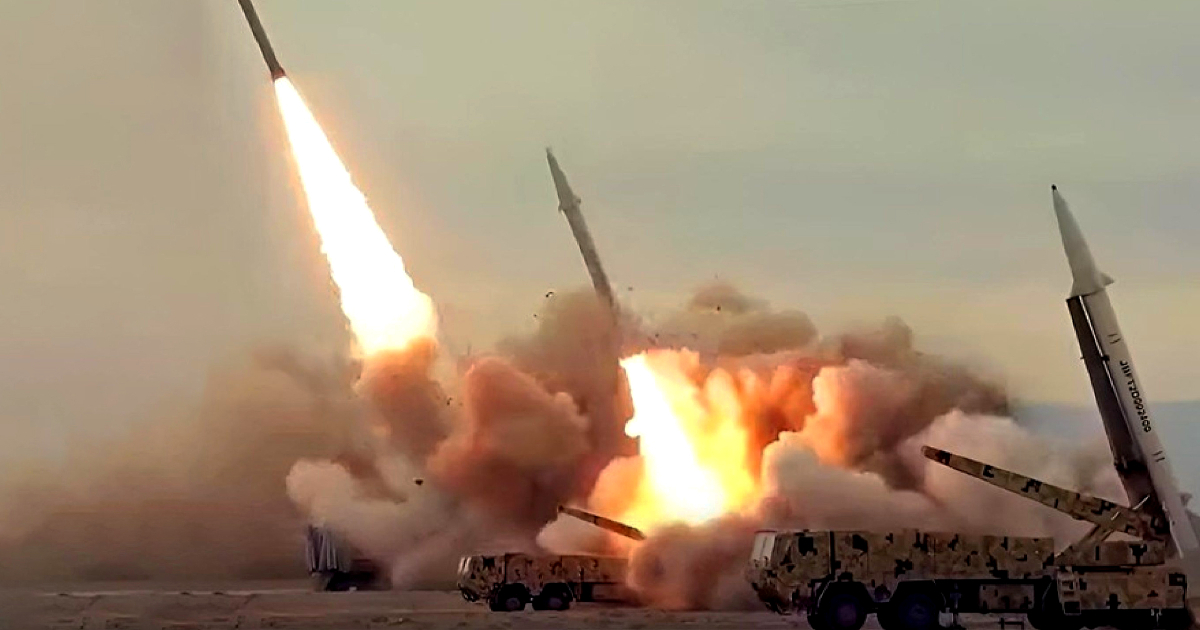
According to an investigation by The Washington Post, the Iranian regime has allegedly harnessed the power of Elon Musk's satellite internet network, Starlink, to bolster its military activities against U.S. forces in the Middle East.
Four sources with knowledge of the operations confirmed to the newspaper that Tehran has been leveraging SpaceX's technology since the onset of the conflict initiated in late February by the United States and Israel against Iran.
This revelation has reportedly angered Musk, especially after learning that the Pentagon was utilizing Starshield, a military-grade version of Starlink, under contractual terms that were not aligned with the intended use by U.S. forces.
One source mentioned that at least two executives were dismissed from the company following the exposure of these irregularities.
The investigation, which was also covered by Reuters, highlighted that SpaceX did not respond to requests for comments, nor did the Pentagon confirm the alleged use of the technology by Iranian forces.
Russia's Use of Starlink in Ukraine
Iran isn't the first U.S. adversary to exploit Musk's communication infrastructure for military purposes. During its invasion of Ukraine, Russia also utilized Starlink terminals despite commercial and technological sanctions against Moscow. Early in 2026, Ukrainian authorities appealed to SpaceX to prevent such use.
SpaceX responded by implementing additional controls and working with Kyiv to restrict unauthorized device access. However, SpaceX's decisions have sparked debates over their impact on Ukraine's defensive capabilities.
On November 16, President Volodymyr Zelensky publicly urged Musk and the U.S. government to lift Starshield restrictions, citing their implications for civilian protection and Ukraine's energy infrastructure amidst Russian attacks.
Weeks earlier, Secretary of State Marco Rubio stated that decisions regarding service access were up to SpaceX, not the White House.
Military Security vs. Information Freedom
The Iranian case presents further complications, as Starlink serves as a critical tool for citizens trying to bypass censorship and internet blackouts enforced by Tehran's authorities.
In January, during widespread protests against the ayatollahs' regime, Iran's authorities nearly cut off the nation while intensifying their crackdown on demonstrators.
Balancing the prevention of Starlink's military exploitation with maintaining independent communication access for civilians is a significant challenge for SpaceX and the administration of Donald Trump.
Starlink's Role in Cuba's Communication Struggle
This dilemma is particularly relevant to Cuba, where satellite internet access has become a contentious issue between Washington and Havana. In March, Musk confirmed that Starlink operates in Cuba, although it cannot be officially marketed there.
The Trump administration later proposed offering free satellite internet access to Cubans, a proposal rejected by the regime, as it threatened ETECSA's state monopoly over telecommunications.
Official responses were swift. In May, the portal Razones de Cuba labeled Starlink a tool of hybrid warfare, acknowledging that it creates a "parallel and uncontrollable" communication network for Cuban authorities.
Government efforts against this technology intensified in November, with the Cuban Foreign Ministry notifying embassies and international organizations in Havana of a ban on importing and using Starlink terminals.
Days later, state-run sources reported police raids and antenna seizures in Placetas, Villa Clara.
Unlike the Iranian situation, there is no public evidence of Cuban military forces using Starlink for military purposes. The documented crackdown targets those seeking to connect outside state-controlled networks.
The Washington Post investigation thus highlights two distinct security challenges: the military use of commercial technology by governments opposed to the U.S. and the necessity of preserving independent information access for citizens under authoritarian regimes.
Key Questions on Starlink's Impact
What is the significance of Iran using Starlink for military operations?
Iran's use of Starlink for military purposes highlights the potential for commercial technology to be exploited by adversarial nations, raising concerns about national security and the control over technology developed by private companies like SpaceX.
How has SpaceX responded to unauthorized use of Starlink?
SpaceX has implemented additional controls and worked with the Ukrainian government to restrict access to Starlink devices by unauthorized parties, though this has led to controversies over its impact on Ukraine's defense capabilities.
Why is Starlink's presence in Cuba controversial?
Starlink's presence in Cuba is contentious because it challenges the state-controlled telecommunications monopoly and provides Cubans with independent access to information, which the Cuban government views as a threat.