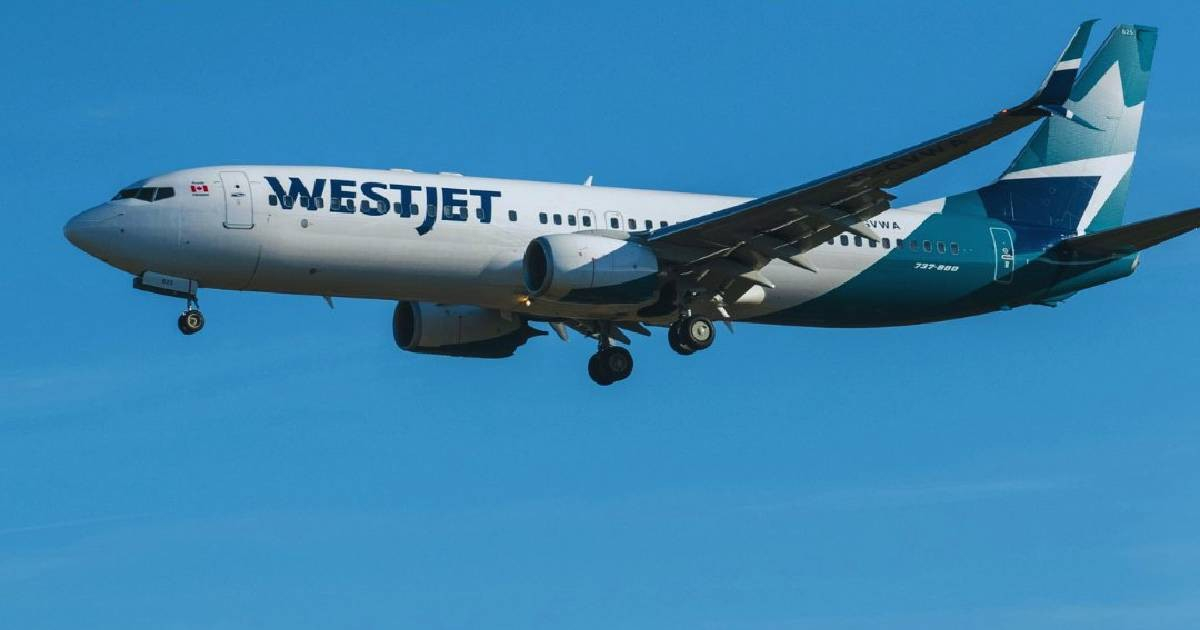
WestJet, Canada's second-largest airline, has ceased all flights to Cuba until at least October 2027, according to data from Cirium analyzed by Simple Flying and published on Saturday.
This is not a formally announced suspension but rather a complete absence of flights in the available schedule—a de facto withdrawal that ends the airline's 17-year presence in the Caribbean nation.
The seven Cuban destinations removed from the schedule are Varadero, Cayo Coco, Cayo Largo del Sur, Cienfuegos, Havana, Holguín, and Santa Clara.
WestJet first launched its route to Cuba on November 1, 2009, with the Toronto Pearson–Varadero flight operated by WestJet Vacations. Over time, it expanded its network to cover these seven points on the island, including Sunwing destinations after acquiring the brand in 2023.
The crisis timeline began in early February 2026, when the Cuban Air Navigation Company issued a NOTAM warning about the lack of Jet A-1 fuel at nine international airports.
WestJet suspended operations the following day, impacting Sunwing Vacations, WestJet Vacations, and WestJet Vacations Québec as well.
In March, the airline announced that most flights would remain canceled until October. By June, it had definitively ruled out tentative return dates and confirmed the suspension "until further notice." Now, Cirium's analysis reveals no scheduled flights to Cuba until October 2027.
The fuel shortage that triggered all this remains unresolved. A new series of ten NOTAMs issued at the end of October extended the unavailability of Jet A-1 at the island's ten international airports until December 1, according to reports on the Cuban air crisis.
As WestJet exits Cuba, it is actively broadening its reach to other warm destinations. In July, the airline announced five new routes for winter 2026/2027: Winnipeg–Punta Cana, Winnipeg–Belize City, Regina–Los Cabos, Calgary–Mérida, and Ottawa–Liberia (Costa Rica). Its capacity to Latin America and the Caribbean will grow by approximately 12% year-over-year this season.
Canadian tourists who once flew to Cuba are effectively being redirected to competing Caribbean and Mexican destinations.
This blow comes at a particularly dire time for the Cuban regime. Historically, Canada was the principal source market for tourists to Cuba, accounting for about 40% of international visitors.
Between January and October 2026, only 130,253 Canadians visited Cuba, compared to 596,801 during the same period in 2025—a 78.2% decline, according to the National Office of Statistics and Information (ONEI). Last October, a mere 1,006 Canadians arrived, a 97.3% drop compared to the previous year.
WestJet is not the only airline to have turned its back on Cuba in 2026. At least 11 companies suspended or reduced operations, with over 1,700 flights canceled. Air Canada, Air Transat, and Sunwing announced indefinite suspensions in June.
Last week, Plus Ultra halted all operations—including its routes with Venezuela—due to financial restructuring and a debt of 53 million euros, leaving Cuba without its only direct air link with Spain.
In July, Prime Minister Manuel Marrero Cruz acknowledged that 73% of Cuban hotel facilities remained closed and that about 25,000 tourism workers were in a state of labor availability.
Gaviota, the hotel chain of GAESA, operated only 3,470 rooms out of over 30,000 available, just 11.6% of its capacity. For the first time in recent history, Cubans residing abroad surpassed Canadians as the main group of international visitors to the Caribbean country.
WestJet's Impact on Cuba's Tourism
Why has WestJet suspended flights to Cuba?
WestJet suspended flights due to a persistent shortage of Jet A-1 fuel at Cuban airports, which remains unresolved.
What is the impact of the suspension on Canadian tourists?
Canadian tourists who previously flew to Cuba are now redirected to other Caribbean and Mexican destinations, affecting Cuba's tourism industry significantly.
How has the Cuban tourism sector been affected?
The tourism sector in Cuba has experienced a drastic decline in Canadian visitors, leading to hotel closures and a significant number of tourism workers facing job uncertainty.