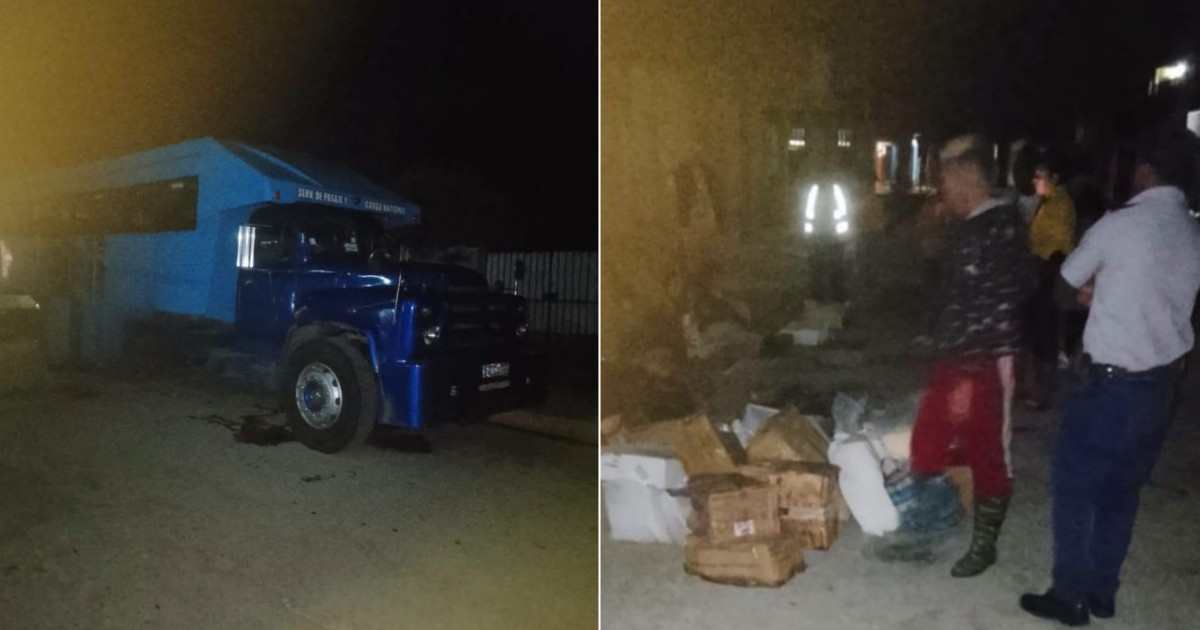
In a recent operation, the police in Morón, located in Ciego de Ávila, stopped a truck carrying 831 pounds of cheese and charged seven individuals with alleged hoarding. This information was shared on Facebook by Luis Alberto Medina Vega, who is affiliated with the Ministry of the Interior (MININT) in the province.
The interception took place at Control Point 47 in the municipality, part of the Sixth National Exercise against Illegal Activities, which commenced on November 23 and will continue until December 5.
The vehicle involved was a Soviet-made truck modified for both passenger and cargo transport, as evidenced by the photos released.
"Seven individuals have been charged with hoarding and were taken to the appropriate unit. Ongoing investigations are in progress," Medina Vega reported.
Authorities did not disclose any information regarding the cheese's origin, its intended market, or whether the involved parties possessed documentation justifying the goods.
The report also lacks clarity on whether the cheese was permanently confiscated, though images accompanying the announcement—displaying packages stacked on the ground—suggest this might be the case.
The announcement sparked hundreds of critiques and questions in Medina Vega's post. The most frequently asked question was about the fate of the seized cheese: "So... where did the cheese go?" one user asked. Another pointed out indignantly, "The only country where you're prosecuted for carrying food."
Several commentators criticized the treatment of transporting cheese between provinces as a criminal act: "Wow, like cheese is a drug," one remarked. Another defended the detainees, saying, "These people didn't steal anything; they're just trying to survive and eat in this country." A third person highlighted the logic of small-scale informal trade: "If I buy cheese from a farmer and want to sell it in Havana for a higher price, where's the crime?"
Irony was not absent: "Today the police eat cheese," one user noted. Another called for different priorities for law enforcement: "Focus on the criminals, murderers, robbers, and thieves." Yet another questioned the scale of the operation: "So many stolen motorcycles, bicycles, and other items, and they focus on cheese, which anyone with two cows could have."
According to Article 311 of the Cuban Penal Code (Law No. 151/2022), hoarding—which involves acquiring, retaining, or transporting goods in quantities clearly exceeding personal or family needs—is punishable by six months to two years in prison, fines, or both. The law does not set precise quantitative thresholds, leaving a broad scope for interpretation by authorities.
This operation comes amid severe food shortages and soaring prices that burden the population. This week, a Cuban woman reported that a pound of cheese costs 1,600 pesos, questioning the constant rise in food prices.
National milk production declined by 58% between 2018 and 2023, with Cuba producing less than 200 million liters annually against an estimated demand of 500 million liters. In many areas, fuel shortages prevent milk collection, forcing producers to turn it into cheese to avoid wastage.
During the operation, a pound of cheese was priced between 1,600 and 2,000 Cuban pesos. Food prices have seen an annual inflation rate exceeding 50%, and with national milk production plummeting by 58% from 2018 to 2023, many Cubans view interprovincial cheese transportation not as a crime but as a survival strategy.
In a similar incident in October, 13 individuals from the municipality of Placetas, Villa Clara, were arrested for transporting 1,614 pounds of cheese on a Yutong bus intended for sale in Havana, a case that also stirred outrage on social media.
Understanding Cheese Hoarding Charges in Cuba
What is considered hoarding under Cuban law?
Hoarding in Cuba is defined as the acquisition, retention, or transportation of goods in quantities that clearly exceed personal or family needs. It is punishable by imprisonment, fines, or both according to Article 311 of the Cuban Penal Code.
Why was the cheese seized in Morón?
The cheese was seized as part of a national exercise against illegal activities. The authorities charged seven individuals with hoarding, although details about the cheese's origin and intended market were not disclosed.
How have Cubans reacted to the cheese seizure?
The reaction has been largely critical, with many questioning why transporting cheese is treated as a criminal act. Some expressed irony or indignation, pointing out that people are simply trying to survive amid food shortages.