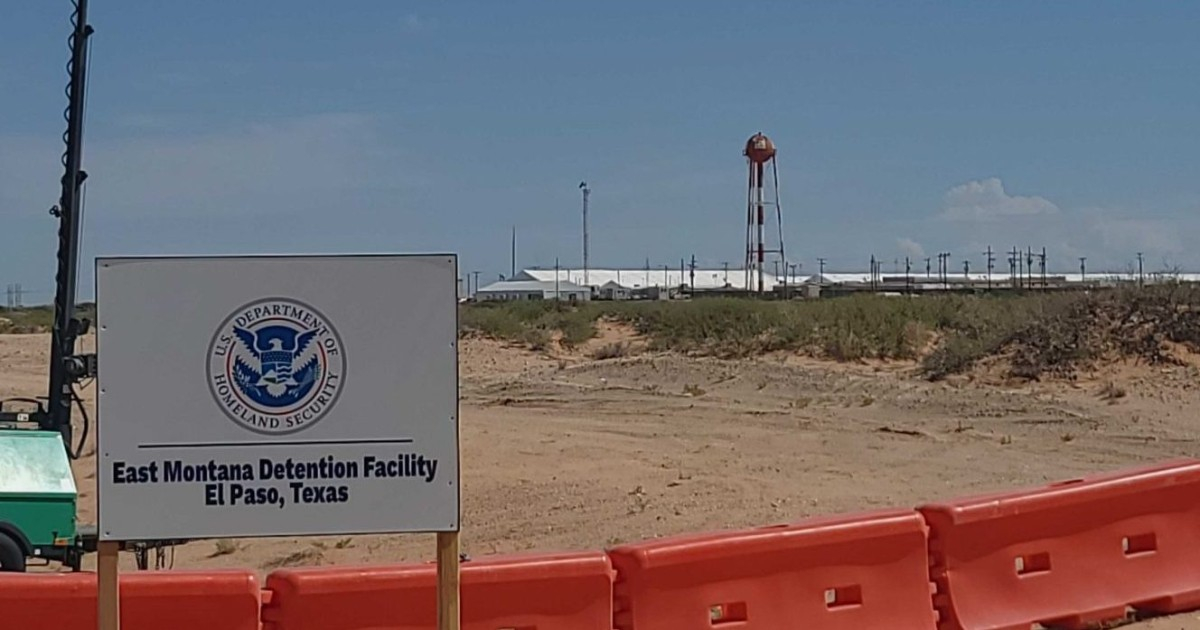
Inmates at the El Paso Service Processing Center (EPSPC), one of the largest immigration detention facilities in the United States, initiated a hunger strike early Saturday morning, according to Cuban detainees at the site.
The protestors are refusing food as a demonstration against their detention, demanding "immediate release and an end to deportations to third countries," as conveyed by the Cuban detainees to CiberCuba.
The wife of a Cuban man, who has been detained for over a year, reported that at least three families have been unable to contact their loved ones at the center, located at 8915 Montana Avenue, El Paso, Texas, following the suspension of phone calls.
According to her account, the detainees continue their strike, and alongside the communication cut, facility authorities have removed food from vending machines.
Choosing to remain anonymous due to her immigration status, the woman added that a family member confirmed the protest persists and that a lawyer is aware of the situation.
Concerns Over Transfers and Deportations
Administered by ICE in El Paso, Texas, the EPSPC has a standard capacity of 600, though operational figures range between 840 and 1,000 detainees. As of early February 2026, the center had an average daily occupancy of 809 individuals—576 men and 233 women—with an average stay of 48 days.
Fears surrounding non-traditional deportations, including to the Central African Republic, are at the heart of this protest.
On November 21, at least 17 Cuban detainees in El Paso were transferred by bus to the Florence detention center in Arizona alongside three African nationals, intensifying alarm among the Cuban population in the center.
Protests Across ICE Facilities
This Saturday's hunger strike is not an isolated incident but part of a wave of protests throughout ICE facilities across Texas, Louisiana, and other states in 2026.
Last Wednesday, a group of migrants, including Cuban Henry Medina, started a hunger strike at the River Correctional Center in Ferriday, Louisiana, protesting detention conditions and expired food. Advocacy organizations estimated participation at around 150 people; ICE, however, claimed only 24 detainees consistently refused food, denying the existence of a strike.
In October, 32-year-old Cuban Luis Alejandro Cora Pérez was force-fed via nasogastric tube at the Port Isabel Service Processing Center in Los Fresnos, Texas, after beginning a hunger strike in August.
Documented Abuses and Past Protests
El Paso's situation is particularly severe. A joint report by Human Rights Watch and the ACLU, released on November 25, documented beatings of detainees at Camp East Montana—located at Fort Bliss, El Paso—as retaliation for participating in hunger strikes or seeking medical attention.
Since that center's opening in August 2026, at least three detainees have died, including a 55-year-old Cuban who stopped breathing after being handcuffed and restrained by guards.
The EPSPC is no stranger to such protests. Early in 2019, at least 11 detainees—mainly Cubans and Indians—held a hunger strike for over 30 days at the same facility; ICE resorted to forced feeding via nasal tube for six under court order.
In October 2020, five Cubans began a similar protest, demanding release to return to Cuba; one of them, Freddy Jesús Rodríguez, had been detained for 340 days.
Nationwide, ICE's detainee population reached approximately 73,000 in February 2026, reflecting a surge in immigration arrests under the Trump administration.
This scenario is part of an ever-evolving immigration landscape. Stay informed about detentions, deportations, and migrant rights in our U.S. Immigration section.
Understanding the Hunger Strike at El Paso Detention Center
What prompted the hunger strike at the El Paso Service Processing Center?
The hunger strike was initiated by detainees demanding immediate release and the cessation of deportations to third countries.
How many people are detained at the El Paso facility?
The El Paso Service Processing Center has a standard capacity of 600 but currently holds between 840 and 1,000 detainees.
What are the broader implications of these protests?
These protests highlight ongoing issues with detention conditions and deportation practices, sparking broader discussions on migrant rights.