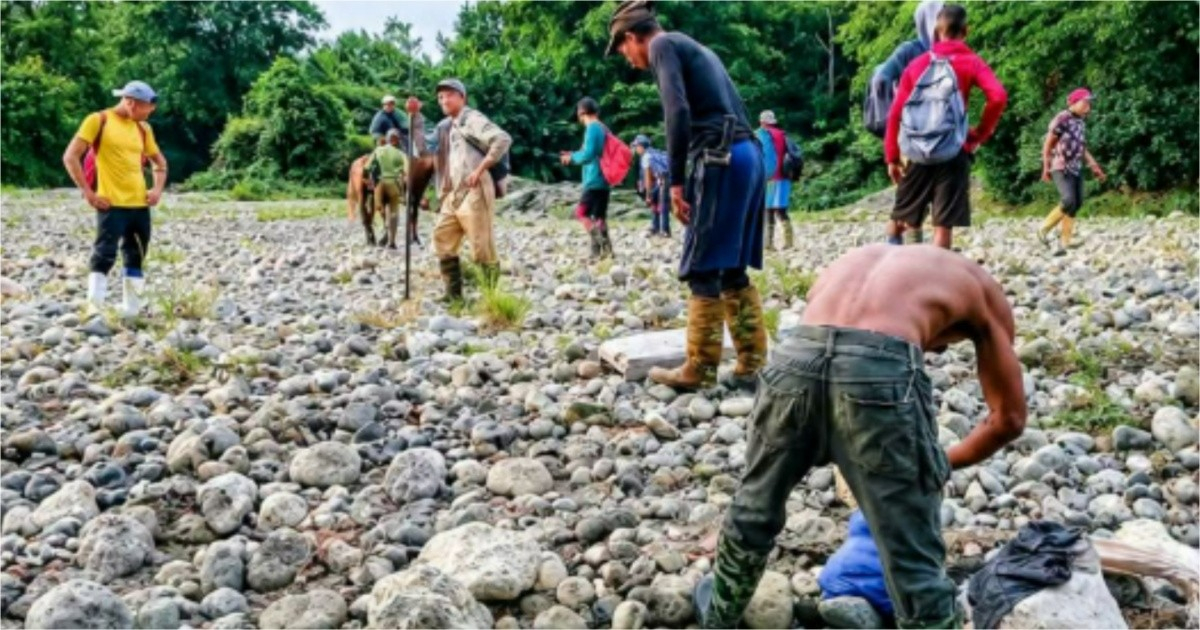
Authorities from the Ministry of the Interior (MININT) and environmental officials have apprehended at least 16 individuals during a crackdown on illegal gold mining in protected areas within the Yateras municipality of Guantánamo province.
According to the state-run page "Guantánamo y su Verdad," which shared the news on Facebook, those arrested were involved in searching for the mineral in forested areas and riverbeds located within protected territories. The operation also resulted in the seizure of various tools and equipment used in the illicit activity.
The identities and residences of the arrested individuals have not been disclosed by the authorities. However, sources close to the situation suggest that most of those detained are local residents of Yateras.
Increased Law Enforcement Actions in 2026
This recent operation is part of a series of law enforcement actions in the region throughout 2026. In October, a similar operation in El Yarey, also within Yateras, led to the arrest of at least 60 people, predominantly young individuals. The previous month, illegal mining sites in Yateras and Imías were dismantled, resulting in multiple arrests.
The ongoing economic crisis in Cuba is a significant driver of this phenomenon. By October 2026, the price of one gram of refined gold had soared above 60,000 Cuban pesos on the black market.
Environmental Impact and Legal Consequences
The environmental damage caused by illegal mining is extensive. Between 2014 and 2024, this activity destroyed approximately 27.4 hectares of forest and altered 47 kilometers of river channels within the Cuchillas del Toa Biosphere Reserve and Alejandro de Humboldt National Park, a UNESCO World Heritage site known for its extraordinary biodiversity.
In 2021, an illegal mining-related fire devastated around 1,896 hectares of the park, marking the largest fire in its history. Another fire in July 2026 affected about 200 hectares in the Ojito de Agua area, potentially linked to the same illegal mining activities.
Legal responses have intensified as well. In September 2025, the Yateras Municipal People's Court sentenced five individuals for illegal gold extraction and soil contamination at Piedra la Vela, along the Toa River within the Humboldt Park. Sentences ranged from one year and six months to two years and seven months in prison, along with the confiscation of tools and travel restrictions.
Despite Cuban laws imposing sentences of up to seven years for such crimes in Guantánamo province, the enduring nature of illegal mining activities suggests that these penalties have not been effective deterrents. The persistent economic struggles, which the government has failed to resolve after more than six decades, continue to drive these illicit endeavors.
Environmental and Economic Challenges in Guantánamo
What prompted the recent arrests in Guantánamo?
The arrests were part of a crackdown on illegal gold mining activities in protected areas of the Yateras municipality, aimed at tackling environmental degradation and illegal economic activities.
What are the environmental impacts of illegal mining in the area?
Illegal mining has led to the destruction of forests and alteration of river channels, significantly impacting biodiversity in the Cuchillas del Toa Biosphere Reserve and Alejandro de Humboldt National Park.
How has the Cuban government responded to illegal mining activities?
The government has intensified legal actions, with recent court sentences for illegal gold extraction, although these measures have not fully deterred the activities due to ongoing economic challenges.