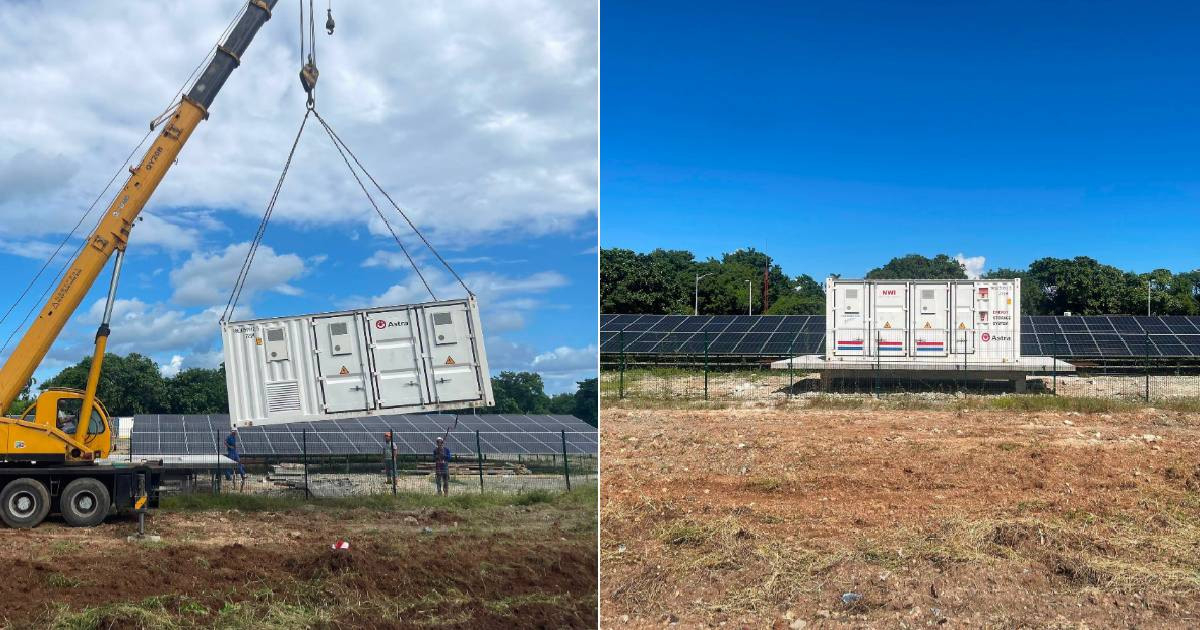
A private enterprise, 5ta Avenida Motores S.U.R.L., is spearheading the construction of a public fast-charging station for electric vehicles in Guanabo, Havana. This facility is designed to operate independently from the National Electric System using solar power.
Located in La Veneciana, just outside Guanabo in East Havana, the station is hailed by the company, which manages the after-sales service for Dongfeng in Cuba, as their "first large-scale public fast-charging station." The entity shared this milestone on their Facebook page this past Friday.
The ambitious project is set to feature a solar park consisting of 432 photovoltaic panels, delivering an installed power capacity of approximately 263.5 kWp. Additionally, it will include a one megawatt-hour storage system and five charging points, with two offering 60 kW and three providing 7 kW. The company claims that the infrastructure will be able to service up to seven vehicles simultaneously.
Beyond charging, the station will also house a technical diagnostic center for electric vehicles and aims to provide 24-hour service. The company is conducting pilot tests for 60 kW fast charging at their specialized workshop located in the Playa municipality (19, between 36 and 42), with plans to open this to the public soon.
Earlier media reports highlighted that the project encompasses additional community initiatives, such as creating local jobs, renovating 11 buildings, installing 18 solar lamp posts, and restoring a dilapidated service center nearby.
On Saturday, the University of Havana announced a tender for establishing a photovoltaic charging station in El Curita Park, Central Havana, funded by the Basque Government.
Meanwhile, on Wednesday, President Miguel Díaz-Canel inaugurated the Habana 220 battery system, a 50 MW installation, alongside the José Antonio Echeverría Technological University of Havana (Cujae), albeit nearly a month behind schedule.
The Guanabo station has sparked mixed reactions on social media. While some users praised the development of infrastructure supporting electric vehicles, others were skeptical about the proposed fee of one dollar per kilowatt-hour.
Residents of Peñas Altas, where the project is underway, responded with sarcasm regarding the area's existing power supply issues. "Everyone in Peñas Altas thought it was to stop our power outages, how naive," one person remarked. Another pointed out that Peñas Altas and Brisas del Mar residents still endure "hours without electricity."
A specialist involved in the discussion emphasized that such installations must generate all required energy through their own solar capacity to prevent overloading the national electric grid. According to the company's released specifications, the Guanabo station aims to achieve this by functioning independently of the national network.
In August, Cuba introduced tax and tariff exemptions for importing electric vehicles along with renewable charging stations, a policy that has accelerated the development of both public and private projects of this nature.
Key Questions on Guanabo's Solar-Powered Charging Station
What is the capacity of the solar park at the Guanabo charging station?
The solar park at the Guanabo charging station consists of 432 panels, with a total installed capacity of approximately 263.5 kWp.
How many vehicles can the charging station accommodate simultaneously?
The charging station is designed to service up to seven vehicles at the same time.
What additional community projects are associated with the station?
The project includes creating local jobs, renovating 11 buildings, installing solar lamp posts, and restoring a nearby service center.