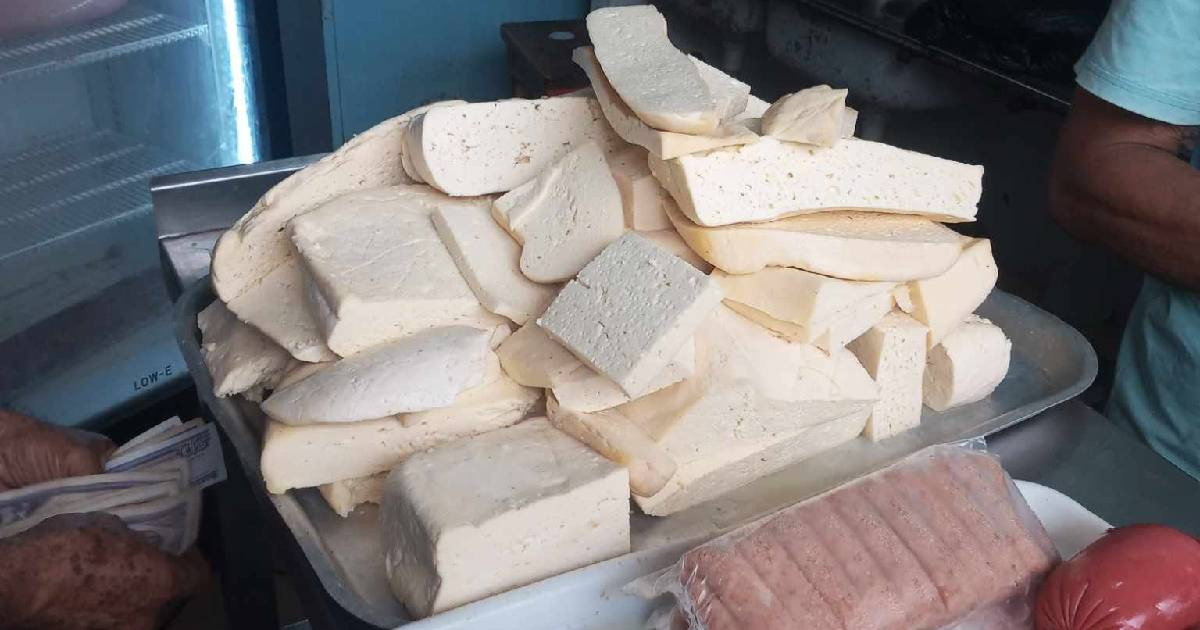
On Friday, a Cuban woman raised a red flag about the soaring cost of cheese, reporting that a pound now costs 1,600 pesos, while others have noted prices as high as 2,000 pesos in various areas of the country. The constant rise in food costs has many questioning how long this can continue.
Ayansan Sánchez expressed her frustration on a Facebook group dedicated to the sale and purchase of cheese in bulk, stating, "It's disrespectful. Look at the cheese price, 1,600 pesos per pound. Prices keep going up, and we don't know where it will end. How long will this go on?" However, she did not specify where the photo accompanying her post was taken.
This complaint adds to a growing chorus of citizens reporting exorbitant prices for the product. Some consumers have paid up to 2,000 pesos per pound, with prices recorded at 1,900 pesos in the EJT agricultural market in Plaza de la Revolución, Havana, and 1,700 in La Palma, Arroyo Naranjo. While some reports mention offers at 1,000 pesos, these are significantly lower than the more frequently reported prices.
With the minimum monthly wage set at 3,210 pesos as of July, a pound of cheese priced at 1,600 pesos accounts for nearly half of a worker's salary. In comparison, the average state salary of 7,354 pesos means that cheese represents more than a fifth of monthly income.
Economic Factors Behind Rising Cheese Prices
The reasons behind the price hikes have sparked debate among consumers. Some blame the informal dollarization and speculators, while others cite production costs. One user pointed out, "A cow producing milk for cheese costs 300,000 pesos, and you have to stay up all night to watch over it."
However, another participant challenged this explanation, arguing that there haven't been enough changes to justify the price more than doubling in less than a month. According to his comment, the dollar's increase was less than 100 pesos, and fuel prices, another element affecting transportation, had decreased.
Concerns are mounting as December approaches, a time when demand for dairy products and pork traditionally rises. "People need to eat, and the worst is yet to come in December," warned another commenter.
The Broader Impact of Food Price Inflation
This price escalation takes place amidst a decline in the dairy sector. National milk production in Cuba fell by 58% between 2018 and 2023, generating less than 200 million liters annually against an estimated demand of 500 million. In some areas, a lack of fuel prevents milk collection, forcing producers to convert it into cheese by hand to avoid losses.
Other food items have also reached unaffordable prices for many Cubans. Recent social media reports highlighted pork prices as high as 2,500 pesos per pound in Havana, while red beans are priced between 1,300 and 1,400 pesos.
Adding to this challenging scenario, the official annual inflation rate was reported at 32.70% in October by the National Office of Statistics and Information (ONEI). Food prices alone saw an increase of 50.72% over the past year, continuing to erode the purchasing power of Cuban households.
Understanding Cuba's Cheese Price Crisis
What is the current price of cheese in Cuba?
As of now, the price of a pound of cheese in Cuba ranges from 1,600 to 2,000 pesos, though there are reports of offers as low as 1,000 pesos.
Why are cheese prices so high in Cuba?
The high prices are attributed to factors such as informal dollarization, speculator activity, and increased production costs. Some argue that changes in the exchange rate and transportation costs do not justify the rapid price increase.
How does the cheese price impact Cuban workers?
With the minimum wage at 3,210 pesos, a pound of cheese consuming 1,600 pesos represents nearly half of a worker's monthly earnings, significantly affecting their purchasing power.