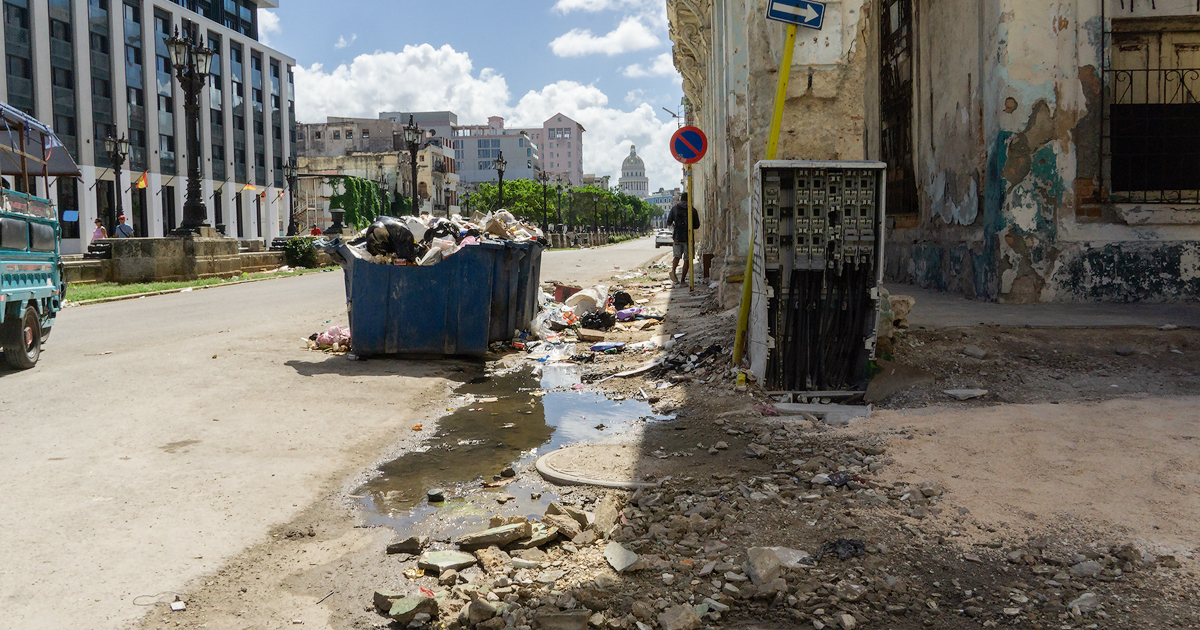
A columnist from the Chinese outlet Guancha, featured in the state-owned Shanghai publication The Paper, has authored a piece on Cuba that delivers an uncomfortable truth for the Havana regime: the revolution that once sought independence from the United States now relies heavily on financial support from relatives who have moved to Miami.
Written by Li Yun (李昀) and titled "In Cuba, Miami Remittances and Chinese Cargo Ships," the article draws from a six-day visit to the island in October, guided by a Cuban sociologist. The significance of this report lies in its source: Guancha is a nationalist publication aligned with the Chinese Communist Party, and The Paper is state-owned, making their critical portrayal of Cuba—without solely blaming the embargo—difficult for the Cuban regime to dismiss.
Li Yun begins by citing demographic data for 2025: 68,064 births compared to 136,214 deaths. "For every newborn, the country bids farewell to two individuals," he notes. The total population decreased by over 313,000 in a single year, due to both a negative natural increase and an estimated net emigration of about 245,000 people.
The columnist details the ration book system, in place since 1962, using an example provided by his guide: 14 pounds of rice per month for two adults, equating to approximately 106 grams of raw rice per person per day, often delivered months late. By February 2025, some areas were still receiving allocations from December 2024.
The World Food Program reported in 2023 that the Cuban rationed food basket covered merely 46% of the recommended caloric intake.
Economic Hardships and Social Services in Decline
The economic disparity is stark. In 2025, the average salary was 6,930 pesos, barely over $9 at the informal exchange rate of October, when the dollar was valued at 750 pesos, compared to about 42 in 2020. The estimated basic monthly cost of living was around 96,060 pesos, fourteen times the average salary. "Products fill the shelves," writes Li Yun, "but those relying on a salary or pension cannot afford them."
The deterioration extends to sectors the regime once touted as successes. In education, only 73% of teaching positions were filled before the 2026-2027 academic year began; approximately 3,000 teachers were relocated from eastern provinces to Havana, and national school uniforms met just 12% of demand.
In healthcare, up to 70% of essential medications were unavailable, and the UN reported over 100,000 patients on surgical waiting lists, including around 11,000 children. The official housing deficit exceeded 805,000 units, with only 5,493 completed in 2025.
The Complex Reality Behind Cuba's Struggles
Li Yun does not attribute the crisis solely to the embargo. "The external blockade and accumulated internal issues are intertwined," he explains; "neither socialism, the American embargo, nor market reforms alone account for the current situation." He notes that sugar production has plummeted to historic lows and infrastructure has suffered from decades of inadequate investment.
The article concludes with a poignant irony: "A revolution intended to eradicate privilege and dependency has, sixty years later, reached a point where what one can eat or treat depends again on whether they have relatives abroad, who they know, and if they have dollars in their pocket."
The Soviet Union was the first benefactor, Venezuela the second; now China sends solar panels and Mandarin-speaking electric tricycles. But on a familial level, Li Yun concludes, "the most reliable support for many families comes from Miami, those relatives who left."
The piece was published shortly after the Chinese ambassador to Cuba acknowledged over 20-hour blackouts and childbirths assisted by flashlight, while a delegation from the Cuban Communist Party traveled to Beijing to express their desire to "learn deeply from China's successful experience" in economic reform and opening.
Understanding Cuba's Current Economic and Social Landscape
How does the Cuban regime currently sustain itself financially?
The Cuban regime heavily relies on remittances from relatives in Miami, as well as support from Chinese economic engagements such as sending solar panels and electric tricycles.
What are the main challenges faced by Cuban citizens today?
Cuban citizens face numerous challenges including a declining economy, inadequate healthcare and education services, and a significant housing shortage. These issues are compounded by shortages of essential goods and a high cost of living.
What role does the US embargo play in Cuba's current situation?
While the US embargo impacts Cuba, it is not the sole cause of the country's hardships. Internal management issues, lack of investment in infrastructure, and economic policies also play significant roles in the island's struggles.