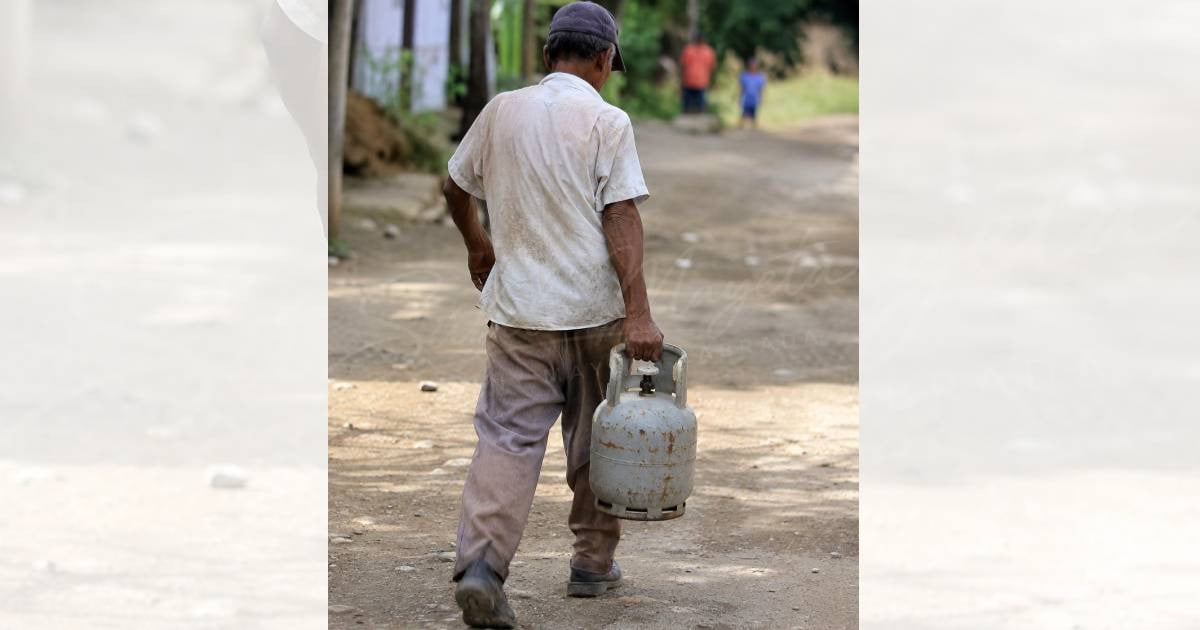
Recently, small tanks of liquefied gas have been sold for $41 in the Altamira neighborhood of Santiago de Cuba. These transactions required payment in dollars, with no option to pay in the local currency or through the ration book system.
Journalist Yosmany Mayeta Labrada highlighted this issue on his Facebook page, questioning the contradiction between the Cuban government's rhetoric, which portrays the United States as an adversary, and its reliance on dollars sent by Cubans living there to purchase essential goods.
"While the U.S. is depicted as an enemy in official speeches, the dollars from those residing there are welcomed when selling what the people need," Mayeta pointed out.
Citizens have reported varying prices for these gas tanks: $55 in Trinidad, $70 in Bayamo and Havana del Este, and between $41 and $60 in other areas. A buyer noted the necessity of providing "exactly 41 dollars since no change is available."
On top of the gas cost, acquiring a place in line reportedly involved additional expenses, with informal market prices ranging from 5,000 to 10,000 pesos. "Besides selling it in a currency we don't earn, another form of speculation has emerged, as a spot in line costs 5,000 pesos," a local resident complained.
Reactions have also underscored the gradual dollarization of essential goods and services. One individual criticized this trend sarcastically by mentioning sales in MLC (freely convertible currency), fuel transactions in dollars, and the rising gas prices, suggesting those unable to afford it would have to turn to wood and charcoal.
Mayeta concluded his critique with a poignant question highlighting the plight of those relying solely on their income in the national currency: "How does someone who earns in pesos and has no outside support cook?"
With the informal exchange rate hitting approximately 978 pesos per dollar last Friday, the $41 price tag translates to over 40,000 pesos, exceeding 12 monthly minimum wages, which have been set at 3,210 pesos since July.
A worker from the Commerce sector revealed she hadn't received her salary for six months and, lacking relatives in the U.S. who could assist, resorted to cooking with wood. Teachers, street sweepers, healthcare workers, and retirees face similar challenges accessing gas, often having to rely on other costly fuels.
The crisis has been ongoing since January, when state-owned Cupet indefinitely halted the distribution of liquefied gas in the eastern provinces due to supply shortages. By September, this suspension had expanded nationwide.
In July, the government established an official price of 350 pesos for a 10-kilogram cylinder under Resolution 155/2026. However, this price remains unattainable for consumers while the product remains unavailable through state channels.
Meanwhile, the expansion of foreign currency sales points continues. Reports from Sancti Spíritus indicate sales of the fuel at up to $80, in Holguín at $94, and on the Isle of Youth, prices rose from $50 to $89 in October.
Understanding the Dollarization of Essential Goods in Cuba
Why are Cubans required to pay in dollars for liquefied gas?
Due to the Cuban government's reliance on foreign currency, particularly dollars, for essential goods, payments for items like liquefied gas require dollars instead of the local currency.
What challenges do Cubans face with the current gas pricing?
The high cost of liquefied gas, coupled with the requirement for dollar payments, places a significant financial burden on Cubans, many of whom rely solely on their earnings in pesos and lack access to foreign currency.
How has the informal market affected access to gas?
The informal market has led to additional costs, such as paying for a place in line, making it even more difficult for people to secure the gas they need.