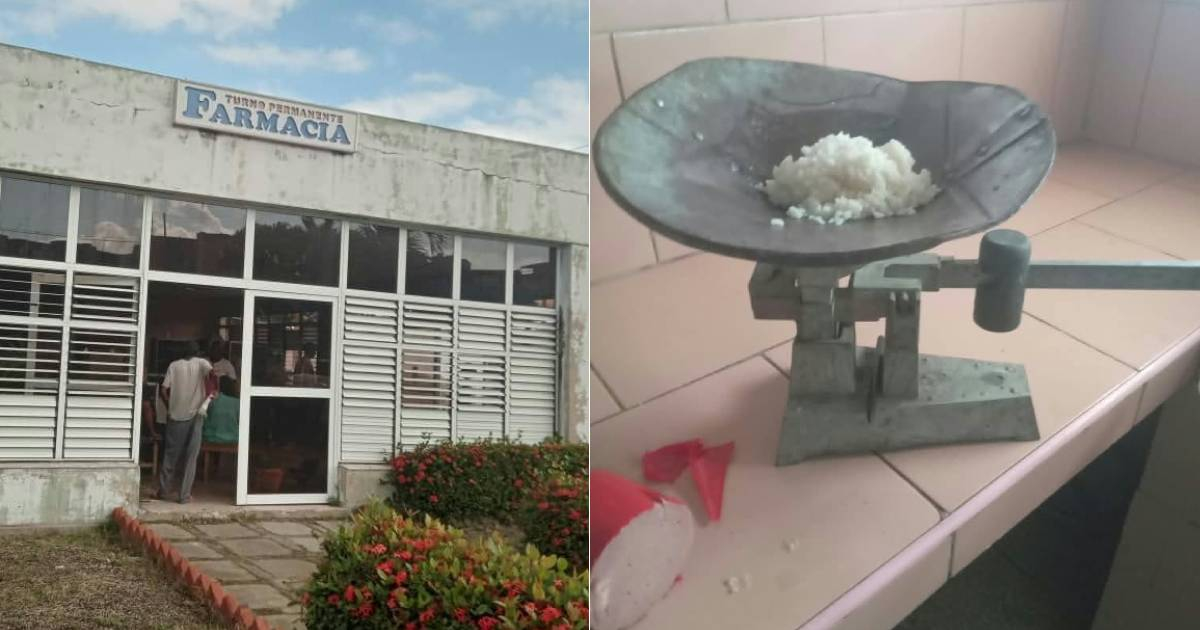
State inspectors in Villa Clara have uncovered significant irregularities involving withheld medications at pharmacies, underweight bread intended for children, and incomplete food portions at establishments within the Family Attention System (SAF), along with other commercial discrepancies.
According to a post on Facebook by Inspección Villa Clara, these discoveries emerged during the Sixth National Exercise for prevention and confrontation of crime, corruption, and illegalities.
The medications involved include antibiotics, tranquilizers, diabetes treatments, and eye solutions. At pharmacy U-710, inspectors found nine blister packs of diazepam retained by an employee who was also a beneficiary of the medication.
In unit U-672, located on Camajuaní Road, inspectors discovered five blister packs of glibenclamide stored away in an office drawer. Additionally, a discrepancy was noted with one blister pack of amoxicillin missing when inventory was checked.
Inspectors at community pharmacy U-742, which provides hospital services and is situated in the Hospital People's Council, reported eight bottles each of ciprofloxacin eye drops and diclofenac sodium withheld in storage. In another instance, 20 boxes of ranitidine tablets were found in a residence designated as a medication storage facility.
In pharmacy U-665, also within the Hospital People's Council, it was verified that three bottles of aspirin were missing. The official report did not specify why the medications were withheld, nor did it mention if they were eventually made available to patients or any penalties against those responsible.
Inspectors also noted that a self-employed worker in the food service sector within the Abel Santamaría People's Council was failing to comply with electronic payment channel regulations.
Substandard Bread and Incomplete Meals for Vulnerable Individuals
The day before, Inspección Villa Clara disclosed irregularities in food preparation and sales. At the El Águila de Oro bakery, a surprise weighing revealed that bread destined for a childcare center weighed less than the required 40 grams. The state entity criticized, “Even children are being deceived!”
Similar issues were found at the Chambery bakery, where 60-gram bread meant for the general public also fell short. The irregularities extended to SAF establishments, which are meant to supply food to vulnerable individuals. At SAF Brisas Riviera in the José Martí People's Council, inspectors found that portions of processed meat expected to weigh 50 grams were only 30 grams, while portions of white rice, expected to weigh 240 grams, were only 190 to 200 grams.
Additionally, at the El Mamoncillo agricultural market, a sale of five pounds of rice resulted in only four and a half pounds being delivered.
Price Gouging and Forced Sales in the Private Sector
Inspectors also reported irregularities in private establishments, including conditional sales of sugar and oil, non-compliance with electronic payment systems, and surcharges exceeding 10% for using these platforms. In shops within the Capiro People's Council, prices were deemed exorbitant: toothpaste at 650 Cuban pesos (CUP), 500 grams of detergent at 1,200 CUP, bath soap at 700 CUP, and oil at 2,700 CUP.
The official reports did not clarify any penalties for these commercial irregularities or whether affected consumers received compensation.
Critical Shortage of Medications Amid Seizures
The findings are particularly alarming given the severe shortage of medications in the province. Authorities admitted in February that 368 out of 636 essential medications were missing, affecting all pharmacological groups. In August, Cuban leader Miguel Díaz-Canel acknowledged that only about 30% of essential medications were available in Cuba.
This scarcity forces many families to turn to the informal market, where treatments are often sold at high prices. In October, the seizure of resold medications in Centro Habana led to public outcry, as citizens questioned where they could obtain treatments not available in state pharmacies.
More recently, in early November, Public Health Minister José Ángel Portal Miranda acknowledged the severe shortages of medications, supplies, and medical equipment that compromise the ability of Cuban healthcare institutions to diagnose diseases and provide treatments.
Understanding the Medication Crisis in Villa Clara
What types of medications were found withheld in Villa Clara pharmacies?
Medications such as antibiotics, tranquilizers, diabetes treatments, and eye solutions were found withheld.
How was the issue of underweight bread for children discovered?
A surprise weighing at the El Águila de Oro bakery revealed that the bread intended for a childcare center was below the required weight.
What are the implications of medication shortages in Cuba?
The shortages force families to rely on the informal market where medications are sold at high prices, and they compromise the healthcare system’s ability to provide necessary treatments.