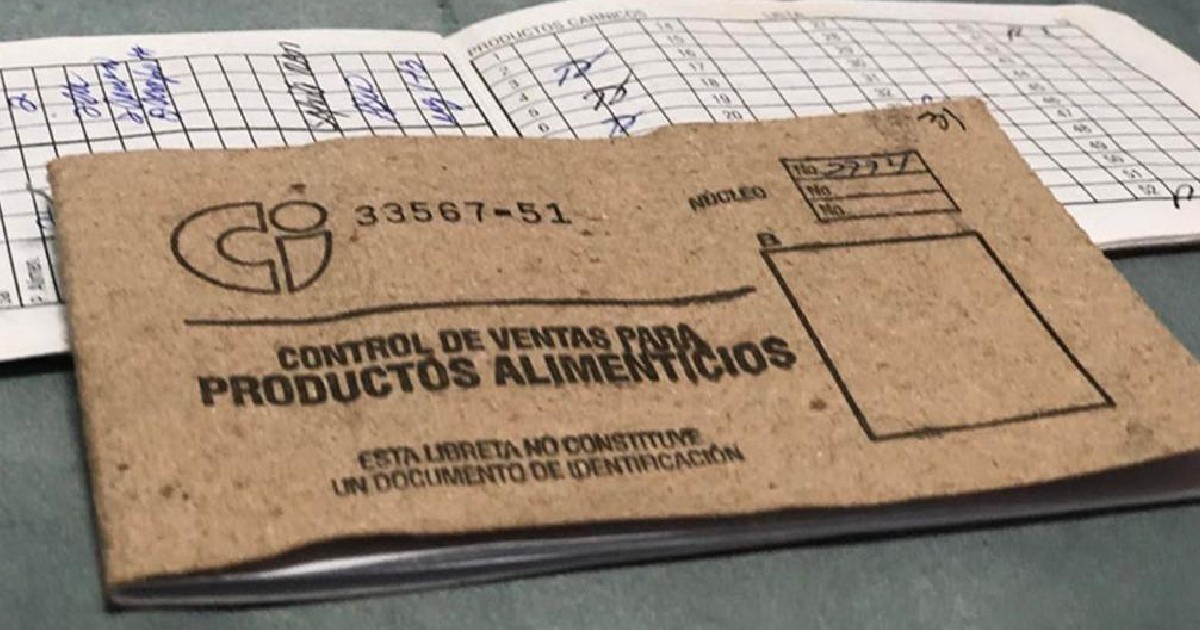
The Cuban government has effectively ended the ration book system that has been in place for 64 years. Now, only 1,913 of the roughly 12,000 stores nationwide will distribute subsidized food, and solely to those deemed "vulnerable" by the state.
This announcement was made by Marpessa Portal, the Director General of Goods Sales at the Ministry of Domestic Trade, during an appearance on Radio Rebelde's "Haciendo Radio" program.
The remaining stores have either been closed, remain empty, or have been leased to the private sector. Economist Omar Everleny, writing for IPS, bluntly stated that the ration book has "practically disappeared, one could say it has been extinguished."
The new welfare system supports 883,426 individuals, a figure disclosed by the Minister of Labor and Social Security, Jesús Otamendiz Campos, after evaluating over 1.3 million families. This number represents a mere 9% of Cuba's estimated population of 9.4 million.
Discrepancies in Vulnerability Estimates
Independent calculations challenge these figures. Sociologist Mayra Espina from the Center for Reflection and Dialogue (CCRD-Cuba) estimates that over 1.3 million Cubans are genuinely vulnerable. Additionally, 66% of the population lives in economic poverty, with incomes insufficient to purchase a basic food basket.
The government decides who qualifies for the lists, leading some families to misrepresent their circumstances during census counts. One mother of three, interviewed by IPS Cuba, admitted she falsely claimed to be without a husband to qualify for assistance, stating, "The money isn't enough for anything. The other day we couldn't eat until we collected the module from the store."
Monthly Aid For Recognized Beneficiaries
The monthly aid package for recognized beneficiaries includes five pounds of rice, one pound of sugar, and one pound of grains. Sunflower oil—one of the priciest and scarcest items—is provided every two months by the World Food Program.
For those not classified as vulnerable, the official alternative lies in "neighborhood markets," set up in former stores and run by small private enterprises or cooperatives. These markets were supposed to offer prices 10% to 30% lower than the regular market, but Prime Minister Manuel Marrero Cruz admitted that prices could be equal to or even higher than those in other outlets.
In Ciego de Ávila, for example, a neighborhood market sold oil this month for 3,000 pesos, compared to 2,600 pesos at nearby private stores.
Impact on Unlisted Citizens
For those excluded from the lists, the situation is dire. Carlos Garrido, a 63-year-old builder from Havana, lamented, "I haven't received rice for months. No sugar, coffee, or beans. Chicken, maybe by 2025, if I remember correctly. They say they're getting rid of the ration book, but I think it's already gone in practice."
This dismantling is not an abrupt decision. In 2011, Raúl Castro proposed replacing subsidized products with targeted aid, as the system cost over $1 billion annually, with the government recovering only 12% of the actual value. Díaz-Canel echoed the need for change in 2020, but the removal was delayed until June 2026 when the Cuban Communist Party and the National Assembly formalized it as part of 176 economic transformations.
The end of the universal ration book further strains the diaspora. Only 37% of Cuban households receive remittances. According to a survey by the International Republican Institute, 38% of those receiving remittances still struggle to meet basic needs, and among those without external financial support, this figure rises to 48%.
Impact of Ending the Ration Book System in Cuba
What is the significance of the ration book system in Cuba?
The ration book system, implemented for 64 years, was a method for distributing subsidized food to Cuban citizens. Its effective end marks a significant shift in how the government provides for its population, particularly affecting those in economic need.
How many people are affected by the new welfare system in Cuba?
The new welfare system supports 883,426 individuals, which is only about 9% of the estimated 9.4 million population, leaving many in economic hardship without subsidized food.
What are the alternatives for those not classified as vulnerable?
Those not considered vulnerable can buy from "neighborhood markets" managed by private enterprises or cooperatives. However, these markets often have prices similar to or even higher than regular stores.