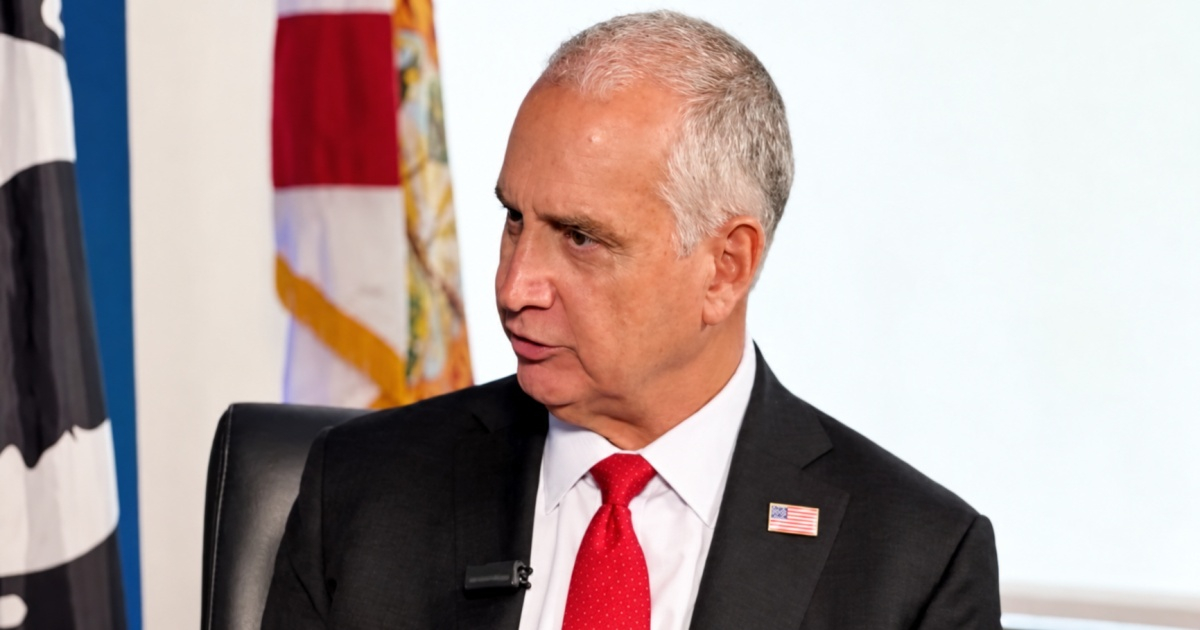
Republican Congressman Mario Díaz-Balart has suggested, following the 11th Circuit Court's November 17 ruling, that the Trump administration could explore a Temporary Protected Status (TPS) for Cuba. This measure aims to provide relief to the countless Cubans caught in immigration limbo with the I-220A form.
In an interview with Los Pichy Boys on Instagram, Díaz-Balart, a Cuban-American legislator from Florida, was asked if a TPS could be a potential solution. "I believe the administration has the ability to do something temporary, like a TPS. Yes, they could implement a TPS due to the situation in Cuba. Let me reiterate, this decision lies with one person, the President of the United States," he responded.
Díaz-Balart criticized President Joe Biden's administration for leaving these immigrants without the parole needed to benefit from the Cuban Adjustment Act. He described the situation as an "illegal limbo" created by "empty promises" from the administration, pointing out that the I-220A form was essentially meaningless.
The congressman highlighted that among those affected are individuals who have established their lives in the United States, some of whom fled Cuba after participating in the July 11, 2021 protests, which were met with harsh repression. Human Rights Watch has documented arbitrary detentions and abusive legal proceedings following these demonstrations.
Impact of the 11th Circuit's Decision
The proposal comes in response to the binding decision by the 11th Circuit in the Aguiar-Fernández case, which ruled that the I-220A does not qualify as the humanitarian parole required by the Cuban Adjustment Act for permanent residency applications. This precedent affects Florida, Georgia, and Alabama.
This marks the first occasion Díaz-Balart has explicitly mentioned a TPS for Cuba following the legal setback. Previously, in an August interview with Telemundo 51, he advocated for TPS for Venezuelans and Haitians and sought "a pathway" for Cubans with the I-220A, without proposing a specific designation for Cuba.
Understanding TPS for Cubans
A TPS designation would offer temporary protection from deportation and work authorization for those meeting eligibility criteria. However, it wouldn't grant permanent residency or transform the I-220A into the parole required by the Cuban Adjustment Act. The formal process would involve the Department of Homeland Security (DHS) designating Cuba and publishing the notice in the Federal Register.
As of this writing, Cuba lacks any active TPS designation; El Salvador, Lebanon, Sudan, and Ukraine are currently designated, following the removal of TPS for Venezuela, Haiti, and Nicaragua under the Trump administration.
Ongoing Legal and Legislative Developments
Meanwhile, legal proceedings continue. The class action lawsuit Bello-Rubio v. Noem, filed by 992 Cubans in the Southern District of Florida, seeks to have border release circumstances recognized as parole. A favorable ruling could potentially benefit between 500,000 and 600,000 Cubans.
On the legislative front, Congresswoman María Elvira Salazar's DIGNITY Act (H.R. 4393) gained 16 new co-sponsors on November 16, totaling 56, yet it has not been voted on in the full House.
The political paradox is stark: the same Cuban-American legislators who support Trump's hardline stance against the Cuban regime are now advocating for migration protection for their fellow countrymen. At the same time, deportations of Cubans by the administration have soared—ICE arrests of Cubans increased by 463% in the first year of the second term—and TPS for other regional countries has been rescinded.
Díaz-Balart made it clear where the final decision rests: "That decision is up to one person, the President of the United States."
The immigration situation for Cubans with I-220A continues to evolve. Stay updated on this and other topics in our U.S. Immigration section.
FAQs on Cuban Immigration and TPS
What is the I-220A form?
The I-220A form is a document issued to certain immigrants, which does not confer legal status or parole required for the Cuban Adjustment Act.
How does a TPS benefit Cubans?
A TPS would provide temporary protection from deportation and allow eligible Cubans to work legally in the U.S., but it does not lead to permanent residency.
Who decides if Cuba receives a TPS designation?
The decision to designate Cuba for TPS lies with the President of the United States, and the Department of Homeland Security would carry out the formal process.