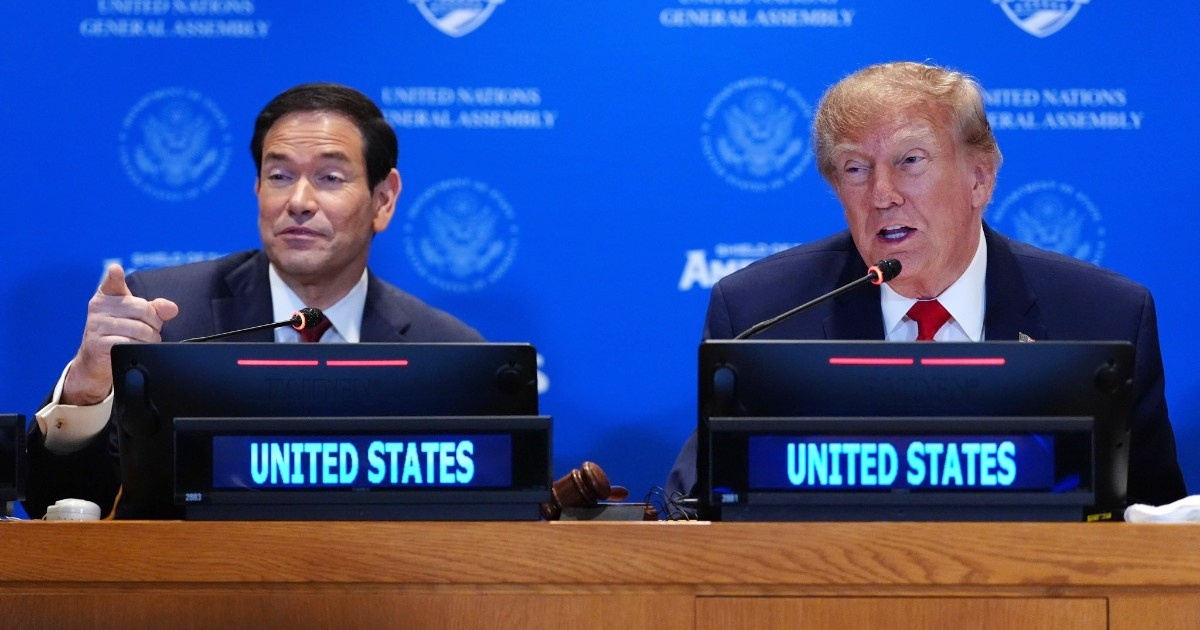
The recent electoral defeat of the Republicans won't bring any relief to the Cuban regime. A U.S. official has made it clear that the Trump Administration remains firm in its stance against Havana and continues to anticipate the eventual "collapse of the regime."
This cautionary message was featured in an analysis by Patrick Oppmann, CNN's correspondent in Cuba, who evaluated Trump's strategy towards the island following the electoral setback and the possibility of maintaining pressure should Marco Rubio assume the presidency.
Oppmann notes that Cuban officials privately expressed hope that a Republican loss in the midterms, combined with American voters' aversion to military interventions, might temper the White House's ambitions regarding Cuba.
However, according to the official consulted by CNN, the election results will not lead to any easing of U.S. policies towards the island.
The Continuing U.S. Focus on Cuba
President Trump has stated his intent to resolve the "Cuba issue" before leaving office. He told conservative radio host Hugh Hewitt that he might consider military action to topple the Cuban government, raising tensions with Havana. According to CNN, Cuba has been preparing its military and civilian militias for potential U.S. military intervention.
"Cuba does not attack or threaten any nation, but we will resist any attempt of foreign military aggression, and we are preparing for that threat," responded Miguel Díaz-Canel on X.
U.S. Demands on Cuba
In his analysis, Oppmann reports that during several meetings in 2026, U.S. officials warned their Cuban counterparts to liberalize the island's economic and political model and cease their cooperation with U.S. adversaries or face consequences.
The formal indictment against former Cuban president Raúl Castro in May, shortly after Nicolás Maduro's capture in Venezuela, reinforced these warnings. Marco Rubio, a key architect of the pressure strategy on Havana, has emphasized the need for leadership change in Cuba, citing U.S. legal requirements for lifting sanctions.
"Cuba's economic trajectory cannot change while its current leaders remain," Rubio told Fox News in May.
Strained Diplomatic Relations
Despite maintaining formal diplomatic relations with Havana, the Trump Administration has labeled the Cuban government as an "illegitimate regime" for months. Tensions were highlighted in October when Cuban Foreign Minister Bruno Rodríguez Parrilla attempted to interrupt U.S. Ambassador Mike Waltz's speech at the United Nations. Subsequently, a Cuban diplomat was expelled for allegedly shoving a U.S. official, CNN reported.
Oppmann highlights the deteriorating economic situation in Cuba, marked by prolonged blackouts, increasing food and medicine shortages, and the depreciation of the Cuban peso. Yet, the regime maintains tight internal control.
Limited talks between the two governments have yet to yield tangible results, and Washington has not found a figure within the Cuban leadership akin to "their Delcy," a reference to Delcy Rodríguez, Nicolás Maduro's successor in Venezuela, who might be more amenable to U.S. demands.
While Trump predicts that Cuban leaders might eventually make concessions to ease U.S. pressure, Oppmann argues that the prospects for diplomatic progress remain slim. Cuban officials view the potential economic benefits of an agreement with the U.S. as a double-edged sword.
Oppmann recalls a conversation with a Cuban diplomat who summed up Havana's stance: "We know that if the Americans are for it, we should be against it."
The Future of U.S. Pressure on Cuba
Oppmann's analysis suggests another scenario for the Cuban regime: Marco Rubio potentially ascending to the U.S. presidency in 2028. Republican donors and lawmakers are quietly promoting Rubio's potential candidacy following the electoral defeat.
Even if the Secretary of State were to leave the Trump Administration to prepare for his run, any relief Havana might experience would likely be temporary. Should Rubio win the presidency, he is expected to advance Trump's plans concerning Cuba.
Ricardo Herrero, executive director of the Cuba Study Group, suggests that Cuban authorities might be missing the chance to secure a lasting agreement with one of their biggest political adversaries. "It's like Nixon going to China," Herrero told CNN, arguing that an agreement with the current U.S. administration, although politically costly for Havana, might endure longer than one negotiated with the Democrats.
Frequently Asked Questions on U.S.-Cuba Relations
What is the current U.S. policy towards Cuba?
The U.S. maintains a strict policy against Cuba, emphasizing economic sanctions and pressure for political change.
How has the Cuban government responded to U.S. pressure?
Cuba has increased military preparedness and maintains strong internal control, resisting U.S. demands.
What are the economic conditions in Cuba?
Cuba faces severe economic challenges, including blackouts, food and medicine shortages, and currency depreciation.