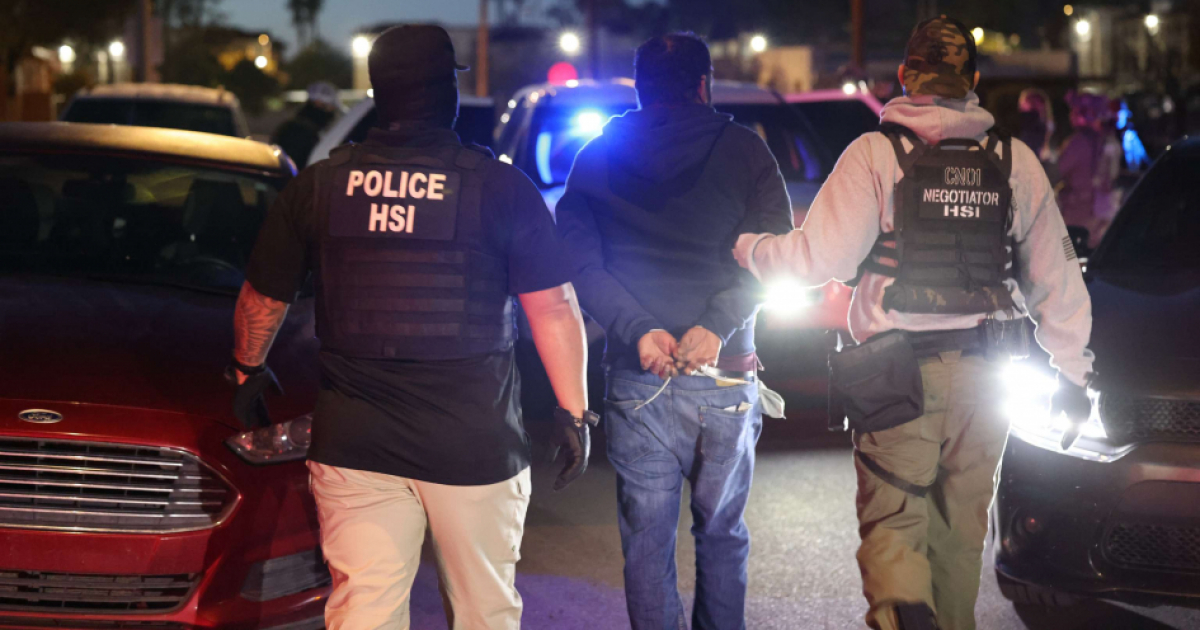
A federal judge in California has ordered a halt to the Immigration and Customs Enforcement's (ICE) practice of re-arresting immigrants during their routine check-ins. This decision, while not directly affecting Cubans in Florida, sets a significant legal precedent against such tactics.
Simultaneously, a class-action lawsuit filed in Georgia is progressing within the same federal circuit that includes Florida. If successful, it could compel ICE to modify its approach in that state as well.
Judge Dana M. Sabraw of the Southern District of California certified the case Fanfan et al. v. Noem et al. as a class action, instructing ICE to refrain from re-arresting individuals already released with ongoing court cases during check-ins, unless a significant change in circumstances is individually assessed.
The ruling is currently applicable only in San Diego and Imperial counties.
This case was initiated by the Center for Human Rights and Constitutional Law alongside UCLA's School of Law. "ICE was drawing these individuals to check-ins or ICE appointments and re-detaining them without justification," stated Monika Langarica, the legal director of the organization.
The implications of ICE's re-arrest practices during check-ins for Cubans in Florida are part of a continually evolving immigration landscape. Stay updated on the latest developments in our U.S. Immigration section.
This is not the first such order; in December 2025, Judge Sabraw had previously issued a temporary restraining order in the case, while a San Francisco court blocked the same practice for Northern California.
Georgia Lawsuit: Its Significance for Florida
The most critical judicial front for Cubans in Florida began on November 12 in the Northern District of Georgia. The ACLU from Georgia, North Carolina, and South Carolina, along with the Foley Hoag law firm, filed a class-action lawsuit against the Department of Homeland Security, Secretary Markwayne Mullin, ICE Acting Director David Venturella, and Kristen Sullivan, the acting director of ICE's Atlanta office.
The lawsuit challenges the "redetention policy" that DHS adopted around May 2025, abandoning the "change of circumstances policy" that the Atlanta ICE office had followed for over four decades.
Under the previous policy, ICE could not re-arrest someone previously released without first determining that their circumstances had materially changed. "Our clients have adhered to the rules imposed by the government. They have attended court hearings, ICE check-ins, and complied with the conditions of their release," said Corina Scott, an attorney with the ACLU of North Carolina.
Georgia's link to the 11th Circuit, which also covers Florida and Alabama, is key. If the lawsuit succeeds and reaches appeal, a ruling from that court would be binding across the circuit.
As of this edition, the court has not yet ruled on the motions for stay and class certification filed on November 17.
Implications for Cubans in Miramar
Thousands of Cubans with Form I-220A regularly visit the ICE office in Miramar, South Florida, where arrests during these appointments and alleged abuses have led to a federal complaint filed by the SPLC and Americans for Immigrant Justice.
Currently, the judicial decisions from California and Georgia do not directly impact Florida. However, the legal framework they establish—requiring individual assessments before re-arrest—is already being used by attorneys in habeas corpus petitions in the Southern District of Florida, where over 97,000 detainees have resorted to this since Trump's return.
The legal outlook for Cubans with I-220A is mixed: Last May, the 11th Circuit recognized the right to bond hearings for detainees within the country, but on November 17, the same court ruled that the I-220A does not equate to the parole required by the Cuban Adjustment Act, blocking a path to residency for many.
While courts determine the extent of these protections, experts advise continuing to attend appointments in Miramar, as failing to do so increases the risk of detention. It's recommended to always have an immigration attorney accessible before any ICE appointment.
Understanding ICE's Legal Challenges and Impact on Cubans
What is the significance of the federal judge's decision in California?
The decision halts ICE's practice of re-arresting immigrants during routine check-ins without an individual assessment of changed circumstances, setting a legal precedent that could affect future cases.
How could the Georgia lawsuit impact Cuban immigrants in Florida?
If successful, the lawsuit could lead to changes in ICE's policies across the 11th Circuit, which includes Florida, potentially altering how re-arrests are handled.
What should Cuban immigrants with I-220A do while awaiting these legal outcomes?
Experts advise continuing to attend ICE appointments to avoid increased detention risks and to have an immigration attorney available for assistance.