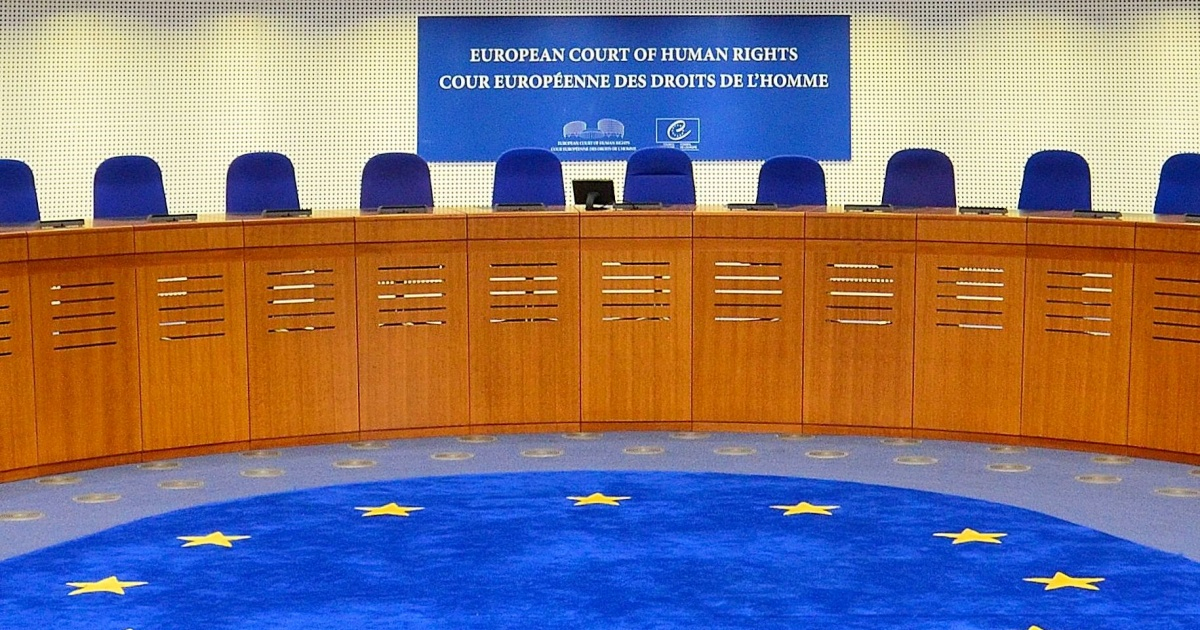
The European Court of Human Rights (ECHR) has mandated Lithuania to provide 60,000 euros in compensation to four Cuban migrants who were unlawfully detained for six months in 2022. These individuals attempted to enter Lithuania from Belarus seeking asylum.
The ruling, issued on Tuesday by the Grand Chamber in Strasbourg, found that Lithuanian authorities violated the rights to liberty and security of the Cuban nationals.
According to the European Union Agency for Asylum (EUAA), each migrant is entitled to 15,000 euros for moral damages, along with a collective sum of 1,800 euros for legal fees and expenses. This brings Lithuania's total financial obligation to 61,800 euros.
The ruling focuses not on the return of the migrants to Belarus but on their illegal detention within Lithuanian territory.
The ECHR's Stance on Belarus Returns
Despite acknowledging the unlawful detentions, the ECHR dismissed another major claim from the Cubans: their repeated returns to Belarus. By a vote of 11 to 6, the judges concluded that these expulsions did not violate Article 3 of the European Convention on Human Rights, which prohibits torture and inhumane or degrading treatment.
The court's official statement highlights the "instrumentalization of migration" by Belarusian authorities, who allegedly encouraged and facilitated the movement of migrants toward neighboring borders to destabilize these regions.
Under such circumstances, the ECHR noted that returning migrants to Belarus does not inherently breach Article 3, although states must identify and protect those particularly vulnerable to severe harm.
Why Lithuania Must Compensate the Cuban Migrants
The case, identified as C.O.C.G. and Others v. Lithuania, file number 17764/22, originated in spring 2022. The migrants were detained from April 15 to October 18 of that year at Medininkai and Pabradė foreign registration centers, which were secure and closely monitored.
During their detention, their freedom of movement was severely restricted. The judges unanimously determined that Lithuania breached three fundamental rights under Article 5 of the European Convention on Human Rights: the right not to be unlawfully deprived of liberty, the right to be informed promptly of detention reasons, and the right to challenge the detention in court.
The migrants did not receive individual decisions justifying their detention nor had effective legal means to contest the legality of their situation. Lithuania's Constitutional Court had already declared the legal framework allowing such detentions unconstitutional, as it did not consider personal circumstances or less restrictive measures.
The ECHR concluded that Lithuania's laws at the time did not meet the minimum legality standards required, even in scenarios involving a mass influx of asylum seekers.
Who Are the Cuban Plaintiffs?
The four plaintiffs, Sonia Hernández, Carlos Cruz, Yarisledy Rodríguez, and a woman who chose to remain anonymous, fled Cuba in 2021 following anti-government protests on July 11, fearing for their safety.
Yarisledy Rodríguez, a dancer from Ciego de Ávila, left after witnessing friends being jailed, with one sentenced to four years. The group traveled to Russia, which did not require visas for short stays, and then flew to Minsk, Belarus, intending to seek international protection in Lithuania.
Challenges Faced at the Lithuania-Belarus Border
What was meant to be a path to safety became a harrowing ordeal as the Cubans spent two weeks trapped at the border, repeatedly intercepted and returned to Belarus despite their asylum intentions.
They endured cold temperatures, food shortages, and alleged mistreatment from border agents. According to Sonia Hernández, Belarusian guards chased them at night, forcing them to hide in the woods.
On April 8, 2022, with volunteer assistance, the ECHR issued a provisional measure to prevent their expulsion from Lithuania, provided they were on Lithuanian soil. Yet, they were returned to Belarus the next day, as Lithuanian authorities claimed they could not verify the court order in time.
Eventually, on April 13, they entered Lithuania, where they were detained and initiated their asylum procedures. By early 2023, all four were granted refugee status and permanent residency in Lithuania.
Implications for European Borders
This ruling is part of a series concerning migrant returns at the Lithuania, Latvia, and Poland borders with Belarus. The EU has accused Belarusian President Aleksandr Lukashenko of using migration to politically pressure EU nations.
In related cases, the ECHR condemned Poland for returning an Afghan national to Belarus despite a court order and found Latvia violated the rights of Iraqi minors and families by sending them back to Belarus.
Amnesty International's Response
Amnesty International criticized the rulings as a "devastating blow" to protection against torture and mistreatment at European borders. Mandi Mudarikwa of Amnesty highlighted the difficulty for migrants to access protection, arguing that their rights are continuously violated by Belarusian authorities and limited access to justice.
The organization asserts that the judgments do not exempt states from fulfilling international human rights obligations, including the right to seek asylum. These Grand Chamber decisions are final and binding, overseen by the Council of Europe's Committee of Ministers.
Understanding the ECHR's Ruling
What was the basis for the ECHR's decision against Lithuania?
The ECHR found that Lithuania unlawfully detained the Cuban migrants, violating their rights to liberty and security, as outlined in Article 5 of the European Convention on Human Rights.
Why were the Cuban migrants initially detained in Lithuania?
The Cuban migrants were detained after attempting to enter Lithuania from Belarus seeking asylum. They were held in foreign registration centers with restricted movement.
Did the ECHR rule against the return of migrants to Belarus?
No, the ECHR did not find the returns to Belarus in violation of human rights, as they did not inherently breach Article 3 of the European Convention.