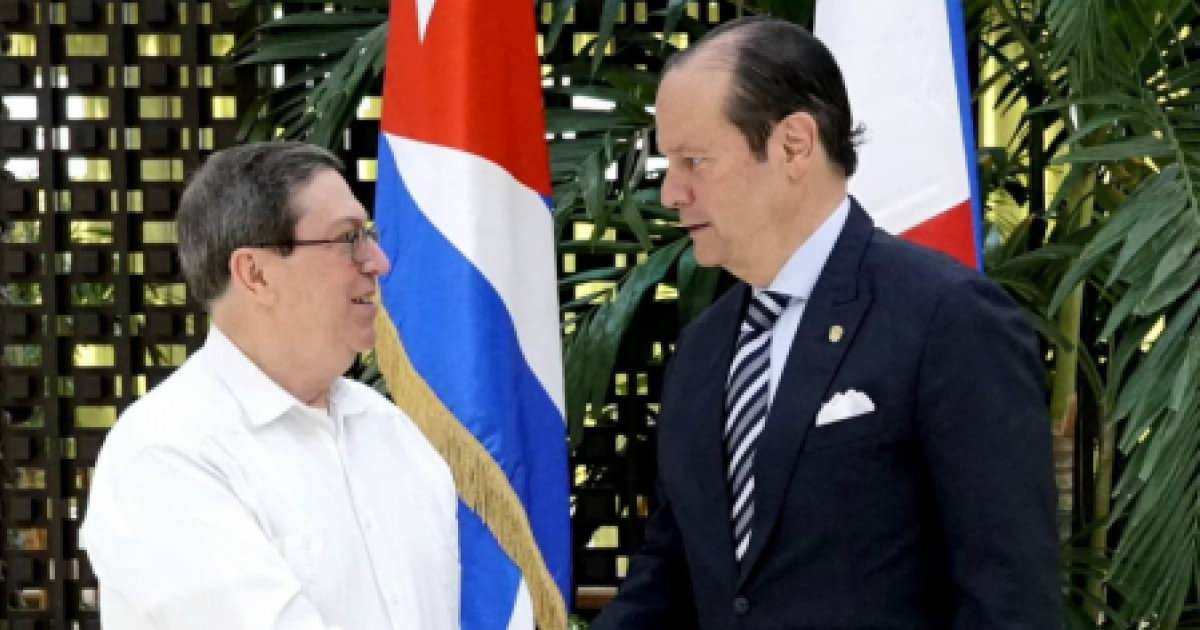
On Wednesday, Panama's Foreign Minister, Javier Martínez-Acha, made his second official visit to Havana this year, focusing on the detention of seven Panamanian citizens held in Cuba since February 28.
The individuals are accused of "committing a crime against the constitutional order of the Republic of Cuba" for allegedly displaying signs with messages critical of the Cuban regime. Panama's Ministry of Foreign Affairs has confirmed that this trip is part of ongoing diplomatic efforts, now spanning nine months, to secure the return of these citizens.
Cuba's Ministry of Foreign Affairs reported that the two ministers discussed topics on the bilateral agenda, as well as cooperation in migration and consular matters.
Regarding the detainees, the Cuban statement merely noted, "The Foreign Minister was updated on the situation of the seven Panamanian citizens detained in Cuba."
Upon arrival, Martínez-Acha was greeted by Otto Vaillant Frías, the Director General of Latin America and the Caribbean at Cuba's Ministry of Foreign Affairs, before meeting with Cuban Foreign Minister Bruno Rodríguez Parrilla.
The incident dates back to February 28, when ten Panamanians were arrested in Havana for allegedly posting signs with phrases like "Down with tyranny," "Communism: enemy of the community," and "We trust Donald Trump, Marco Rubio, and Mike Hammer."
Cuba's Ministry of the Interior claimed that the detainees were "recruited in Panama to create signs with subversive content" and were promised between $1,000 and $1,500 upon returning home.
Panamanian activist Jair Ortiz, who left Cuba before the arrests, provided a different account, stating that the group traveled to offer humanitarian aid and distribute food to vulnerable families.
Three women from the group—Evelyn Castro, Cinthia del Carmen Camarena, and Abigail Sthefany Gudiño—were released on April 25 through legal mechanisms termed "effective collaborator" and "opportunity criterion." They returned to Panama the same day. The remaining seven are still held at Villa Marista, the headquarters of Cuba's State Security in Havana.
The charge of "propaganda against the constitutional order" carries potential sentences ranging from three to eight years in its basic form, and four to ten years if social media was used.
This marks the second visit by Martínez-Acha to Havana for this issue. During his initial visit in March, he met with the ten detainees and verified that they were receiving "humane treatment and adequate legal assistance," according to official statements from both foreign ministries.
On November 24, the Foreign Minister confirmed that the judicial investigation phase had concluded and that Panama's diplomatic representatives maintain regular contact with the detainees, who have legal support provided by the Panamanian state.
Panama has engaged Cuban lawyers for the defense of the seven men. In July, Martínez-Acha announced that his government would request that, if found guilty, the seven men serve any sentences in Panama, citing international mechanisms for the transfer of convicted individuals.
Key Details on Panamanian Detainees in Cuba
What are the charges against the Panamanian detainees?
The detainees are accused of "committing a crime against the constitutional order of the Republic of Cuba" for allegedly placing signs with messages against the regime.
What legal support are the detainees receiving?
The detainees have access to legal assistance provided by the Panamanian government, and Cuban lawyers have been hired for their defense.
What steps has Panama taken regarding the detainees?
Panama has engaged in diplomatic efforts for nine months to secure the return of its citizens and is considering requesting their transfer to Panama if convicted.