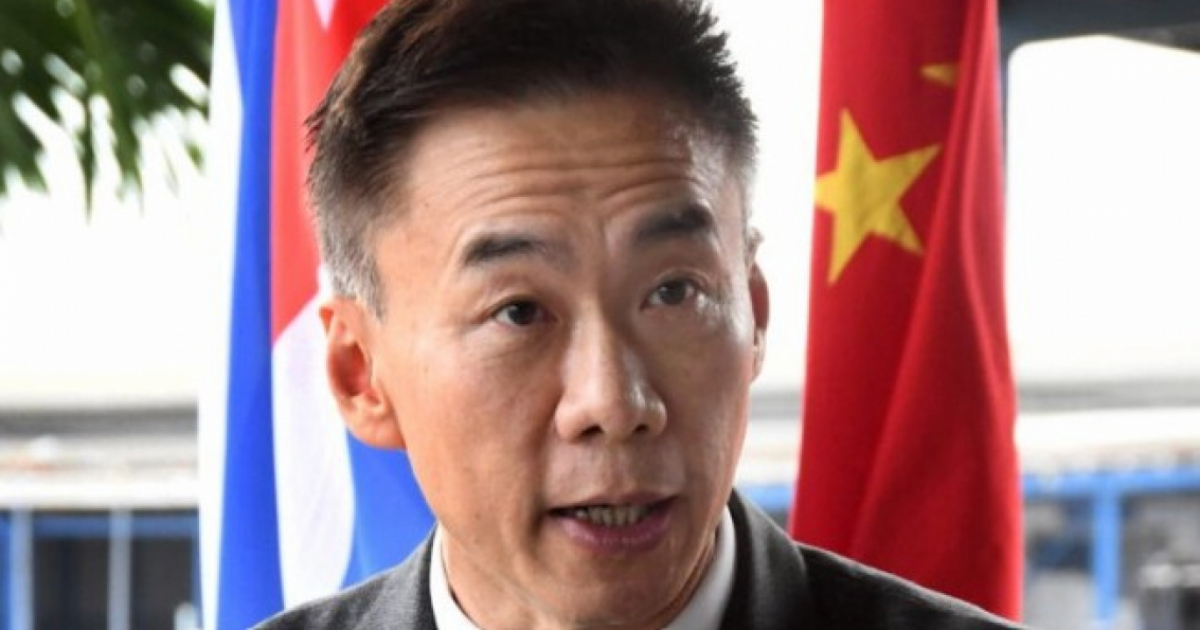
The Chinese Ambassador to Cuba, Hua Xin, has provided a stark depiction of Cuba's ongoing energy crisis, surpassing any acknowledgement by the Cuban government itself. In an article published in the People's Daily, the official newspaper of the Chinese Communist Party, he detailed power outages in Havana lasting over 20 hours daily, leaving hospitals and nursing homes "completely in the dark" and necessitating the use of flashlights during childbirth.
The piece, titled "The Sun Cannot Be Blocked," serves as official propaganda from a regime ally and should be interpreted as such. Nevertheless, the figures presented offer a glimpse into a reality that Havana often glosses over in its state media.
"This year, due to the impact of unilateral sanctions, Cuba has encountered an unprecedented shortage of oil and electricity. Hospitals, schools, and nursing homes are entirely dark; in many areas, including the capital Havana, power cuts exceed 20 hours a day," Hua Xin wrote, according to the Chinese embassy.
The ambassador recounted visiting a Havana clinic where staff admitted that during the worst times, they "could only hold flashlights to care for critical patients, and even to assist in childbirth," until solar panels donated by China were installed.
Hua Xin places the blame squarely on the U.S. embargo—referred to as a "blockade"—and cites Cuban government statistics claiming solar energy contributes between one-third and half of midday peak generation. These figures are sourced from official Cuban channels and have not been independently verified.
Learning from China's Economic Reforms
While the Chinese ambassador painted a picture of a darkened Cuba, another significant event unfolded in Beijing. Cai Qi, ranked fifth in the hierarchy of the Chinese Communist Party's Politburo Standing Committee and effectively Xi Jinping's chief of staff, hosted a delegation from the Cuban Communist Party led by Jorge Luis Broche Lorenzo, a member of the PCC's Central Committee Secretariat and head of its Economic-Productive Department.
According to the official statement from the Chinese embassy, Broche Lorenzo expressed gratitude to Beijing for its support amidst the "current difficult situation" and stated, "We wish to deeply learn from the successful experience of the Chinese Communist Party in directing reform and opening up, and in advancing economic and social transformation."
The Chinese reforms that the Cuban officials are eager to study include agricultural de-collectivization, special economic zones, and the market as a central mechanism. These are aspects the Cuban regime has resisted or only partially and reversibly implemented over the decades.
Strengthening Bilateral Ties
Broche's visit is part of a series of intense bilateral diplomatic activities. Earlier this month, Cuban Foreign Minister Bruno Rodríguez Parrilla traveled to China as a special envoy of the PCC and the Cuban government, meeting with Wang Yi and signing three biopharmaceutical agreements in Shanghai.
Throughout 2026, China approved an emergency package worth $80 million and delivered 10,000 photovoltaic systems in two batches, with plans to construct 92 solar parks totaling 2,000 MW by 2028.
Understanding Cuba's Energy Crisis and Sino-Cuban Relations
What are the main causes of Cuba's current energy crisis?
Cuba's energy crisis is primarily attributed to the impact of unilateral sanctions, leading to severe shortages of oil and electricity. The situation is exacerbated by outdated infrastructure and reliance on external aid.
How is China assisting Cuba during this energy crisis?
China is aiding Cuba by donating solar panels and approving an $80 million emergency package. Additionally, China plans to build 92 solar parks by 2028 to help alleviate the energy shortage.
Why are Cuban officials interested in learning from China's economic reforms?
Cuban officials are interested in China's economic reforms because they see potential in adopting strategies like agricultural de-collectivization and special economic zones to transform their economy and improve social conditions.