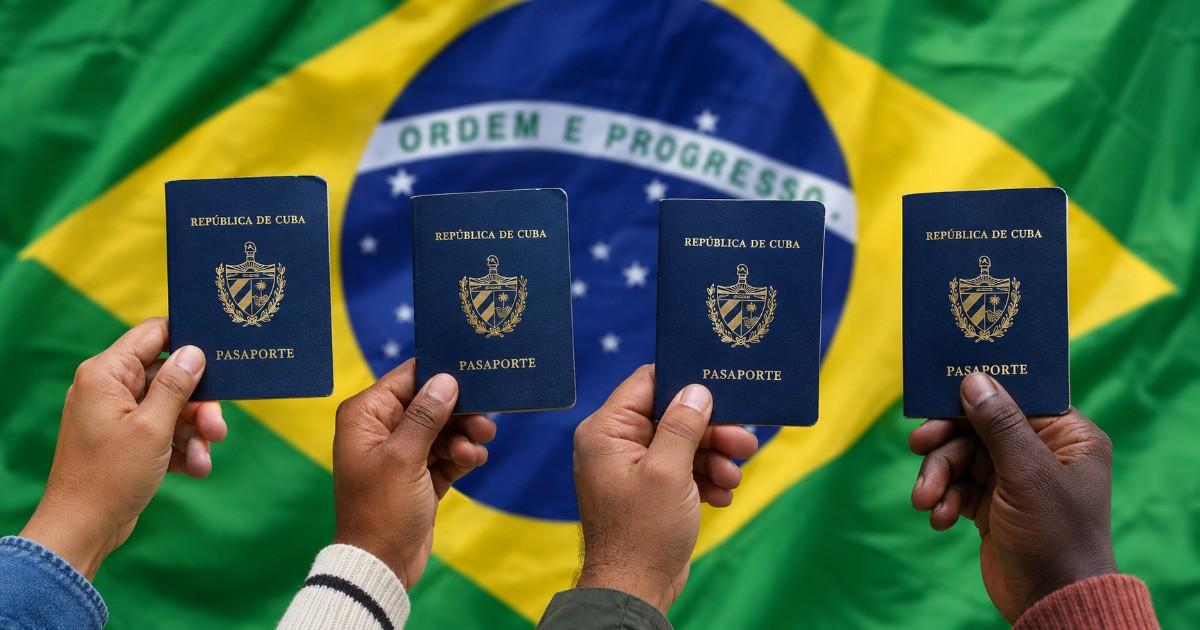
In September, Cuban nationals set a new record for asylum requests in Brazil, with a staggering 4,885 applications submitted in just one month, according to the International Migrations Observatory (OBMigra) within Brazil's Ministry of Justice, as reported by Portal 8K this week.
From January to September 2026, Cubans filed a total of 33,185 asylum applications, marking an 8% increase compared to the same timeframe in the previous year, which saw 30,731 applications. Cuban requests comprised nearly 60% of all international protection applications received by Brazil during this period.
The most significant spike occurred starting in August, when applications rose to 4,292, an 18% increase over July. September saw an additional 13.8% increase over the August numbers.
This surge directly correlates with Cuba's most severe energy crisis in years, amidst escalating extreme poverty and simultaneous shortages of fuel, food, and medicine.
The crisis is a direct result of 67 years of communist dictatorship, exacerbated by the halt of Venezuelan oil supplies following Nicolás Maduro's capture by U.S. forces in January 2026.
Changing Routes and New Challenges
A notable development this year is the shift in entry routes. Roraima has overtaken Amapá as the primary entry point, accounting for 18,501 Cuban entries between January and September, 62.5% of the national total, compared to just 3,702 entries in all of 2025. Overland entries have increased from 23% to 66% of the total during the same period.
The established route begins in Havana and proceeds to Georgetown, the capital of Guyana. From there, it continues overland to Lethem and culminates in an irregular river crossing of the Tacutu into Bonfim, Roraima.
Coyotes facilitating this journey charge between $1,200 and $10,000 per migrant. Those who undertake these routes frequently face hunger, abandonment, and exploitation in remote jungle areas devoid of any assistance services.
Impact of Migration Policy Changes
This corridor has become an alternative due to stricter migration restrictions in the Darién. This route, which saw over 201,000 crossings in the first half of 2024, plummeted to just 280 during the same period in 2026, a reduction of over 99% following the Trump administration's tightened migration policies.
According to the International Organization for Migration, approximately 3,000 Cubans per month entered Brazil via Guyana during the first half of the year.
Cubans have long surpassed Venezuelans as the top nationality seeking asylum in Brazil. In 2024, Venezuelans led with 27,150 applications compared to 22,288 from Cubans. By 2025, the situation reversed, with Cubans nearly doubling their figures to 41,919, while Venezuelan applications dropped to 21,233.
Administrative Backlog and Delays
Behind the surge in new applications lies a critical administrative backlog. As of the end of September, 99,306 Cuban cases were pending resolution in Brazil, constituting 58.7% of the 169,136 pending cases across all nationalities.
Venezuelans are the second-largest group awaiting decisions, with 36,676 cases, followed by Colombians (3,440) and Haitians (3,136).
The formal recognition process for asylum can take more than five years, and progress has been nearly stagnant for Cubans. The responsible agency did not record any formal recognitions for Cuban citizens during the first four months of 2026.
Understanding the Cuban Asylum Crisis in Brazil
What has caused the increase in Cuban asylum applications in Brazil?
The rise in Cuban asylum applications in Brazil is primarily due to Cuba's severe energy crisis, escalating poverty, and shortages of essential supplies, which are direct results of decades of communist rule.
How has the route for Cuban migrants to Brazil changed?
The preferred route now begins in Havana, goes through Georgetown in Guyana, and then overland to Lethem, with an irregular crossing into Bonfim, Roraima, Brazil.
What are the challenges faced by Cubans using this migration route?
Cubans using this migration route often face extreme conditions such as hunger, abandonment, and exploitation in remote jungle areas, with coyotes charging hefty fees for their passage.
How long does the asylum process take for Cubans in Brazil?
The asylum process in Brazil can take over five years, and for Cuban applicants, it has been particularly slow, with no formal recognitions recorded in early 2026.