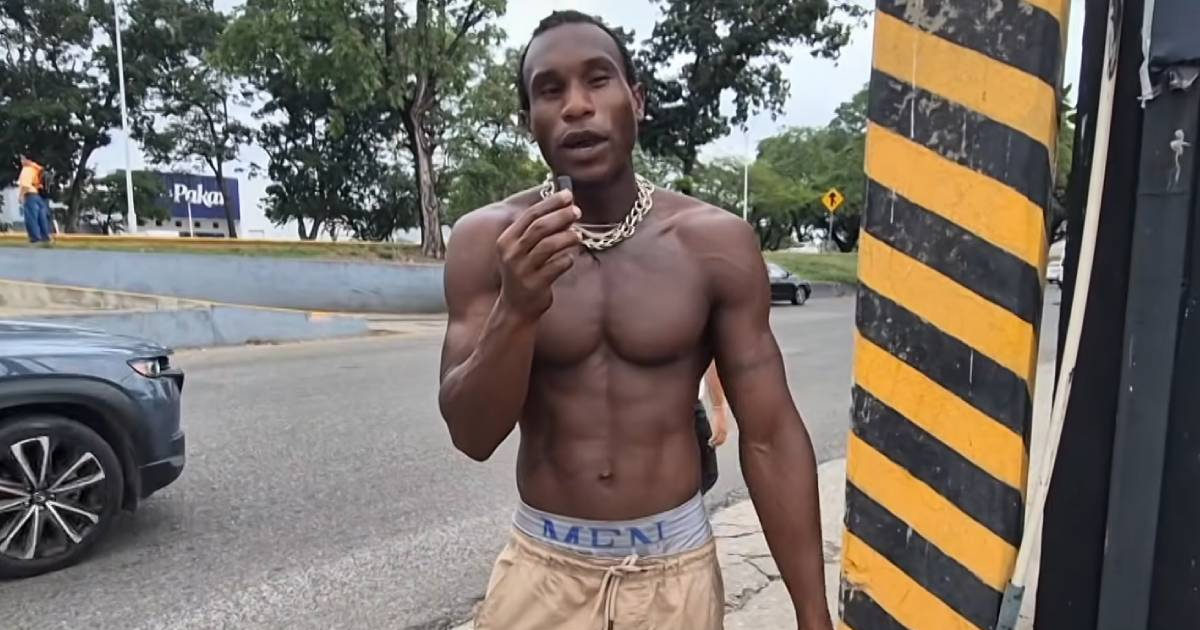
A young man from Havana, who previously worked as a model and entertainer in Miami, has become a trending topic on social media in Villahermosa, Tabasco. His striking height and physique caught the attention of local residents as he made his way through the city's streets. Known as Lisbany, his story was captured in an interview with Uno TV, which quickly spread across various platforms.
Lisbany shared that he had moved to Florida where he earned a living by modeling for clothing stores and entertaining at nightclubs. About six months ago, he was caught in an immigration raid and subsequently deported to Mexico, ending up in Tabasco without having chosen it as his destination.
Currently residing in the Casa Blanca neighborhood of Villahermosa, Lisbany lives in a borrowed room and spends his days searching for food, water, and job opportunities. So far, he hasn't been able to resume his modeling career in the Tabasco capital.
The Broader Impact of Deportations
Lisbany's story highlights the tangible effects of deportations from the United States. Stay updated on the latest developments by checking our U.S. Immigration section, covering issues impacting Cubans and other migrants.
His distinctive appearance continues to draw attention. Lisbany explained, "Women take pictures of me with hidden cameras in their cars. I can see them snapping photos as I walk by, and it really catches their attention."
Considering New Opportunities
Facing limited opportunities in Villahermosa, Lisbany is considering relocating to Tulum or Playa del Carmen, hoping these tourist hotspots will offer a more receptive market for his modeling skills.
His situation sheds light on a large-scale migration crisis affecting thousands of Cubans. According to a Human Rights Watch report, "They Leave Us Here to Die," released in May 2026, approximately 4,353 Cubans were deported from the U.S. to Mexico between January 20, 2025, and March 9 of that year. They were the largest group among nearly 13,000 people from other countries sent to Mexico.
By the same date, activists estimated that around 3,000 Cubans were stranded in Villahermosa, with about 800 more in Tapachula, Chiapas, lacking documentation, work permits, or a clear path to regularization.
The Structural Challenges of Deportation
The limbo these deportees find themselves in stems from structural issues: the Cuban regime refuses to accept certain individuals back, particularly those with criminal records, preventing their direct repatriation. Meanwhile, with a deportation order in place, they cannot return to the U.S.
Lisbany's story stands out for both his age and the viral nature of his situation compared to others in Villahermosa, such as Rafael Enrique Migolla, a 73-year-old Cuban deported in October 2025 after living in Miami since 1991, or Julio Borrell, who spent 46 years in Miami before being sent to Tapachula. They all face the same scenario: a country they did not choose, without a support network, and with no clear future.
Human Rights Watch also highlighted that none of the more than 40 Cubans interviewed for their report received protection interviews before being transferred to Mexico, a fact presented to the U.S. Supreme Court last Monday.
Key Issues Surrounding Cuban Deportations
Why was Lisbany deported to Mexico?
Lisbany was deported to Mexico following an immigration raid in Florida, despite not choosing Tabasco as his destination.
What challenges does Lisbany face in Villahermosa?
In Villahermosa, Lisbany struggles to find food, water, and employment opportunities, and has not been able to continue his modeling career.
How many Cubans have been deported to Mexico recently?
Between January 20, 2025, and March 9, 2026, approximately 4,353 Cubans were deported to Mexico, the largest group among nearly 13,000 deported individuals.