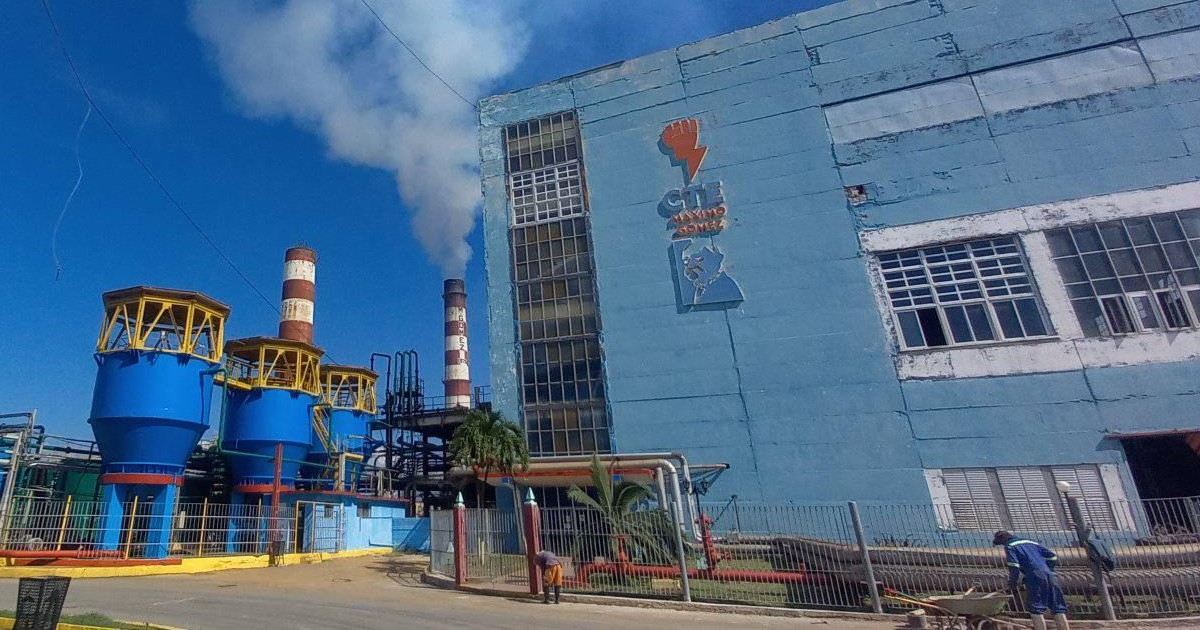
In a rare moment of candor, a Cuban citizen sarcastically remarked, "Finally, a believable excuse," upon hearing about the shutdown of Unit 6 at the Máximo Gómez Thermoelectric Plant in Mariel, located in the province of Artemisa. The reason? A shortage of fuel.
On November 24th, the Electric Union (UNE) made a brief announcement on Facebook regarding this latest disruption to the National Electric System (SEN). The post lacked details about the root of the fuel shortage and offered no timeline for when the unit might be back in operation.
The state-run company openly acknowledged, "Unit 6 of the Máximo Gómez Thermoelectric Plant is offline due to fuel shortage," sparking a wave of sarcastic responses from online users who have grown skeptical of the usual explanations given for power outages.
Public Skepticism and Reaction
Many netizens expressed their disbelief, with comments such as "The first time they tell the truth," "First believable news from UNE in years," and "Finally, a genuine justification." One user humorously awarded UNE a prize for honesty, posting, "And the award goes to #UneCuba for telling the truth."
Among the questions raised was the use of domestic crude oil at the Mariel plant. "I was under the impression that the crude used was Cuban... I truly don't understand," commented one user. Another questioned, "But doesn't that plant use national crude? If so, what went wrong?" Others speculated whether the issues stemmed from production, transportation, delivery, or the availability of suitable fuel.
Concerns Over Military Exercises and Future Power Supply
Criticism also targeted the recent military exercises, which proceeded amid ongoing power shortages for civilians. A user quipped, "No worries, there's no shortage for military drills," highlighting the irony of the situation.
The situation is further exacerbated by adverse weather conditions anticipated in the western part of the country, where lack of electricity hampers access to information. The overcast skies also impede solar panel energy generation, leaving citizens increasingly anxious. "When we most need electricity to stay informed, we’re left wanting," and "No sun, no power, what a lovely outlook," were some of the responses.
Fears are growing that the situation could deteriorate in the coming weeks, with one user lamenting, "This could be the worst December ever."
Historical Context of Cuba's Energy Crisis
While the acknowledgment of fuel scarcity grabbed attention, it isn't the first instance of Cuban authorities admitting its impact on electricity generation. Back in September, UNE officials disclosed the lack of imported fuel for operating distributed generation plants, floating power plants in Havana, and other facilities, which left over 1,200 megawatts (MW) of generation capacity offline.
Similarly, in June, during one of the most critical periods for the electrical system marked by the outage at the Felton thermoelectric plant, UNE reported that 106 distributed generation facilities, equating to 890 MW, were halted due to fuel shortages. By June 15th, when the Antonio Guiteras thermoelectric plant disconnected from the SEN, the unavailable generation capacity due to fuel issues had risen to 1,203 MW.
This problem isn't new. In November 2024, as Cuba braced for Hurricane Rafael, authorities acknowledged that fuel shortages, combined with malfunctions in various thermal units, contributed to a 1,750 MW deficit, causing blackouts lasting up to 20 hours in some regions.
Understanding Cuba's Energy Challenges
Why did Unit 6 at the Máximo Gómez Thermoelectric Plant shut down?
The shutdown of Unit 6 was due to a shortage of fuel, as acknowledged by the Electric Union (UNE).
What are the public's reactions to the fuel shortage announcement?
The public reacted with sarcasm and skepticism, viewing the admission as a rare moment of honesty from the authorities.
How has the lack of electricity affected daily life in Cuba?
The lack of electricity has disrupted access to information, especially during adverse weather, and has heightened concerns over future power shortages.