On Tuesday, Russia's ambassador to Cuba, Victor Koronelli, disclosed that interactions between Havana and Washington have come to a halt, dismissing the notion of any formal negotiations between the two governments. His remarks were given in an interview with the TASS agency and echoed by the Cuban state media outlet, Cubadebate.
"I wouldn't say that negotiations between Havana and Washington have failed. In fact, according to our Cuban partners, there is no comprehensive dialogue with the United States, but rather sporadic contacts that are currently suspended," stated the Russian diplomat.
Koronelli noted that in previous months, senior officials from the State Department and the CIA visited the island and met with their Cuban counterparts, yet these meetings did not yield tangible outcomes.
The Stalled Communication Channel
In July, Cuban Deputy Foreign Minister Carlos Fernández de Cossío confirmed that the regime accepted a communication channel proposed by Washington, but the talks did not advance due to conditions set by the U.S.
According to Koronelli, Havana is ready to discuss topics such as migration and humanitarian aid—including aid facilitated by Catholic organizations—but outright rejects any dialogue about its political system. "The demands by U.S. authorities for changes to Cuba's political system and internal organizational structure are absolutely unacceptable to the Cuban leadership; they will never agree to discuss these matters," emphasized the Russian ambassador.
Conditions for Dialogue
This stance was reiterated by Miguel Díaz-Canel just four days prior, when he offered dialogue to Washington but imposed firm conditions: "without pressure, without conditions, and without questioning our political system, our sovereignty, and our self-determination."
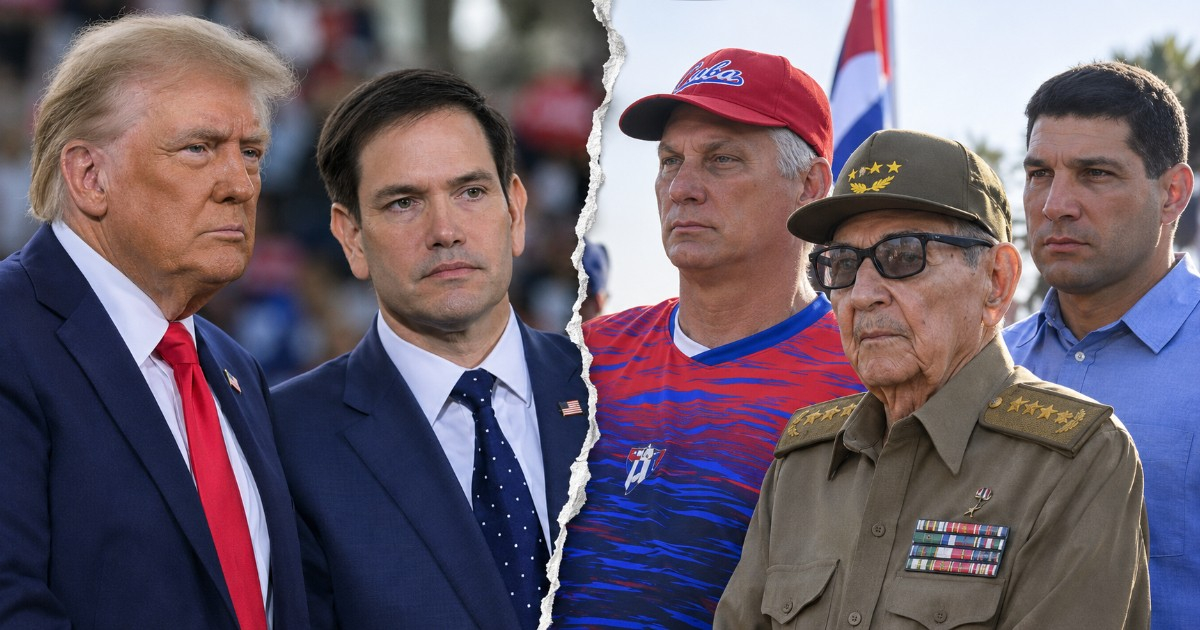
The ambassador's statements come amid heightened bilateral tensions. On November 12, Trump announced he might consider a short military campaign against Cuba, expressing a desire to "finish with Cuba" before leaving office. Secretary of State Marco Rubio, speaking from Paris on November 9, warned that the regime "fears granting its people any form of freedom" and that change would depend on its leaders "waking up and realizing there's no future in their current path."
International Support and Challenges
On the multilateral front, the UN resolution against the U.S. embargo on Cuba passed on October 28 received only 130 votes in favor, compared to 165 in 2025 and 187 in 2024, marking the lowest support since these votes began in 1992. Koronelli attributed this decline to "an unprecedented campaign" by Washington to weaken international backing for Havana.
The diplomat also acknowledged that Russian-Cuban cooperation faces tangible challenges: he cannot ensure that Russian companies will pursue new investments on the island, citing the risk of secondary U.S. sanctions as the main deterrent.
Despite these circumstances, Koronelli concluded his interview with a message of confidence in Cuban resilience, recalling the slogan that circulated during the Special Period of the 1990s: "They will endure now, just as they did in the 1990s. Simply because no one here gives up."
Key Questions on Cuba-U.S. Relations
What led to the suspension of exchanges between Cuba and the U.S.?
According to Russian Ambassador Victor Koronelli, exchanges are on hold due to the absence of a comprehensive dialogue and the imposition of conditions by the U.S. that Cuba finds unacceptable.
What topics is Cuba willing to discuss with the U.S.?
Cuba is open to discussing migration and humanitarian aid, including aid from Catholic organizations, but refuses to engage in discussions about its political system.
How has the international community's support for Cuba changed recently?
The UN resolution against the U.S. embargo on Cuba saw a decline in support, with only 130 votes in favor, the lowest since the series of votes began in 1992. This decrease is attributed to a campaign by Washington to erode international backing for Havana.