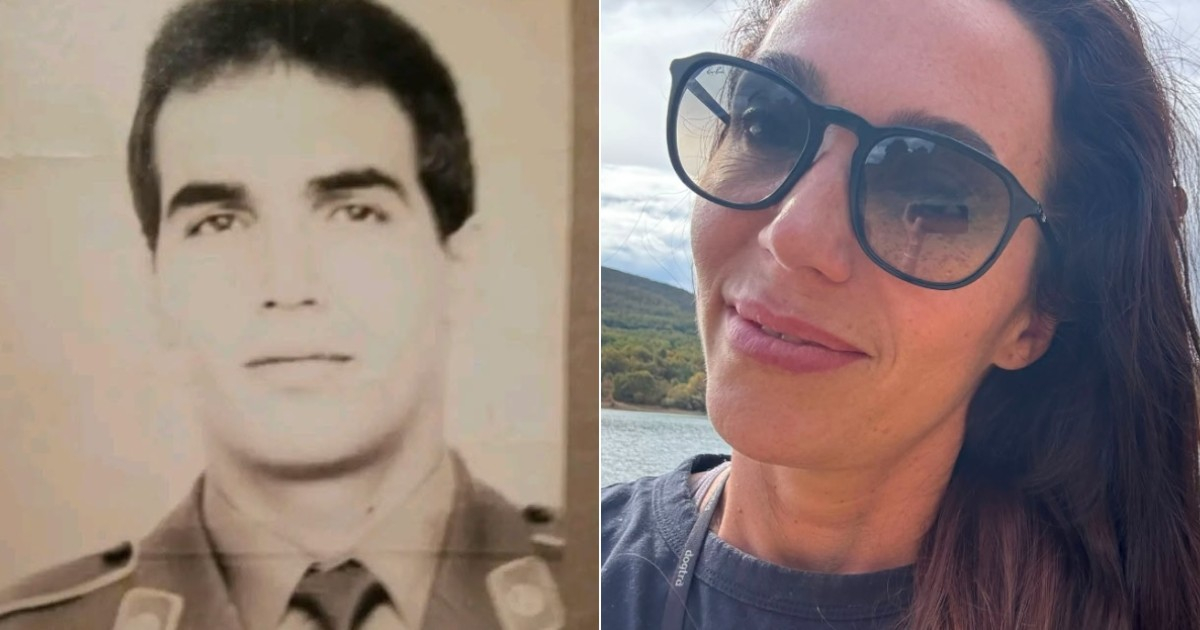
Yana Ernandes, living in Sofia, Bulgaria, shared on Facebook this Tuesday that she successfully located her Cuban father after a quest that rallied hundreds on social media, culminating in a surprising twist: her father was not in Cuba, but in Miami.
The search unfolded in two phases. Initially, widespread sharing of her appeal on Facebook—especially boosted by the efforts of Matanzas journalist Yuni Moliner—enabled Yana to connect with her siblings and other relatives in Matanzas. They informed her that her father, Jorge Luis Hernández Paulla, had been residing in Florida for many years.
With that crucial information, the search shifted to Miami, and the long-awaited reunion soon followed.
"HAPPY ENDING! I've found my dad and everything is great," Yana expressed on her Facebook profile, where she thanked those who supported her during this pivotal moment in her life.
In her message, she highlighted the assistance of "two wonderful women—they know who they are," who played a key role in concluding the search, without revealing their identities.
Yuni Moliner, who had previously shared the story and galvanized the online community, confirmed the outcome on her own profile: "Last night, they were able to communicate and begin to calmly rebuild a story that deserved this reunion."
The journalist also requested respect for Yana’s privacy moving forward, echoing the young woman's own request: "I kindly ask you to stop the search and refrain from sharing the previous posts, as from now on everything will proceed in a very private and discreet manner."
The Historical Context Behind the Reunion
The story finds its roots during the Cold War era. Jorge Luis Hernández Paulla attended the Military Construction Higher School in Sofia from 1980 to 1985, as part of educational cooperation programs between Cuba and socialist bloc countries. In 1986, he traveled to Cuba with Yana’s Bulgarian mother, but shortly after, she returned to her country with Yana, and over the years, communication between father and daughter dwindled.
Yuni Moliner had emphasized from the beginning that Yana’s intent was not materialistic: "After so many years, she simply wants the chance to hear his voice and give him the hug that distance and time have denied her."
This case reflects a broader phenomenon. During the Cold War, Cuba sent between 100,000 and 300,000 students and workers to the USSR, Bulgaria, Czechoslovakia, and other socialist countries through cooperation agreements. During those years, children of mixed couples were born, and when Cubans returned to the island or emigrated later, these children were often separated from one parent.
Social media has become the primary bridge for these reunions. In July 2026, Czech Veronika Nováková found her Cuban father, Leonel González, after 36 years without contact, following unsuccessful efforts with the Cuban Embassy in Prague.
Moliner encapsulated the significance of what happened with Yana in a phrase that also applies to all these cases: "Because when solidarity is set in motion, it can also make these small, great miracles possible."
Frequently Asked Questions about Reunions Through Social Media
How did Yana Ernandes find her father?
Yana Ernandes located her father through a widespread social media campaign on Facebook, supported by journalist Yuni Moliner, which connected her with relatives who informed her of her father's location in Miami.
What role did social media play in these reunions?
Social media serves as a crucial tool for connecting separated families, allowing individuals to reach out to a wider audience and gather information that leads to reunions.
What historical context influenced these separations?
During the Cold War, many Cubans were sent to socialist countries for education and work, resulting in mixed-nationality families. When these Cubans returned to Cuba or emigrated, families often got separated.