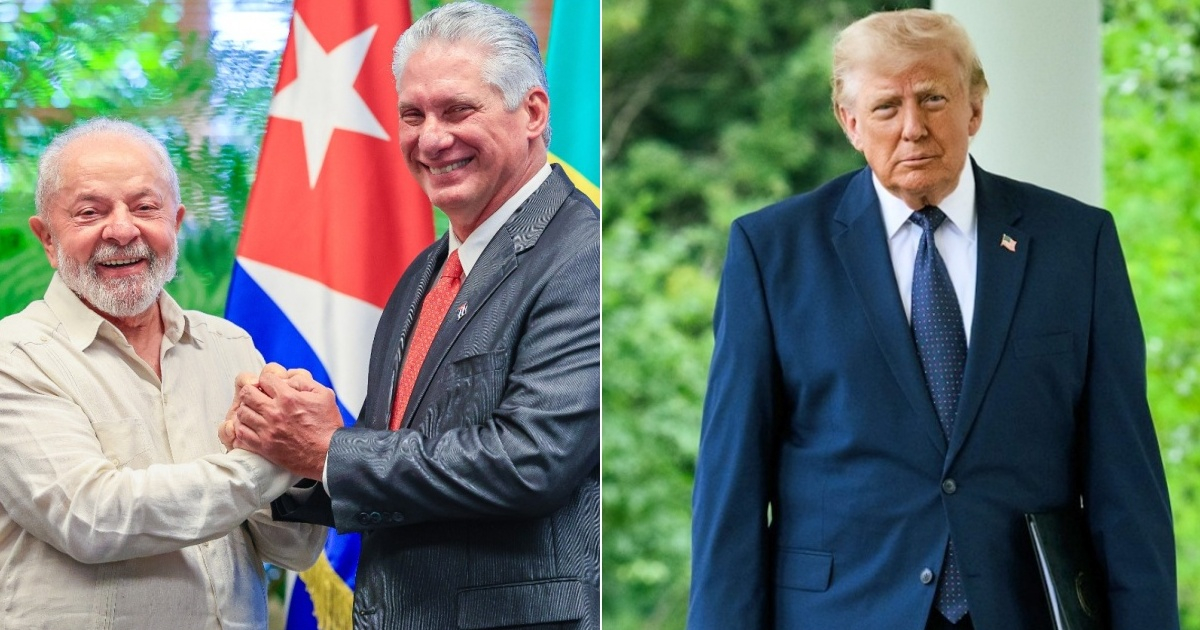
Over 60 Brazilian labor unions and social movements have increased pressure on President Luiz Inácio Lula da Silva and the state-controlled oil company, Petrobras, to supply fuel to Cuba. This plea comes after nine months without a response to their request for energy assistance to the island.
The "Oil for Cuba" campaign is gearing up for a renewed submission of the document initially presented in February to Brazil's Presidential Palace and Petrobras' president, Magda Chambriard, as reported by the Brazilian outlet, Brasil de Fato.
Economic Risks Deter Brazilian Government
The initiative faces concerns from the Brazilian government about potential economic repercussions of defying U.S. restrictions on supplying oil to Cuba—a risk acknowledged by members of Lula's administration.
On May 22, CNN Brazil disclosed that the Brazilian government had decided against offering energy aid to Cuba due to fears that Petrobras, which trades on the New York Stock Exchange, might face U.S. sanctions.
According to sources from the Presidential Palace, former President Donald Trump had not directly requested Brazil to cease its support for Havana. However, the administration deemed any fuel supply too risky due to the restrictions imposed on the island.
Brazilian authorities were also concerned that potential sanctions against Petrobras could hinder the government's efforts to stabilize domestic fuel prices.
Lula's Aide Acknowledges U.S. Concerns
In September, Celso Amorim, Lula's chief foreign policy adviser, admitted publicly that while Brazil wished to send fuel and additional aid to Cuba, there was apprehension about Washington's reaction.
During an interview with The New York Times, later featured in the Brazilian newspaper Folha de S.Paulo, Amorim explained that even Brazilian state companies have economic interests in the United States and are wary of possible repercussions.
Despite these challenges, Brazil has continued its humanitarian support to Cuba by sending medicines and food, with at least four shipments in 2026, according to Brasil de Fato.
Brazilian Unions Demand Petrobras Action
The campaign has been spearheaded by the Brazilian Movement of Solidarity with Cuba and Just Causes, alongside the two major Brazilian petroleum workers' unions: the Unified Federation of Oil Workers (FUP) and the National Federation of Oil Workers (FNP).
On February 13, the FUP formally requested a meeting with Petrobras' management to explore the feasibility of supplying Cuba with fuel and to analyze the operational and regulatory implications of such a decision.
The campaign suggests Brazil lead a regional cooperation initiative with the island that includes not only oil and its derivatives but also food, medical supplies, and solar energy projects.
On November 16, the Rio de Janeiro Oil Workers Union (Sindipetro-RJ) and other Latin American labor organizations issued a solidarity manifesto with Cuba, urging the governments of Brazil and Mexico to authorize the immediate shipment of oil.
The signatories believe both countries have the political leeway to act since they are not part of the "Shield of the Americas," a coalition initiated by Trump in March.
While the manifesto opposes U.S. oil restrictions, it also questions Cuba's economic policies, advocates for freedom of political and union organization on the island, and calls for the release of those jailed for participating in the July 11, 2021, protests.
Minimal Impact on Petrobras Production
Proponents of the campaign argue that Cuba's energy needs constitute a minor fraction of Petrobras' production. According to estimates cited by Brasil de Fato, under normal consumption conditions, Cuba would require about 110,000 barrels of oil per day, compared to a national production of roughly 40,000 barrels.
Based on these figures, the campaigners estimate that just over seven days of Petrobras' production could cover Cuba's deficit for a year.
However, this comparison considers Petrobras' combined oil and natural gas production, not solely the crude oil volume available for export.
Petrobras announced on November 10, in its official third-quarter 2026 report, a record production of 3.51 million barrels of oil equivalent per day and a net profit of 39.8 billion reais.
The company's total output includes hydrocarbons meant for the Brazilian domestic market, refinery supply, and its commercial obligations.
Cuba's Loss of Traditional Oil Suppliers
The pressure on Lula follows Cuba's loss of regular oil supplies from Venezuela and Mexico, its main crude suppliers during 2025.
Venezuelan shipments ceased after Nicolás Maduro's capture on January 3. Mexico also halted its deliveries after Trump signed an executive order on January 29, establishing a mechanism for imposing additional tariffs on countries supplying oil to Cuba.
Russia managed to send approximately 100,000 tons of crude aboard the tanker Anatoly Kolodkin, which docked in Matanzas on March 31. The Cuban ambassador in Moscow later acknowledged that this shipment only reduced blackouts for about two weeks.
International supply restrictions, coupled with the deterioration of Cuban thermoelectric plants, have exacerbated an energy crisis that predates Washington's measures this year.
Ironically, the United States has emerged as a significant fuel source for the island through authorized exports to the Cuban private sector.
A Wall Street Journal investigation published on November 12 revealed that, by August, over 1.6 million barrels of fuel worth more than $230 million had been shipped from U.S. ports to Cuba.
These imports have helped maintain the operation of vehicles, generators, and private businesses to some extent but fall short of meeting the country's energy needs and resolving the daily blackouts affecting the Cuban populace.
Frequently Asked Questions about Brazil, Cuba, and Oil Supply
Why is Brazil hesitant to supply oil to Cuba?
Brazil is concerned about the potential economic consequences and sanctions from the United States, which has imposed restrictions on oil supply to Cuba. This risk affects Brazilian companies like Petrobras, with economic interests tied to the U.S. market.
What role do Brazilian unions play in the "Oil for Cuba" campaign?
Brazilian labor unions, particularly in the petroleum sector, are actively advocating for Petrobras to supply oil to Cuba despite the risks. They have formally approached Petrobras to discuss the feasibility and implications of such support.
How has Cuba's energy supply been affected by changes in international relations?
Cuba has lost its traditional oil suppliers, Venezuela and Mexico, due to political and economic shifts. This has exacerbated an existing energy crisis, with limited international sources now available to fill the gap.