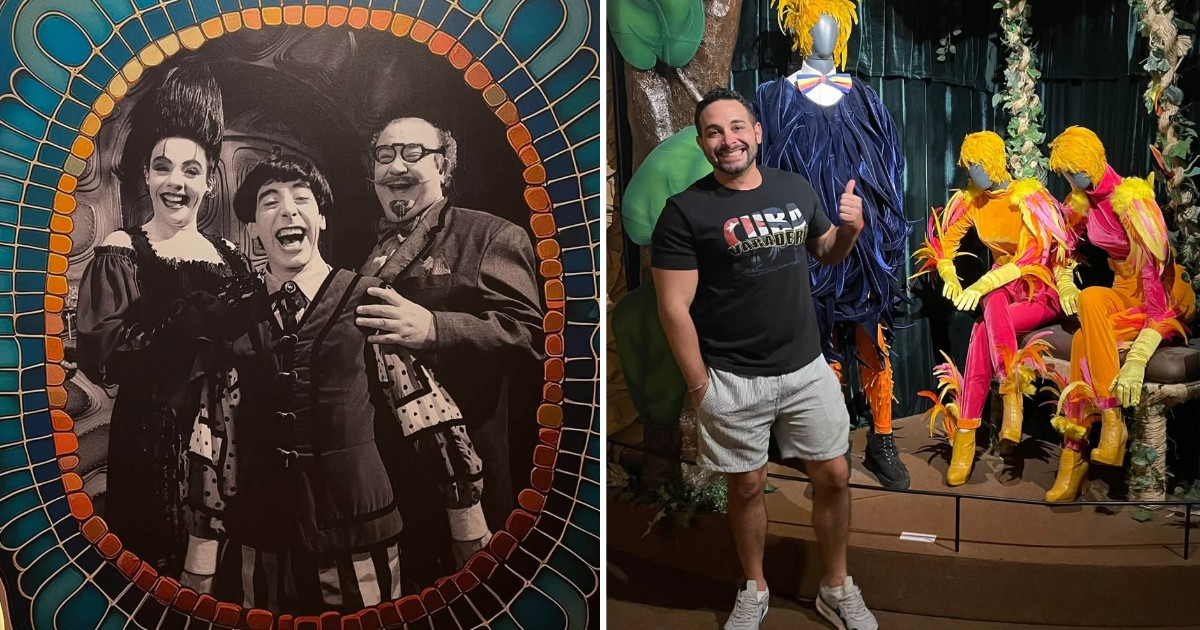
A Cuban resident in Brazil recently had a nostalgic journey back in time by attending a special exhibition celebrating the 30th anniversary of the beloved Brazilian children's series, Castle Rá-Tim-Bum. This show was a significant part of many Cuban children's lives during the 1990s.
Adiel González Maimó shared his experience on Facebook after visiting the exhibit, which has been set up at the Shopping Praia de Belas in Porto Alegre, Brazil since November 19. The exhibition is scheduled to remain open until February 24, 2027.
"Today's visit to the exhibition celebrating the 30 years of the series was a true journey against forgetfulness. It took me right back to my childhood, to a time that seems distant now, but where I was undoubtedly very happy," González Maimó wrote.
Exhibition Highlights and Nostalgia
The exhibition, titled Castelo Rá-Tim-Bum: 30 anos, features over 20 themed settings, complete with recreated scenes, costumes, puppets, and original props from the show.
According to González Maimó, Castle Rá-Tim-Bum made its way to Cuban television in 1995, making Cuba the first country outside of Brazil to broadcast it. This was possible due to an agreement between TV Cultura and Cubavisión. The series was dubbed into Spanish by Cuban actors at ICRT, providing a local touch that resonated with the children of that era.
The Impact of Castle Rá-Tim-Bum
The series, produced by TV Cultura and originally aired from May 9, 1994, to December 24, 1997, followed the adventures of young wizard Nino—a 300-year-old sorcerer's apprentice—alongside his Uncle Dr. Víctor, great-aunt Morgana, and neighborhood friends Pedro, Biba, and Zequinha.
Through its 90 episodes, the show taught viewers about history, science, ecology, literature, music, and civic values. The Blue Mouse character was instrumental in promoting hygiene habits, while the song "Pajarillo, ¿qué sonido es ese?" from another educational segment is still fondly remembered by a whole generation.
González Maimó also recalled that this song was used as a tool for homophobic bullying against him in school, due to the derogatory connotation the word "pájaro" carries in Cuba.
Lasting Memories
Castle Rá-Tim-Bum left an indelible mark on those who grew up watching it in 90s Cuba, and three decades later, its settings still evoke the same emotions. "I loved that series, I would rush home from school to watch it and sing: 'Pajarillo, what sound is that!'" reminisced one commenter.
Another shared, "What a beautiful and brilliant series, I remember it with a lot of affection. If some Brazilian soap operas captivated Cuban adults, without a doubt, this one captivated children and left a mark on an entire generation now nearing their 40s."
"I love the series that shaped the childhood of so many Cuban children. My sister still has her little decoration with the little mouse, and I'm searching for one here in São Paulo," expressed another Cuban.
FAQs about Castle Rá-Tim-Bum's Impact in Cuba
Why was Castle Rá-Tim-Bum so significant in Cuba?
Castle Rá-Tim-Bum was significant in Cuba because it was one of the first international children's series to be broadcasted in the country, offering a unique blend of education and entertainment with a local Spanish dub that resonated with Cuban children.
What educational themes did Castle Rá-Tim-Bum cover?
The series covered a wide range of educational themes including history, science, ecology, literature, music, and civic values, all delivered through engaging storytelling and memorable characters.
How did the Spanish dubbing influence its popularity in Cuba?
The Spanish dubbing by Cuban actors gave the series a local flavor that made it particularly relatable and enjoyable for Cuban children, contributing significantly to its popularity.