Dr. Andy S. Gómez, a noted analyst on Cuban affairs for Local 10 (WPLG) and a leading Cuban-American scholar, delivered a grim prognosis on the island's future this Monday.
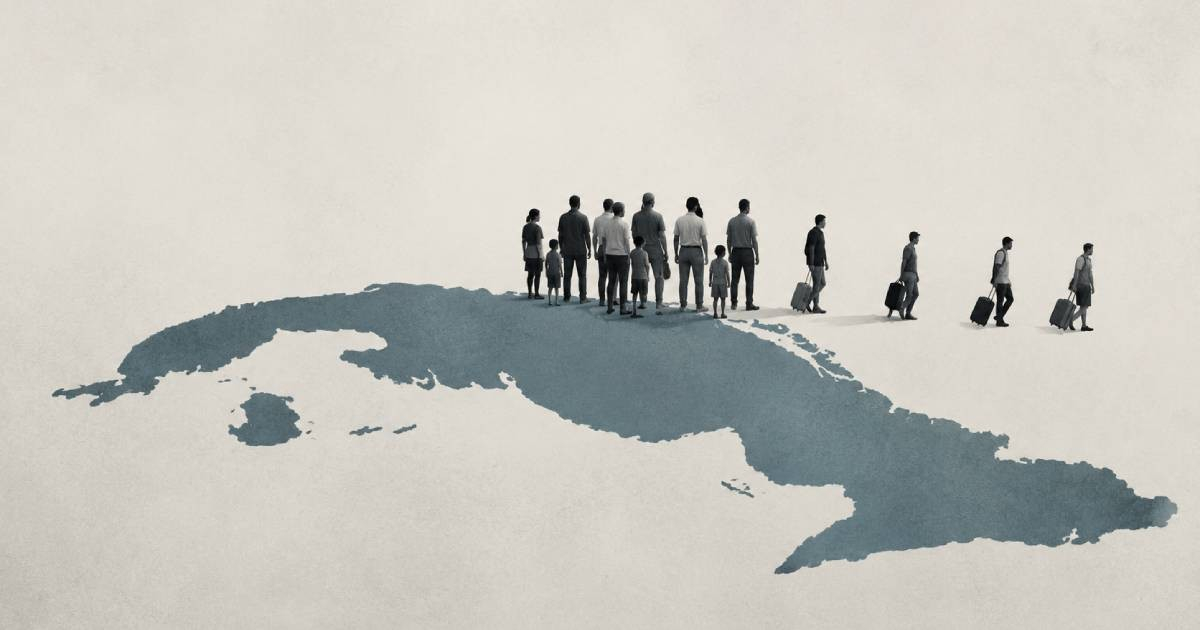
"Within Cuba, many who once hoped for U.S. intervention have now lost faith, especially among the younger generation. We can expect another significant wave of emigration, primarily involving individuals aged 18 to 45 seeking better lives and opportunities," Gómez remarked.
The turning point, according to Gómez, is due to a mix of factors. Firstly, the United States' ongoing involvement in Iran lacks a clear exit strategy, and negotiations between Washington and Tehran remain at a standstill.
Additionally, with the Democrats' victory in the midterm elections on November 3, they are set to take control of both Congressional chambers by January 2027. Gómez suggests that this political shift will complicate the Trump administration's ability to justify any military confrontation with Cuba's regime.
Given the current landscape, Gómez dismisses as "political theater" both the federal indictment by the Department of Justice against Raúl Castro, related to the 1996 downing of Brothers to the Rescue planes, and the arrest warrant signed by Judge Ariana Fajardo Orshan at the request of Florida Attorney General James Uthmeier in October.
In his view, these actions do not alter the status quo. Raúl Castro remains in Cuba, with no practical chance of extradition. "It's likely that nothing will come of it," the analyst stated.
Gómez's forecast aligns with a recent survey by the International Republican Institute, which indicated that 90% of Cuban youth believe the country is on the wrong path, and 85% of those aged 18 to 35 demand immediate and significant change.
Cuba experienced a population decline of over 313,000 people between 2024 and 2025, with an estimated 1.6 to 2.75 million people, roughly 13% to 25% of the population, having left the country since 2020.
In terms of exile efforts, Gómez points out that numerous opposition leaders have proposed transition plans. These include the Cuban American National Foundation's 13-pillar roadmap and $35 billion in investment promises from exiled business leaders.
However, the analyst warns that "there remains a lack of a centralized and cohesive effort" to transform these plans into actual change.
The accumulated disillusionment within Miami's Cuban community forms the backdrop of this analysis. Ten months after Nicolás Maduro's capture in Venezuela, the much-anticipated intervention in Cuba has not materialized.
Gómez concludes his analysis with a somber reflection: "The Cuban regime has survived once again, at least until Raúl Castro's death. Even then, the path to a free and improved Cuba remains uncertain. Only time will tell."
Understanding the Potential Cuban Exodus
Why are young Cubans losing hope for U.S. intervention?
Many young Cubans had hoped for U.S. intervention to bring about change, but ongoing geopolitical issues and political shifts in the U.S. have diminished these hopes.
What factors are contributing to the potential mass exodus from Cuba?
The combination of economic hardships, political stagnation, and the loss of hope for external intervention are driving many, especially the youth, to seek better opportunities abroad.
How has the political landscape in the U.S. affected its relations with Cuba?
The Democratic victory in the midterm elections is likely to make it more challenging for the U.S. administration to engage in military confrontation with Cuba, affecting diplomatic dynamics.