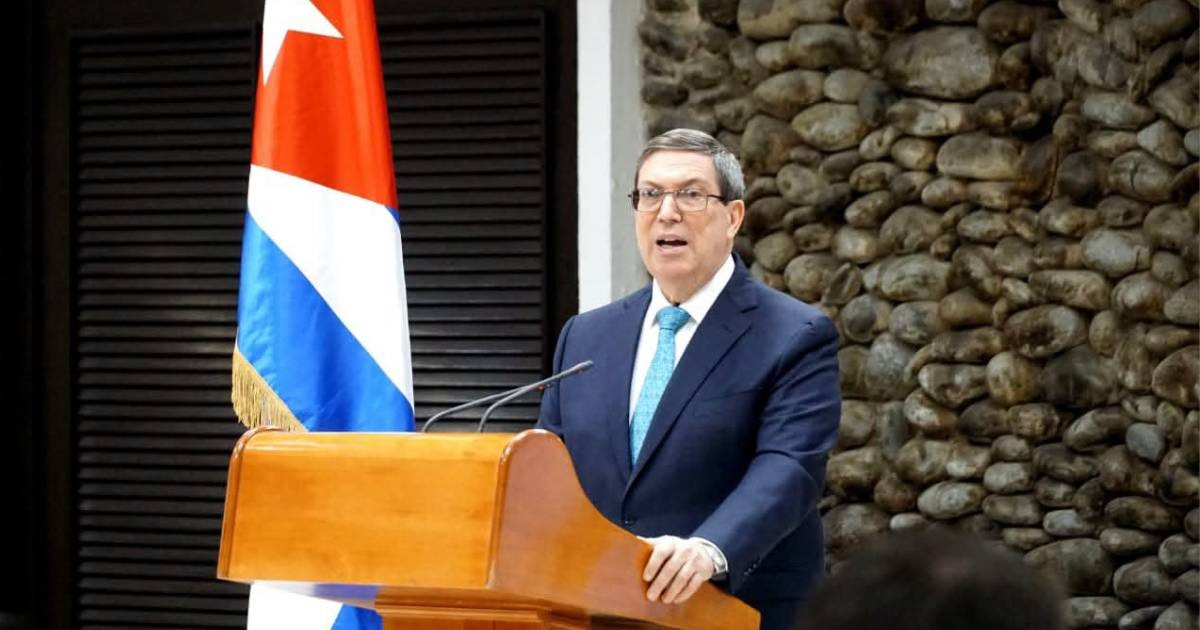
On Monday, Cuban Foreign Minister Bruno Rodríguez Parrilla launched a scathing critique against the United States, charging the world's leading economic and military power with attempting to establish peace through force and undermining the principles of international law.
In a post shared on the social media platform X, Rodríguez claimed the global superpower is trying to "legitimize and impose chaos, barbarism, interference, interventionism, military force, and the abuse of its economic might over weaker nations, all through deceit and coercion."
Although Rodríguez refrained from naming the United States explicitly, his message was unmistakably directed at Washington amid escalating tensions between the two nations in 2026.
The minister further alleged that the U.S. government is aiming to "dismantle or rewrite the norms and foundations of international law," disregarding the sovereign equality of states and using coercion as a tool for negotiation and the supposed peaceful resolution of disputes.
Rodríguez concluded his statement with a direct accusation: "They seek to replace International Law with the imperialist doctrine of enforcing peace through power."
This declaration from the Cuban regime emerged just days after President Donald Trump suggested he might contemplate a brief military operation against Havana, expressing his intent to "address the Cuba issue" before the end of his term.
On November 17, Rodríguez responded to remarks made by Marco Rubio regarding the International Criminal Court, asserting that "the powerful resort to violating or ignoring International Law because force remains their only option."
The backdrop of this rhetorical escalation includes a tense incident at the United Nations General Assembly in late October, where the Cuban foreign minister and diplomatic officials interrupted U.S. Ambassador Mike Waltz during a speech preceding the annual vote on Cuba's resolution against the embargo.
Rodríguez accused the U.S. diplomat of lying and approached the podium to halt his speech, causing a brief suspension of the session.
Later, Waltz posted on X: "They can intimidate their own people in Cuba, but think twice before trying that nonsense in the United States of America."
That same week, the General Assembly passed the yearly resolution against the embargo with 130 votes in favor, 17 against, and 25 abstentions, marking the lowest support for Havana's regime since the resolution was first voted on in 1992.
Rodríguez's stance is part of a sustained diplomatic campaign throughout the year, including interventions at the Security Council in May and the General Assembly in September, consistently framing Washington's sanctions and energy pressures as violations of international law and a "collective punishment" against the Cuban people.
Frequently Asked Questions About U.S.-Cuba Relations
What are the main accusations made by Bruno Rodríguez against the United States?
Bruno Rodríguez accuses the United States of trying to impose peace through force, undermining international law, and using its economic power to coerce weaker nations.
How has the U.S. responded to Cuba's accusations at the UN?
U.S. Ambassador Mike Waltz countered by suggesting that Cuban intimidation tactics might work domestically but warned against trying such approaches in the United States.
What was the outcome of the UN General Assembly vote on the Cuba embargo?
The General Assembly passed the resolution against the embargo with 130 votes in favor, 17 against, and 25 abstentions, the lowest support for Cuba since 1992.