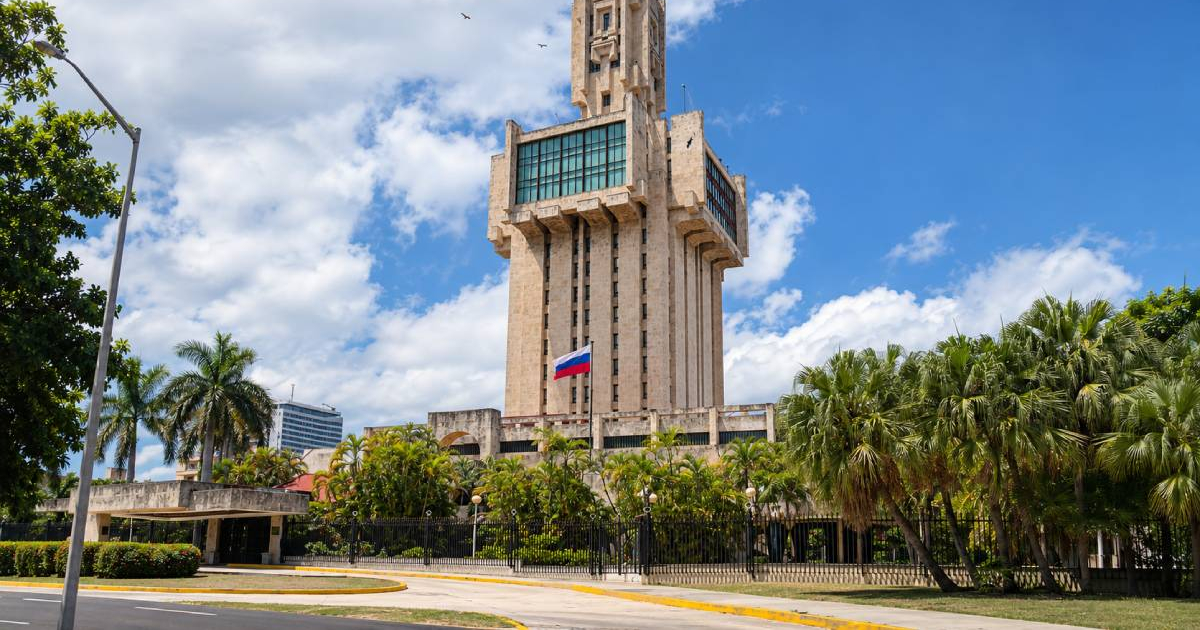
On Monday, Russia's ambassador to Cuba, Viktor Koronelli, acknowledged to the state agency TASS that Russian tourism on the island has dwindled to mere "isolated cases." He attributed this decline to the lack of aviation fuel, which has prevented the resumption of direct flights. Additionally, he detailed the limited Russian oil supply to Cuba for the year 2026.
The statements, spread across five pieces by TASS throughout the day, inadvertently reveal the gap between Moscow's rhetoric of "steadfast and unconditional support" and the minimal material aid actually reaching Cuba.
Russian Tourism Nearly Vanished
Koronelli clarified that traveling from Russia to Cuba currently involves at least two stopovers, either through Turkey and Panama or Turkey and Mexico. This makes the trip both expensive and time-consuming.
"That's why our travelers in Cuba are now isolated cases. There are no organized tourist groups from Russia here," he stated.
Back in 2024, Russia was the second-largest source of tourists to Cuba, sending 185,816 visitors, second only to Canada.
The decline in Russian tourism is evident in official statistics. Between January and August 2026, Cuba welcomed only 21,563 visitors from Russia, a sharp fall from the 80,653 during the same period in 2025, marking a 73.3% decrease. This downturn aligns with the suspension of direct flights since February due to the aviation fuel shortage on the island.
The ambassador also acknowledged that "many major foreign hotel chains have left Cuba, and the number of operational hotels has drastically decreased."
No Kerosene, No Flights, No Timeline
Addressing the lack of direct flight connections, Koronelli was candid: "The main problem is that in Cuba, amid a severe fuel shortage, there is no aviation kerosene." He noted that only airlines that do not need to refuel on the island are operating flights there.
Cuban civil aviation representatives and Russia's aviation authority, Rosaviatsia, held talks in Moscow about potentially resuming direct flights. Both sides expressed interest in reestablishing connections, though no date was set.
Energy Supply Issues
In terms of energy, Koronelli mentioned that the sole tanker delivering oil to Cuba in 2026 was Russian, arriving in March with 100,000 tons of crude. However, what he didn't mention was that this shipment, as admitted by the Cuban ambassador in Moscow in October, only managed to reduce blackouts for about two weeks. A second Russian tanker changed course in the South Atlantic in May and never reached the island.
By early November, the Russian Duma's International Affairs Committee acknowledged that since August 2026, Cuba has been "practically" without fuel imports.
Promises of Aid: Oil, Medicines, and a Solar Plant
Regarding Russian material aid to Cuba, Koronelli highlighted two shipments of vitamin-fortified vegetable oil acquired through Moscow's contributions to the UN's World Food Program.
He also mentioned a shipment of medicines being prepared by the government of St. Petersburg and a project to build a 10 MW solar plant intended for a water pumping station in Havana. This solar plant initiative is still under review by the Russian Ministry of Energy.
"On various platforms, Russia consistently provides Cuba with strong political support, as well as material assistance within its means, and will continue to do so," Koronelli stated.
Just five days earlier, Russian Deputy Minister Riabkov had met with the Cuban ambassador in Moscow, reaffirming "steadfast and unconditional" support without making concrete fuel commitments for the island.
Key Questions About Russian Tourism and Aid in Cuba
Why has Russian tourism to Cuba decreased?
The decline in Russian tourism to Cuba is mainly due to the lack of aviation fuel, which prevents direct flights from operating, making travel more costly and time-consuming.
What is the status of Russian oil deliveries to Cuba?
In 2026, only one Russian tanker delivered oil to Cuba, which temporarily reduced blackouts. There have been no further shipments, and Cuba has been without fuel imports since August 2026.
What aid has Russia provided to Cuba?
Russia has provided shipments of fortified vegetable oil, medicines, and is planning a 10 MW solar plant in Havana, although this project is still under review.