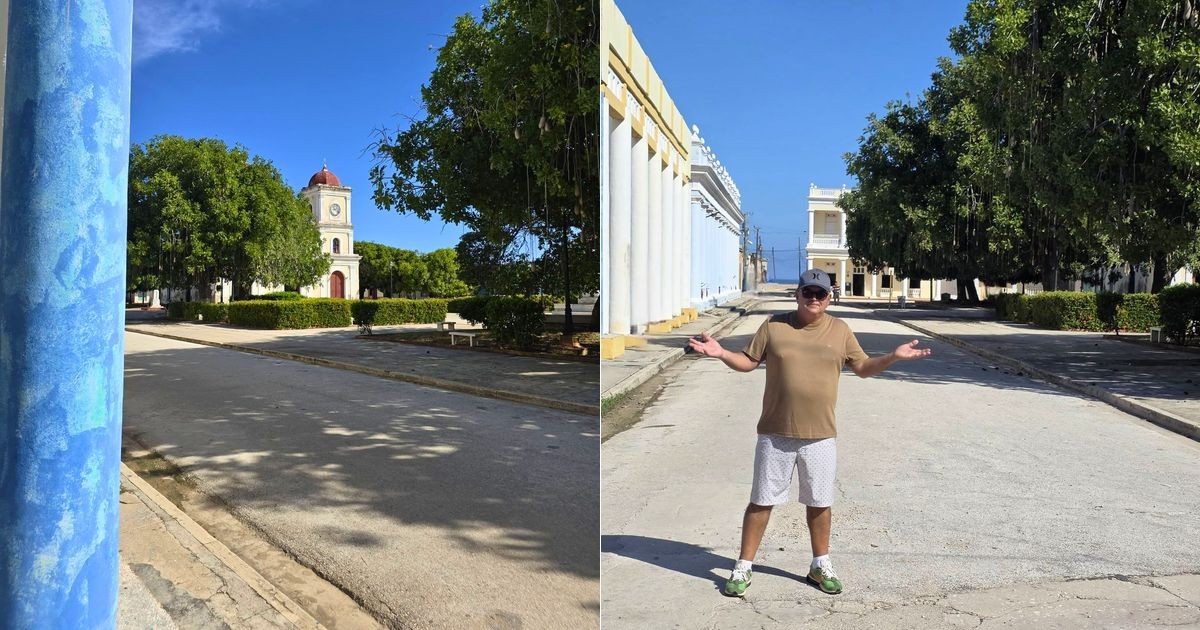
A family on a leisurely outing through Gibara, known as the "Villa Blanca" in Cuba's Holguín province, stumbled upon a scene that was both unexpected and unsettling: completely deserted streets, shuttered businesses, and an eerie silence that quickly became a hot topic on social media.
Jorge Zayas Hernández shared several photos from their walk on Facebook, capturing the bewilderment of the moment: "We decided to take the kids for a stroll around Villa Blanca, and the surprise was... Ehhh, where is everyone in Gibara? Everything, absolutely everything was closed, not even Yakelin's salon was open."
The images accompanying his post depicted empty colonial streets, dilapidated facades, a vacant plaza, and the closed Yakelin salon with the blue sea in the background.
Community Reactions: Humor and Sadness
The scene was no shock to those familiar with Gibara. Many online responses ranged from humorous to deeply sorrowful. Some joked that the locals were "fishing in the sea" or "sleeping with the power on," while others spoke with a tone that left no room for irony.
"The last time I visited Gibara, it felt like a ghost town from a horror movie [...] not a soul in the streets or on the beach," one user commented. Another recalled a recent visit with her husband: "Nothing reminded me of the COVID era." A third comment was more direct about the causes of the emptiness: "My friends from Gibara have died, and others have emigrated to the U.S."
Historical and Widespread Issue
This phenomenon isn't new and isn't confined to this town. A documented tour in July 2026 had already shown deserted beaches and closed businesses in Gibara, even during the summer season. That same month, a resident's open letter reported power outages lasting over 20 hours daily and episodes of up to 56 consecutive hours without electricity, in addition to more than twenty days without running water.
In September 2025, dozens of residents protested after more than 24 hours without electricity, leading to at least seven arrests.
The depopulation of Gibara is part of a nationwide demographic crisis of historic proportions. Cuba's population dwindled from over 11 million in 2022 to 9.4 million by the end of 2025, a reduction of over 1.6 million people in just three years. The external migration balance for 2025 was −245,264 individuals, with the majority being under 40, leaving communities aged and without generational renewal.
A Nationwide Trend
Similar scenes have occurred in other towns: Limonar in Matanzas; Bejucal in Mayabeque; and Isabela de Sagua in Villa Clara, among others. The image of empty streets in broad daylight has become a common sight in Cuba by 2026.
Gibara, whose Urban Historical Center was declared a National Monument in January 2004 and hosts the International Festival of Poor Cinema, now sees its colonial heritage increasingly contrasted with everyday desolation.
"A sad reality, it's Cuba completely empty," summarized one internet user. Another concluded with an unanswered question: "What will remain?"
Understanding the Crisis in Gibara and Beyond
Why are streets in Gibara deserted?
Streets in Gibara are deserted due to a combination of factors, including economic hardships, extensive emigration, and frequent power outages, which have led to a decline in the local population and business closures.
What contributed to Cuba's demographic crisis?
Cuba's demographic crisis is driven by significant emigration, particularly among the younger population, resulting in a reduced and aging population. Economic challenges and lack of opportunities have further exacerbated this trend.
How has Gibara's status as a National Monument been affected?
Despite being a National Monument, Gibara's colonial heritage is overshadowed by widespread desolation as the town struggles with population decline and economic stagnation.