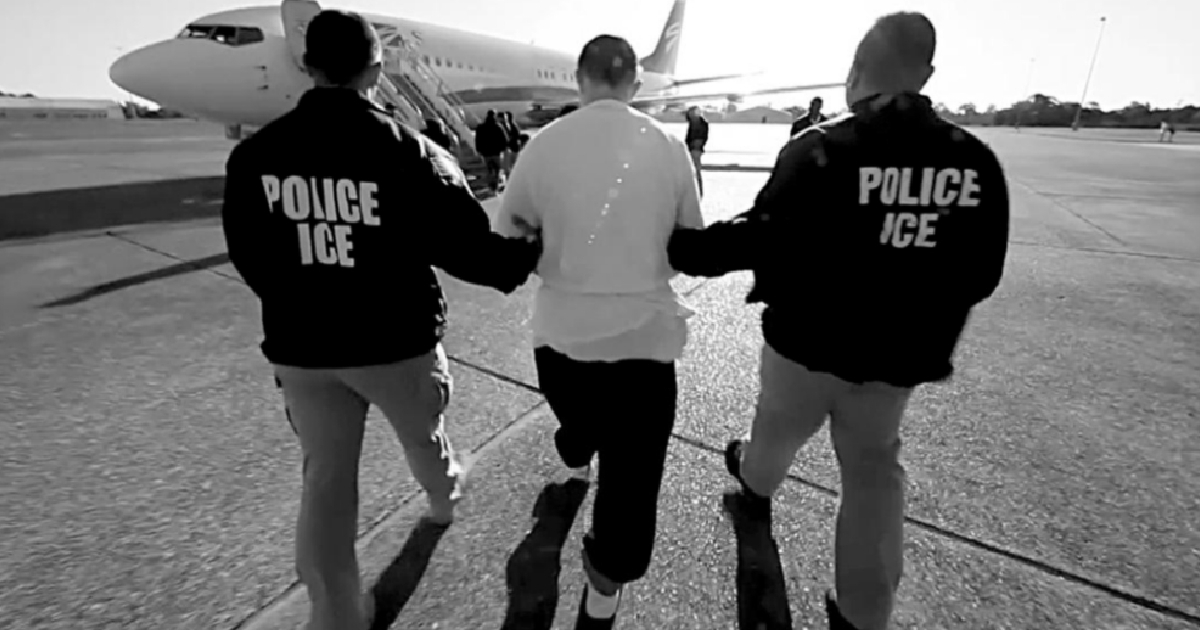
A United States federal appeals court has put a hold on a ruling that required the Trump administration to return a Nicaraguan immigrant from the Central African Republic, adding another legal twist that complicates the prospects for Cubans hoping the courts will pave the way for their return from the same African nation.
The decision, handed down on Thursday, November 19, by the Eighth Circuit Court of Appeals, was reported by CBS Minnesota and FOX 9.
The court agreed to the government's request to temporarily halt the return of Kenis Adalberto López González, a Nicaraguan national deported to Bangui, the capital of the Central African Republic, in August.
This ruling pauses an order issued on October 30 by federal judge Jeffrey M. Bryan of the Minnesota District Court. Judge Bryan had determined that the Immigration and Customs Enforcement (ICE) likely violated its own regulations when it re-arrested and subsequently deported the immigrant.
The Trump Administration's Legal Maneuver
Judge Bryan's order had required the U.S. government to arrange and pay for López’s return, allow him back into the U.S., and reinstate his previous immigration supervision conditions. However, the Trump administration appealed the ruling and succeeded in suspending its execution while legal proceedings continue.
This means that, for now, the Nicaraguan will not be brought back, although the dispute over the legality of his detention and deportation remains unresolved.
Immigrant's Protection Against Deportation
López had been living in Minnesota, working in construction with employment authorization. In August 2024, an immigration judge granted him protection from deportation to Nicaragua due to the risk of torture in his home country.
While this protection did not remove his deportation order, it prevented authorities from sending him to Nicaragua. While in the U.S., he was subject to immigration supervision and had to meet certain conditions, including attending appointments with authorities.
On January 15, 2026, federal agents detained him again. After spending several months in detention centers in Texas and Louisiana, ICE deported him on August 28 to the Central African Republic, a country with which he had no familial or migratory ties.
Procedural Violations and Legal Challenges
In his October 30 order, available on CourtListener, Judge Bryan reviewed the circumstances of López’s detention and concluded that the government likely breached federal rules governing the revocation of supervised release.
He cited regulation 8 C.F.R. 241.13, which requires notifying the immigrant of the reasons for revoking their release and offering an initial informal interview to address the decision's grounds. It also mandates a subsequent custody review.
The court found insufficient evidence that ICE followed these procedures or that López González had received the necessary notification.
Implications for Deported Cubans
The case has sparked interest among Cubans deported to the Central African Republic, as Judge Bryan's initial order demonstrated that a federal court could compel the U.S. government to facilitate the return of a deported individual to a third country if potential rights violations and migration procedure breaches were present.
On October 21, 69 Cubans, including 64 men and five women, were transported to Bangui on a flight originating from Alexandria, Louisiana, making several African stops.
This group arrived almost two months after the Nicaraguan's deportation. Although different flights, the migrants face challenges from being sent to a foreign country, where they struggle to obtain documents, find work, and move freely.
The Eighth Circuit's suspension does not resolve the Cubans' cases, nor does it mean they have automatically lost any chance of returning to the U.S. Its significance lies in halting the execution of a court order that could serve as a precedent for other individual lawsuits against deportations to third countries.
The situation of each Cuban depends on their immigration history, the orders issued against them, and the procedures ICE followed before detaining or deporting them.
Legal Questions Surrounding Deportation Procedures
What does the court's decision mean for Cubans deported to the Central African Republic?
The court's decision pauses an order that could influence other cases involving deportations to third countries. It doesn't directly change the status of deported Cubans, but it could impact future legal actions.
How did ICE allegedly violate López's rights?
Judge Bryan found that ICE likely failed to follow federal rules by not notifying López of the reasons for revoking his supervision and not providing an opportunity for an informal interview.
Why was López granted protection against deportation to Nicaragua?
López was granted protection due to the risk of torture he faced if deported to Nicaragua, as determined by an immigration judge.