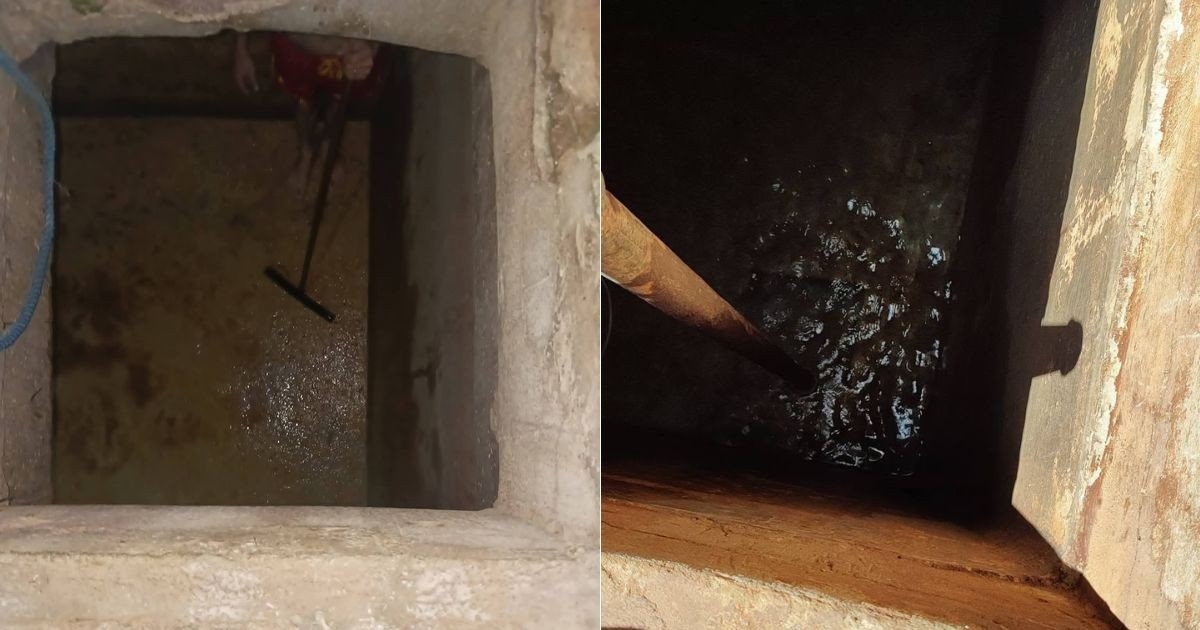
A resident of building H-37 in Zone 13 of Alamar, located in Havana del Este, issued an urgent plea on Facebook this past Saturday. The building has been without water in its cistern for nearly a year, a situation described as "threatening the most basic living conditions."
Rafael Rodríguez Carmona, who posted the message, explained that the issue began about a year ago when workers from Aguas de La Habana came to fix leaks. Since their intervention, water has ceased to enter the building's cistern and has yet to return. "Almost a year later, we're still waiting for a solution!" he lamented.
The residents of H-37 turned to the Municipal Government for assistance. Rodríguez Carmona reported that they were treated politely, but no solutions were forthcoming: "We received kind words and promises, but sadly, the problem remains unresolved. We have no water and no clear answer on when this situation will end."
The author of the appeal described what he sees in the neighborhood as "a troubling mix of inactivity, apathy, lack of resources, and absence of effective responses," contradicting state media narratives: "Despite what some television reports claim, our neighborhood's problems are only getting harder to bear."
One of the most severe repercussions is the forced relocation of the elderly: "Some families are moving their elderly relatives from Alamar to stay with family members in other municipalities because they can't provide basic hygiene and care without water. What greater evidence of the seriousness of this situation could there be?"
Amid this reality, an informal market for water sales and transportation has emerged, inaccessible to many. "Having water, a life-essential resource, is becoming a luxury not everyone can afford," Rodríguez Carmona warned. In Havana, a water truck can cost between 18,000 and 50,000 Cuban pesos, equivalent to 5.6 to 15.6 times the minimum monthly wage, set at 3,210 pesos since July 2026.
The plight of H-37 is not unique. Alamar, a vast residential area known for its numerous multifamily buildings, is part of the Havana del Este municipality. Its water supply largely relies on the El Gato system and the hydraulic infrastructure of the Tanques de Alamar, serving over 90,000 residents of Havana del Este.
A significant portion of the country's hydraulic infrastructure has gone decades without substantial upgrades, with water losses ranging from 40% to 70% before reaching homes. Over 60% of supply interruptions are attributed to power outages, as more than 80% of water systems depend on the National Power Grid.
Nationally, the water crisis has steadily worsened throughout 2026. At the start of this month, the National Institute of Hydraulic Resources reported that 2,681,770 people were affected by supply interruptions, equating to 34.5% of the Cuban population. Concurrently, seven major leaks were identified in the Cuenca Sur pipeline system, which spans over 60 kilometers with pipes over 70 years old.
The regime has responded with inspection visits: on November 12, Miguel Díaz-Canel toured the Tanques de Alamar as part of efforts to rehabilitate Havana's water supply and announced measures like installing generators and 200 MW solar parks for the water systems. However, Alamar residents assert that these actions have not led to tangible improvements.
Rodríguez Carmona concluded his post with a direct demand to the authorities: "Alamar needs solutions, not more promises. We need transparent information, clear explanations, and, above all, concrete actions." He added, "Water is not a privilege. It is a right and a necessity for living with dignity."
Understanding the Water Crisis in Alamar, Cuba
What initiated the water crisis in Alamar?
The crisis began when workers from Aguas de La Habana attempted to repair leaks in building H-37, but since their intervention, water has stopped flowing into the building's cistern.
How have residents responded to the lack of water?
Residents have sought help from the Municipal Government and have resorted to moving elderly family members to other areas due to the inability to provide basic hygiene without water.
What measures has the Cuban government taken to address the water issue?
The government has conducted inspection visits and announced plans to install generators and solar parks for water systems, but residents claim these have not resulted in actual improvements.