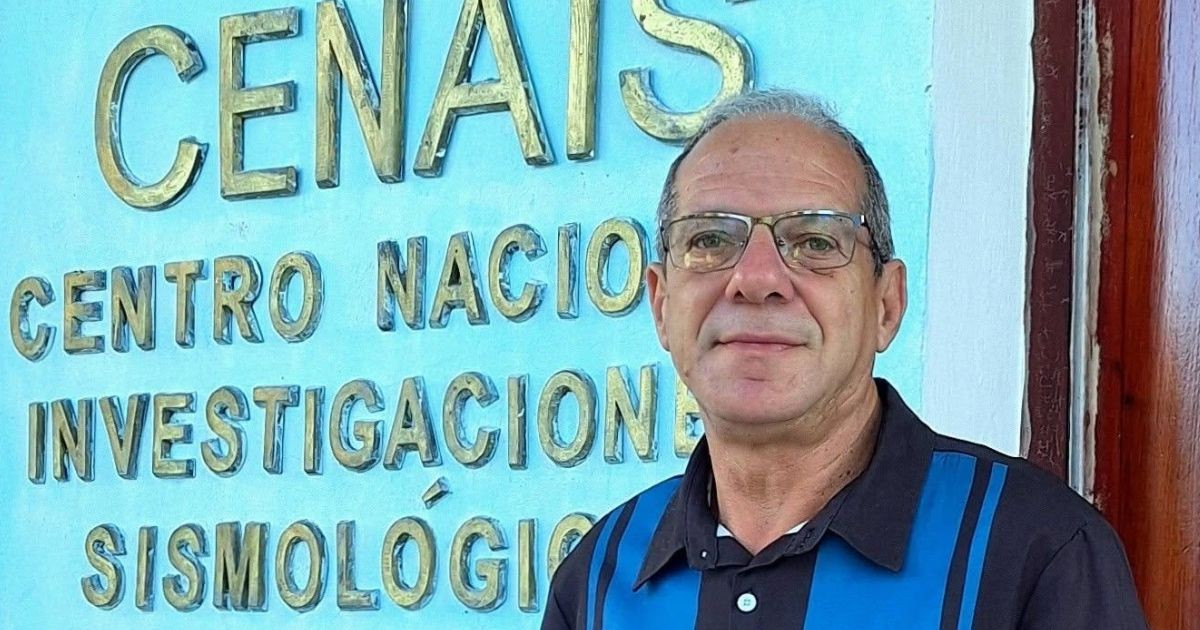
Enrique Diego Arango Arias, the head of Cuba's National Seismological Service, shared a blend of positive and negative updates this Sunday regarding the country's earthquake monitoring capabilities. This development follows ETECSA's restoration of the satellite link for a station in Santiago de Cuba.
Despite this partial recovery, Arango Arias cautioned that the network still faces significant limitations. The current number of connected stations remains insufficient for accurately pinpointing earthquake epicenters.
In a Facebook post, the expert from the National Center for Seismological Research (CENAIS) detailed that ETECSA had set up the VSAT antenna at the Río Carpintero station on Saturday. This action allowed them to regain some of the critical data needed for monitoring seismic activity.
"Yesterday, ETECSA configured the VSAT (satellite) antenna at the Río Carpintero station. This somewhat enables us to track seismic activity, yet a single station is inadequate for accurately locating an earthquake's epicenter, but it's a start," he explained.
This reconnection marks progress from the previous situation, where many of the country's stations ceased transmitting due to power outages and communication disruptions.
Arango noted that several crucial connections still need restoration in eastern Cuba, the nation's most seismically active area.
Challenges in Seismological Network Restoration
Among the pending tasks, Arango mentioned the installation of a VSAT antenna in Las Mercedes, Granma; connecting at least one of the three existing stations in Guantánamo with the central station; and reestablishing the link at Pinares de Mayarí in Holguín. The lack of adequately connected stations complicates the precise determination of earthquake locations. Specialists require data comparison from multiple stations, which is not feasible with just one.
False Alarm Sparks Concern
Arango Arias also addressed a recent incident where a mistaken report of a 5.1 magnitude earthquake caused alarm. The official seismic map erroneously displayed this data for central Cuba, leading to social media concern.
He clarified that the information was incorrect, apologizing for the mistake that stirred unease online. The error stemmed from a malfunction in the automatic location system on the website, directly linked to the lack of signals from Cuban seismological stations. Thus, the reported 5.1 magnitude should not be considered a confirmed event in central Cuba.
This incident highlights how connectivity issues not only impact seismic monitoring but also affect the accuracy of information available to the public.
Impact of Power Outages and Theft on Monitoring
These updates follow Arango's earlier warnings about a critical situation in Cuba's seismological monitoring, primarily due to power shortages at ETECSA communication towers and centers. He had previously mentioned how these issues prevented numerous station recordings from reaching the processing center in Santiago de Cuba.
The disconnection and reprogramming of satellite antennas disrupted key stations, including Río Carpintero in Santiago de Cuba, El Yarey in Granma, Camarioca in Matanzas, and Cascorro in Camagüey. The situation worsened with damages to scientific facilities in Holguín. Arango reported thefts of electrical and communication connections at the provincial headquarters of the Ministry of Science, Technology, and Environment (CITMA), affecting seismology and meteorology operations. These damages left several institutions without power or connectivity, necessitating the relocation of CENAIS equipment to Santiago de Cuba.
Frequently Asked Questions About Cuba's Seismological Monitoring
What progress has been made in restoring Cuba's earthquake monitoring network?
ETECSA restored the satellite connection for a station in Santiago de Cuba, which is a step towards regaining critical monitoring capabilities. However, more connections need to be restored to ensure accurate earthquake data.
Why did the false earthquake report occur?
The false report of a 5.1 magnitude earthquake was due to a malfunction in the automatic location system, linked to the absence of signals from Cuban seismological stations.
How have power outages affected seismological monitoring in Cuba?
Power outages have led to communication and data transmission issues, disrupting the ability to monitor seismic activity and causing some stations to stop transmitting data.